

Utilizing Portable NIR Analyzers for Ensuring Quality in Ethanol Production from Grains
1.Introduction to NIR Technology in Ethanol Production
The Role of NIR in Advanced Grain Analysis
Portable NIR analyzers have become vital tools for ensuring quality in ethanol production from grains. These devices utilize near-infrared (NIR) spectroscopy for rapid, non-destructive analysis, playing a critical role in monitoring grain composition, optimizing production processes, and reducing costs. Portable NIR Analyzer technology provides real-time data, enabling ethanol producers to make immediate adjustments, optimize yield, and minimize waste. In recent years, advances in NIR calibration techniques and portable devices have significantly enhanced the accuracy and reliability of grain analysis, both in laboratory and field settings. These developments have made portable NIR analyzers essential tools for modern ethanol producers and expanded their use in biofuel production.
Advantages of Non-destructive Analysis in Grain Quality Monitoring
NIR spectroscopy, due to its non-destructive nature, allows for repeated and continuous measurements without damaging the grain samples. This feature is especially valuable in providing real-time monitoring of the grain’s quality throughout the production process. It enables more efficient quality control processes, as producers can continuously track grain quality without generating waste or requiring sample preparation.
Learn More:Gas Chromatography vs Liquid Chromatography: Comparative Analysis and Use Cases
2. Portable NIR Analyzer: An Innovative Solution for Quality Control
Introduction of Portable NIR Analyzer 1330
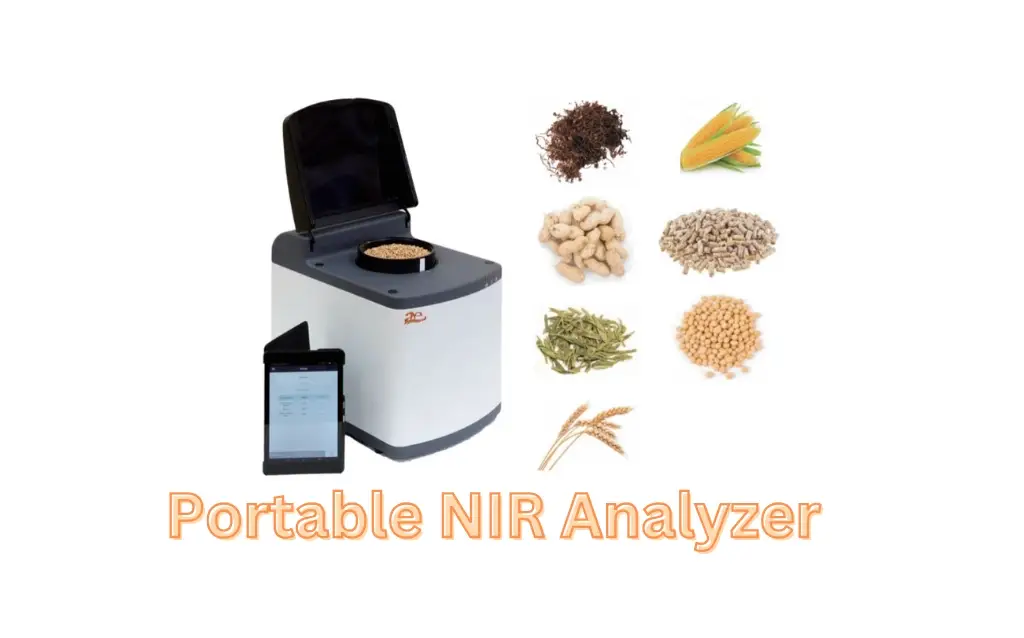
The Portable NIR Analyzer 1330 is a handheld device that uses advanced near-infrared spectroscopy technology to quickly and non-destructively analyze the composition of materials. Designed for use across various industries, including grain, oilseed, starch, sugar, ethanol production, and animal feed, this device offers precise and reliable measurements of key parameters such as moisture, protein, starch, fiber, fat/oil, and sugar.
The Portable NIR Analyzer 1330 features portability, ease of operation, and rapid analysis time (10 seconds). Its lightweight design allows it to be used in both laboratory and field environments, providing flexibility for producers. The device connects to mobile devices via Bluetooth and includes a user-friendly app for easy operation. The long-lasting battery ensures up to 24 hours of continuous analysis, making it ideal for on-site testing and quality control.
For more information and to view the full specifications of the Portable NIR Analyzer 1330, visit Product Page of Portable NIR Analyzer 1330.
3. Grain Quality Assessment with NIR Analyzers
Key Parameters Measured by NIR
Portable NIR analyzers provide accurate measurements of moisture, protein, starch, and fiber content in grains. These parameters directly affect the yield and efficiency of ethanol production. By using NIR technology, producers can monitor these key factors at various stages of production, ensuring the best possible input material for ethanol conversion.
The Importance of Accurate Grain Quality Assessment
Accurate grain quality assessments are directly linked to improved fermentation efficiency and ethanol yield. For example, the moisture content of the grains affects the energy required for drying, while protein levels influence fermentation speed. Understanding these parameters allows producers to better control the production process and improve the quality of the final ethanol product.

4. Enhancing Fermentation Efficiency
Monitoring Fermentation with NIR
Real-time monitoring of sugar content during fermentation helps optimize enzyme usage and fermentation time. NIR analyzers enable precise adjustments during fermentation, ensuring maximum ethanol yield. By continuously monitoring sugar levels, producers can adjust their processes to prevent incomplete fermentation or suboptimal ethanol production.
The Role of NIR in Optimizing Fermentation
NIR technology can also be used to monitor by-products such as glycerol and organic acids that may influence ethanol production. By analyzing these parameters in real time, producers can make immediate adjustments to minimize undesirable by-products and maximize ethanol output.
5. Reducing Waste in Ethanol Production
Efficient By-product Management Using NIR
NIR technology aids in analyzing by-products like distiller’s dried grains (DDGS) to ensure nutrient quality. This helps in sustainable production by minimizing waste and ensuring that by-products are used efficiently in animal feed or other processes. By maintaining quality control over by-products, NIR technology supports a circular economy approach in ethanol production.