
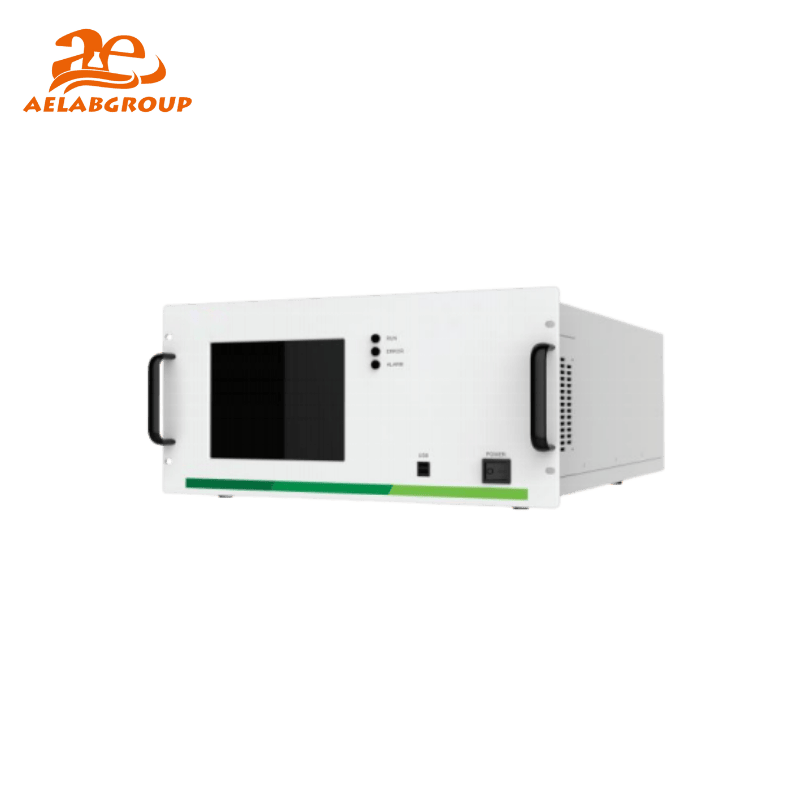
The AELAB EXPEC-2000 Series BTEX Analyzer performs chromatographic separation and FID detection to quantify benzene, toluene, ethylbenzene, and xylene in ambient air. Featuring an automated 10-minute analysis cycle, heat-traced gas path, and optional PID for enhanced selectivity, the instrument delivers precise, maintenance-free VOC monitoring for environmental, industrial, and regulatory applications.
The AELAB EXPEC-2000 BTEX Analyzer is a chromatographic instrument engineered for continuous volatile organic compound (VOC) monitoring, specifically targeting benzene, toluene, ethylbenzene, and xylene in ambient air. It applies gas chromatography with flame ionization detection (FID) to separate and quantify BTEX compounds at trace levels, supporting environmental compliance and industrial hygiene applications. Optional Photoionization Detector (PID) integration enhances compound discrimination and detection sensitivity.
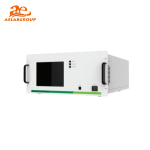
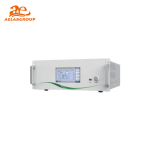
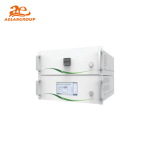
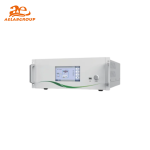
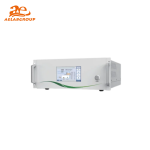
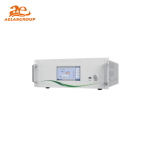
The EXPEC-2000 is built with a fully heat-traced sampling and detection system, eliminating condensation and minimizing adsorption of high-boiling VOCs. Its compact enclosure houses a chromatographic oven with PQ separation columns, a ten-way valve for sample routing, and a Flame Ionization Detector that ignites automatically after warm-up. This integrated design ensures accurate and continuous analysis with minimal operator maintenance.
The AELAB EXPEC-2000 BTEX Analyzer operates on chromatographic separation of VOCs. Ambient air is drawn into a sample loop, then injected into the column system by a ten-way valve. Each BTEX compound elutes at a distinct retention time and is detected by the FID based on ionization of hydrocarbon molecules in a hydrogen-air flame. Signal intensity is proportional to compound concentration. Optional PID detection further enhances selectivity for low-molecular VOCs.
The system supports networked operation through standard industrial interfaces, allowing integration with SCADA, LIMS, or environmental data platforms. Remote access enables data logging, trending, and automated report generation. Outputs include analog (4–20 mA) and digital channels for external system control and alarm signaling.
The EXPEC-2000 is part of AELAB’s air monitoring series, designed for 24/7 VOC analysis. The analyzer’s short cycle time and low detection limits make it suitable for urban air networks, petrochemical zones, and process emission studies. With optional PID enhancement and DB-1/DB-5 capillary column configuration, it accommodates both regulatory and research-grade applications.
The AELAB EXPEC-2000 BTEX Analyzer complies with international EPA and EN VOC monitoring standards. All systems undergo multi-point calibration, thermal uniformity testing, and detector linearity validation prior to delivery. Manufactured under ISO 9001 quality management, the analyzer provides traceable, reproducible BTEX quantification for air quality and occupational exposure evaluation.
Specifications :
| Feature | Details |
|---|---|
| Measurement Components | BTEX (Benzene, Toluene, Ethylbenzene, Xylene) |
| Principle | Gas Chromatography with FID / optional PID |
| Range | 0–1 mg/m³ (300 nmol/mol), expandable by configuration |
| Detection Limit | Benzene 0.7 μg/m³ (0.2 nmol/mol); Others 0.4–1 μg/m³ |
| Repeatability | RSD ≤3% (Benzene 2 nmol/mol) |
| Response Time | <60 s |
| Gas Requirements | Carrier Gas: N₂ or zero air (>99.999%); Hydrogen: >99.999%; Combustion Air: Zero-level air |
| Chromatographic Column | DB-1 or DB-5 Quartz Capillary (customizable) |
| Display | Digital |
| Interface | RS232, RS485, Ethernet, 4–20 mA |
| Power Supply | 220 V AC, 50 Hz, <240 VA |
| Operating Temperature | 5–35 °C |
| Construction | Heat-traced sample path and FID assembly |
| Accessories | Calibration gas set, carrier gas regulator, mounting kit |
| Feature | Details |
|---|---|
| Measurement Components | BTEX (Benzene, Toluene, Ethylbenzene, Xylene) |
| Principle | Gas Chromatography with FID / optional PID |
| Range | 0–1 mg/m³ (300 nmol/mol), expandable by configuration |
| Detection Limit | Benzene 0.7 μg/m³ (0.2 nmol/mol); Others 0.4–1 μg/m³ |
| Repeatability | RSD ≤3% (Benzene 2 nmol/mol) |
| Response Time | <60 s |
| Gas Requirements | Carrier Gas: N₂ or zero air (>99.999%); Hydrogen: >99.999%; Combustion Air: Zero-level air |
| Chromatographic Column | DB-1 or DB-5 Quartz Capillary (customizable) |
| Display | Digital |
| Interface | RS232, RS485, Ethernet, 4–20 mA |
| Power Supply | 220 V AC, 50 Hz, <240 VA |
| Operating Temperature | 5–35 °C |
| Construction | Heat-traced sample path and FID assembly |
| Accessories | Calibration gas set, carrier gas regulator, mounting kit |
Download catalog for:




 Whatsapp