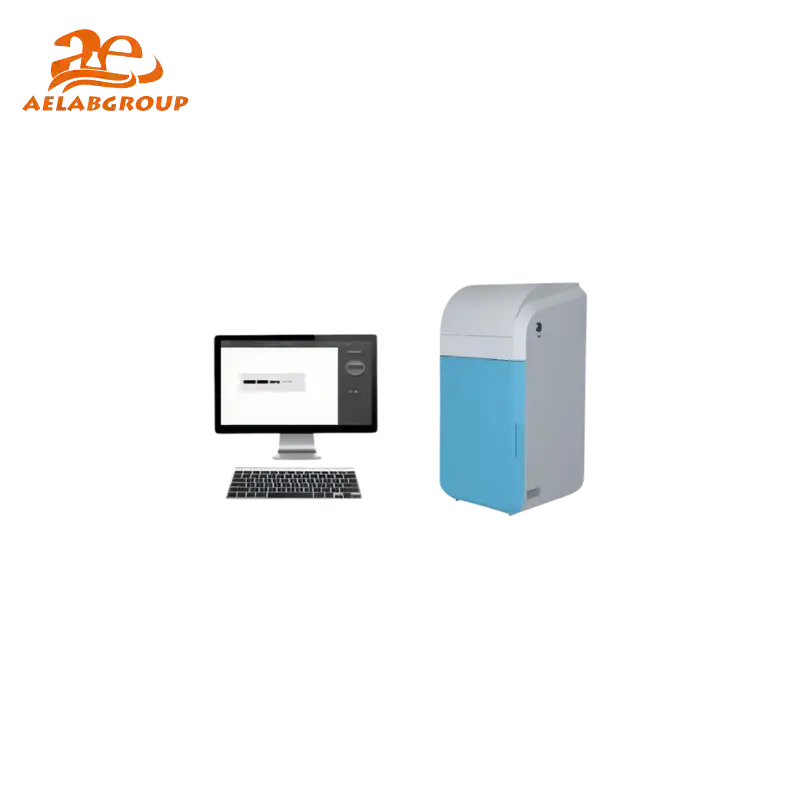
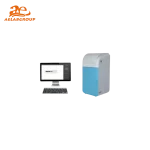
The AELAB AE-GEL900 full-automatic chemiluminescence gel imaging analysis system integrates an ultra-high-sensitivity scientific research–level cryogenic CCD camera and a large-aperture motorized lens. The instrument takes up little space, offers high sensitivity, and provides easy automated operation for luminescence detection workflows.
The system includes deep-cooled imaging, automated lens and light-source control, and one-click acquisition functions that enable rapid marker overlay and chemiluminescence imaging. Millisecond-level automatic exposure eliminates the need for repeated exposure estimation.
The AE-GEL900 features a −65 °C deep-cooled CCD detector engineered for low-noise chemiluminescence detection. The 9-million-pixel sensor with 3.75 µm × 3.75 µm pixels ensures fine spatial resolution. A motorized F = 0.95, 25 mm autofocus lens provides high light-collection efficiency for weak-signal imaging. The system uses LED cold-light reflection for non-UV illumination, ensuring stable imaging without sample degradation. The enclosed imaging cabinet isolates stray light for consistent and reproducible results.
The AE-GEL900 analyzes chemiluminescent samples by capturing low-intensity emitted photons using a high-QE (≥95%) cooled CCD camera. Deep cooling at −65 °C minimizes dark current, allowing long exposures (1 ms–60 min) without image noise. The motorized lens adjusts automatically according to signal intensity, while 16-bit image depth (0–65535 levels) ensures accurate quantification of Western blot bands, ECL signals, and low-light assays. Automated exposure algorithms calculate optimal imaging parameters in milliseconds to prevent saturation and preserve linear response.
The AE-GEL900 supports direct PC workstation control for image acquisition, analysis, and report generation. The system integrates with laboratory data-processing software, enabling storage, image annotation, densitometry, and GLP-compliant documentation. USB connectivity supports data export and external storage management.
| Model | Specifications |
|---|---|
| AE-GEL900 | 9 million pixels, −65 °C refrigeration, 16-bit imaging, ≥4.8 orders dynamic range, F=0.95 motorized 25 mm lens |
The AE-GEL900 is optimized for luminescence-based analytical workflows, including Western Lightning, ECL, ECLplus membranes, chemiluminescent microplates, biochips, nucleic acid probes, and other low-light biological assays. It is suitable for molecular biology, proteomics, biotechnology, medical diagnostics, and pharmaceutical quality control laboratories.
The AE-GEL900 follows AELAB’s manufacturing and calibration standards for scientific imaging systems. The system supports GLP documentation practices, incorporates high-stability illumination, and uses precision components validated for laboratory and research environments.
Specifications :
| Model | AE-GEL900 |
|---|---|
| Resolution | 9 million pixels |
| Refrigeration temperature | -65°C |
| Photosensitive efficiency | High QE: ≥95% |
| Pixel size | 3.75um x 3.75um |
| Binning | 1×1 2×2 4×4 · 8×8 |
| Exposure time | 1ms–60min |
| Image density | 16 bit (0–65535 colors) |
| Dynamic range | ≥ 4.8 orders of magnitude |
| Motorized lens | Motorized lens: F=0.95, 25mm autofocus lens |
| Ultraviolet transmission | not |
| White light reflection | LED Reflection (Cold Light) |
| Ultraviolet reflection | not |
| Filter wheel | not |
| Filter lenses | not |
| Timed shutdown | 1~60 minutes |
| Model | AE-GEL900 |
|---|---|
| Resolution | 9 million pixels |
| Refrigeration temperature | -65°C |
| Photosensitive efficiency | High QE: ≥95% |
| Pixel size | 3.75um x 3.75um |
| Binning | 1×1 2×2 4×4 · 8×8 |
| Exposure time | 1ms–60min |
| Image density | 16 bit (0–65535 colors) |
| Dynamic range | ≥ 4.8 orders of magnitude |
| Motorized lens | Motorized lens: F=0.95, 25mm autofocus lens |
| Ultraviolet transmission | not |
| White light reflection | LED Reflection (Cold Light) |
| Ultraviolet reflection | not |
| Filter wheel | not |
| Filter lenses | not |
| Timed shutdown | 1~60 minutes |
Looking for specific lab equipment? Fill out the form below, and our team will get back to you with detailed information and a personalized quote.



 Whatsapp