
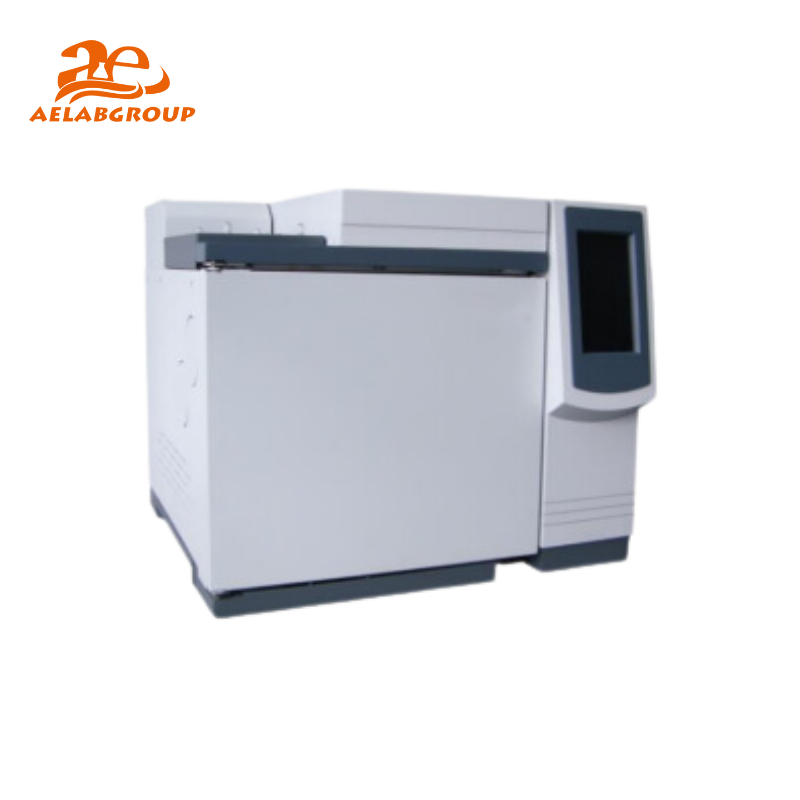
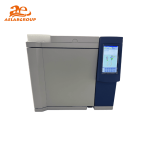
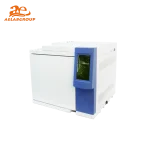
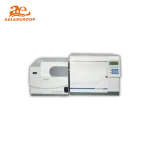
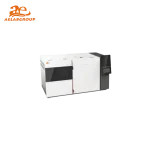
The AELAB GC1290 Gas Chromatograph is designed for monitoring and controlling analytical workflows through an integrated electronic pneumatic control system and advanced data acquisition platform. Its column oven provides superior thermal performance with 20 programmable ramps, enabling stable temperature regulation for precise chromatographic separation. The system supports rapid heat-up, fast cool-down, and automated back-door opening for efficient laboratory use.
The GC1290 incorporates a flexible sample introduction module that allows two sample injectors to operate independently. It offers high-sensitivity detectors, independent analog signal output, and M6 software compatible with GLP/FDA-21 CFR Part 11 electronic records and signatures. The microcomputer-based temperature control system ensures ±0.02°C accuracy, high reliability, and strong anti-interference capability.
The AELAB GC1290 features a robust column oven engineered for stable multistage heating from ambient temperature +7°C to 420°C. Its design integrates EPC-controlled carrier gas channels, purification and desiccation components, and a precision sample injector system. The oven provides rapid cooling performance — from 350°C to 100°C within 3 minutes — optimizing throughput for laboratories performing frequent method changes or multi-run sequences.
The GC1290 performs chromatographic separation through a controlled carrier gas flow and temperature-programmed column environment. Injected samples pass through packed or capillary columns where compounds separate according to their volatility and interaction with the stationary phase. Detectors including FID, TCD, FPD, NPD, and ECD quantify analytes based on ionization, thermal conductivity, photometric emission, nitrogen-phosphorus affinity, or electron capture mechanisms. Real-time acquisition software monitors peak formation, baseline stability, drift, and detector signal outputs.
The AELAB GC1290 supports PC workstation connectivity for full chromatographic control, data logging, multiramp programming, and long-term archiving. EPC parameters, temperature profiles, and detector settings are accessible through the 7-inch touch display. GLP-compliant data export and real-time acquisition integration enable traceable laboratory management.
| Model | Specifications |
|---|---|
| GC1290 | Ambient temperature +7°C ~ 420°C range; EPC gas control; 20 program ramps; FID/TCD/FPD/NPD/ECD detector compatibility; 350°C→100°C ≤ 3 min cooling time; temperature accuracy ±0.02°C. |
The GC1290 is used for petrochemical analysis, solvents, environmental gases, pesticide residues, industrial process monitoring, pharmaceutical raw materials, food additive testing, and general organic compound separation. Its multidetector capability makes it suitable for complex matrices requiring selective, sensitive quantification.
The instrument is designed in accordance with CE, GLP, and FDA-21 CFR Part 11 data integrity requirements. Calibration traceability, self-diagnostic routines, and onboard protection mechanisms (overheat, power-off, and communication monitoring) ensure consistent long-term operation in regulated laboratories.
Specifications :
| Model | ||
| Description | EPC (electronic pneumatic control) / 7 inch touch screen display | |
| Sample Introduction System | sample injector and evaporation chamber | |
| Column Oven | Temperature range | Ambient temperature +7°C ~ 420°C (in 1°C increment) |
| Temperature accuracy | ± 0.02°C | |
| Cooling time | 350°C → 100°C ≤ 3 min, 400°C → 50°C in 8–10 min at 25°C ambient | |
| Programmed temperature setting | 0.1°C ~ 80°C/min (in 1°C increment) | |
| Program ramps | 20 ramps in total (99 ramps available with control workstation) | |
| Size (L*W*H) | 284*280*241 mm (inside) / 340*345*281 mm (outside) | |
| Flame Ionization Detector (FID) |
Detection limit | ≤ 8×10⁻¹² g/s (n-hexadecane) |
| Drift | ≤ 1.5×10⁻¹³ A/h | |
| Noise | ≤ 3×10⁻¹⁴ A | |
| Linearity range | ≥ 10⁶ | |
| Thermal Conductivity Detector (TCD) |
Maximum operating temperature | 400°C |
| Temperature control accuracy | ± 0.1°C | |
| Sensitivity | ≥ 10000 mV·ml/mg (n-hexadecane) | |
| Baseline noise | ≤ 20 µV | |
| Baseline drift | ≤ 100 µV/30 min (after the instrument is stable for 2 hours) | |
| Linear dynamic range | ≥ 10⁴ | |
| Flame Photometric Detector (FPD) |
Detection limit | ≤ 8×10⁻¹³ g/s (P); ≤ 8×10⁻¹¹ g/s (S) |
| Drift | ≤ 2×10⁻¹¹ A/30 min | |
| Baseline noise | ≤ 5×10⁻¹² A | |
| Nitrogen-Phosphorus Detector (NPD) |
Detection limit | ≤ 5×10⁻¹² g/s (N) (Azobenzene), ≤ 5×10⁻¹³ g/s (P) (Malathion) |
| Electron Capture Detector (ECD) |
Detection limit | ≤ 3×10⁻¹⁴ g/ml (γ-666) |
| Drift | ≤ 100 µV/30 min | |
| Noise | ≤ 40 µV | |
| Model | ||
| Description | EPC (electronic pneumatic control) / 7 inch touch screen display | |
| Sample Introduction System | sample injector and evaporation chamber | |
| Column Oven | Temperature range | Ambient temperature +7°C ~ 420°C (in 1°C increment) |
| Temperature accuracy | ± 0.02°C | |
| Cooling time | 350°C → 100°C ≤ 3 min, 400°C → 50°C in 8–10 min at 25°C ambient | |
| Programmed temperature setting | 0.1°C ~ 80°C/min (in 1°C increment) | |
| Program ramps | 20 ramps in total (99 ramps available with control workstation) | |
| Size (L*W*H) | 284*280*241 mm (inside) / 340*345*281 mm (outside) | |
| Flame Ionization Detector (FID) |
Detection limit | ≤ 8×10⁻¹² g/s (n-hexadecane) |
| Drift | ≤ 1.5×10⁻¹³ A/h | |
| Noise | ≤ 3×10⁻¹⁴ A | |
| Linearity range | ≥ 10⁶ | |
| Thermal Conductivity Detector (TCD) |
Maximum operating temperature | 400°C |
| Temperature control accuracy | ± 0.1°C | |
| Sensitivity | ≥ 10000 mV·ml/mg (n-hexadecane) | |
| Baseline noise | ≤ 20 µV | |
| Baseline drift | ≤ 100 µV/30 min (after the instrument is stable for 2 hours) | |
| Linear dynamic range | ≥ 10⁴ | |
| Flame Photometric Detector (FPD) |
Detection limit | ≤ 8×10⁻¹³ g/s (P); ≤ 8×10⁻¹¹ g/s (S) |
| Drift | ≤ 2×10⁻¹¹ A/30 min | |
| Baseline noise | ≤ 5×10⁻¹² A | |
| Nitrogen-Phosphorus Detector (NPD) |
Detection limit | ≤ 5×10⁻¹² g/s (N) (Azobenzene), ≤ 5×10⁻¹³ g/s (P) (Malathion) |
| Electron Capture Detector (ECD) |
Detection limit | ≤ 3×10⁻¹⁴ g/ml (γ-666) |
| Drift | ≤ 100 µV/30 min | |
| Noise | ≤ 40 µV | |
Download catalog for:
Download Manual for:
Looking for specific lab equipment? Fill out the form below, and our team will get back to you with detailed information and a personalized quote.



 Whatsapp