

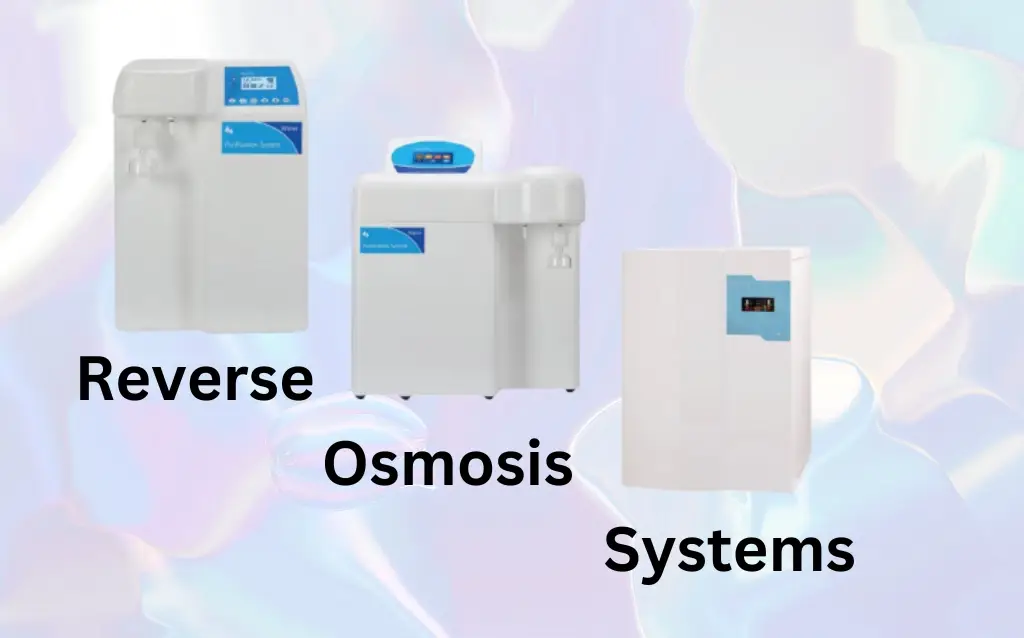
Why Choose Reverse Osmosis Water Purification Systems
Introduction
Reverse osmosis (RO) water purification systems have become a cornerstone in modern water treatment technologies. With their ability to effectively remove a wide range of contaminants, these systems ensure the availability of clean and safe drinking water for residential, commercial, and industrial applications. This article explores the principles, components, benefits, advancements, and challenges of RO systems, while also highlighting innovative products that embody the cutting-edge features of this technology.
Learn more: Freeze Dryer’s Problem: Common Solutions
Principles of Reverse Osmosis Water Purification
Reverse osmosis is a pressure-driven membrane filtration process that removes impurities by forcing water through a semi-permeable membrane. This membrane allows only water molecules to pass while rejecting dissolved salts, organic compounds, and other contaminants. Unlike natural osmosis, which involves the movement of water from a region of low solute concentration to high concentration, reverse osmosis uses external pressure to reverse this flow, achieving highly purified water.
In natural osmosis, the solvent moves naturally to equalize solute concentration on both sides of a membrane. In contrast, reverse osmosis applies external pressure to move the solvent from a region of high solute concentration to low solute concentration, effectively purifying water by removing contaminants.
Comparing Osmosis and Reverse Osmosis
|
Aspect |
Osmosis |
Reverse Osmosis |
|
Definition |
Natural solvent movement through a semi-permeable membrane from low to high solute concentration. | Pressure-driven solvent movement through a semi-permeable membrane from high to low solute concentration. |
|
Purpose |
Equalizes solute concentration. |
Purifies water by removing contaminants. |
|
Pressure Required |
None |
External pressure is required. |
|
Applications |
Biological and industrial processes. |
Water purification and desalination. |
Key Components of Reverse Osmosis Systems
Reverse osmosis systems consist of several critical components working together to ensure efficient water purification. Pre-filters remove large particles and chlorine to protect the RO membrane, which serves as the core filtration element, eliminating dissolved salts and contaminants. A high-pressure pump provides the necessary force to drive water through the membrane. The purified water is then stored in a dedicated storage tank for immediate use. Post-filters further enhance water quality and taste, often adding beneficial minerals. A drain line removes wastewater and rejected contaminants, ensuring the system operates efficiently.
Benefits of Reverse Osmosis Systems
-
Pre-Filters
Remove large particles and chlorine to protect the RO membrane.
-
Reverse Osmosis Membrane
The core filtration component that eliminates dissolved salts and contaminants.
-
High-Pressure Pump
Provides the necessary force to drive water through the membrane.
-
Storage Tank
Stores purified water for immediate use.
-
Post-Filters
Enhance water quality and taste, often adding beneficial minerals.
-
Drain Line
Removes wastewater and rejected contaminants.
Advancements in Reverse Osmosis Technology
Recent innovations have significantly enhanced RO technology. Improved membranes, such as anti-fouling and high-flux designs, boost efficiency and durability. Energy-efficient systems now incorporate advanced features like energy recovery devices to lower operational costs. Compact and modular designs save space and simplify installation, making them ideal for diverse applications. Enhanced monitoring capabilities, including IoT-enabled sensors, allow real-time tracking of performance and automated maintenance. Advanced pre- and post-filtration stages further ensure superior water quality.
Learn more: Surface Profile Gauges: Optimizing Industrial Surface Quality
Challenges and Solutions
Despite their benefits, RO systems face challenges like membrane fouling, energy consumption, and brine disposal. To address these issues, advanced pretreatment systems can reduce fouling, while energy-efficient pumps and recovery devices minimize power consumption. Sustainable brine management strategies also play a critical role in ensuring environmentally friendly operations.
Applications of Reverse Osmosis
RO systems are versatile and widely applicable. In residential settings, they provide safe drinking water for households. In industrial environments, they treat process water in pharmaceuticals, power plants, and manufacturing facilities. The food and beverage industry benefits from RO technology for concentrating juices, pre-treating milk, and purifying ingredients. Desalination processes rely on RO to convert seawater and brackish water into potable water. Additionally, wastewater reuse systems utilize RO to treat wastewater for reclamation and environmental conservation.
AELAB’s Advanced Water Purification Solutions
Classic-R Double Stage RO & Ultrapure Water System
The Classic-R Double Stage RO & Ultrapure Water System combines dual-stage reverse osmosis with ultrapure water technologies to deliver exceptionally high-purity water. Its advanced filtration process ensures the removal of a wide range of contaminants, including dissolved salts, heavy metals, and organic compounds. With a compact design and reliable performance, this system is ideal for laboratories, pharmaceuticals, and other critical applications that demand consistent water quality.

Direct-S Ultrapure Water System
The Direct-S Ultrapure Water System is an all-in-one solution designed to convert tap water into ultrapure water directly. Utilizing advanced pre-filtration, reverse osmosis, and final polishing stages, it ensures water with high resistivity and low total organic carbon (TOC) levels. Compact and user-friendly, it is perfect for laboratory environments with limited space, providing consistent quality for sensitive applications like reagent preparation and equipment feeding.

Medical – RO/Q Deionized Water System
The Medical – RO/Q Deionized Water System offers a robust reverse osmosis process followed by deionization, making it ideal for medical and clinical applications. This system delivers low-conductivity water, free from ions, organics, and bacteria, meeting the stringent requirements of medical-grade water. Its reliable performance and intuitive operation make it suitable for use in microbial cultivation, autoclave sterilizers, and biochemical analysis.

In addition to these cutting-edge systems, AELAB also offers two other advanced products: Ultrapure Water System and Ultrapure Water System Classic-S, ensuring a comprehensive range of solutions for diverse water purification needs.
Conclusion
Reverse osmosis water purification systems represent an essential solution for addressing global water quality challenges. By effectively removing contaminants, they provide safe, reliable, and environmentally friendly water treatment options. With continuous advancements in technology and increasing adaptability to diverse applications, RO systems remain a vital tool for ensuring water security worldwide. Further research and innovation will drive their efficiency and sustainability, solidifying their role in modern water treatment practices.