

Introduction
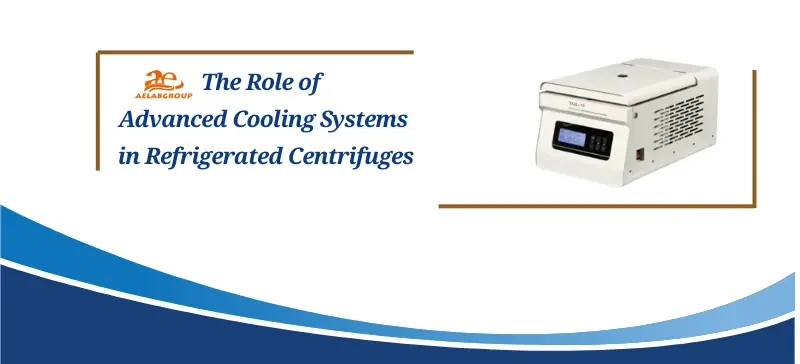
Refrigerated centrifuges are indispensable instruments in modern scientific laboratories, powering critical applications across biology, chemistry, pharmaceuticals, and clinical diagnostics. These devices rely heavily on advanced cooling systems to maintain precise temperature control during high-speed centrifugation. The ability to sustain a stable, low-temperature environment protects heat-sensitive samples such as DNA, RNA, proteins, enzymes, and clinical specimens from thermal damage, ensuring experimental accuracy and reproducibility. This article explores the importance, key components, and innovations in advanced cooling systems used in AELAB refrigerated centrifuges, highlighting their role in enhancing sample integrity, operational efficiency, and versatility.
What Are Refrigerated Centrifuges and Their Cooling Systems?
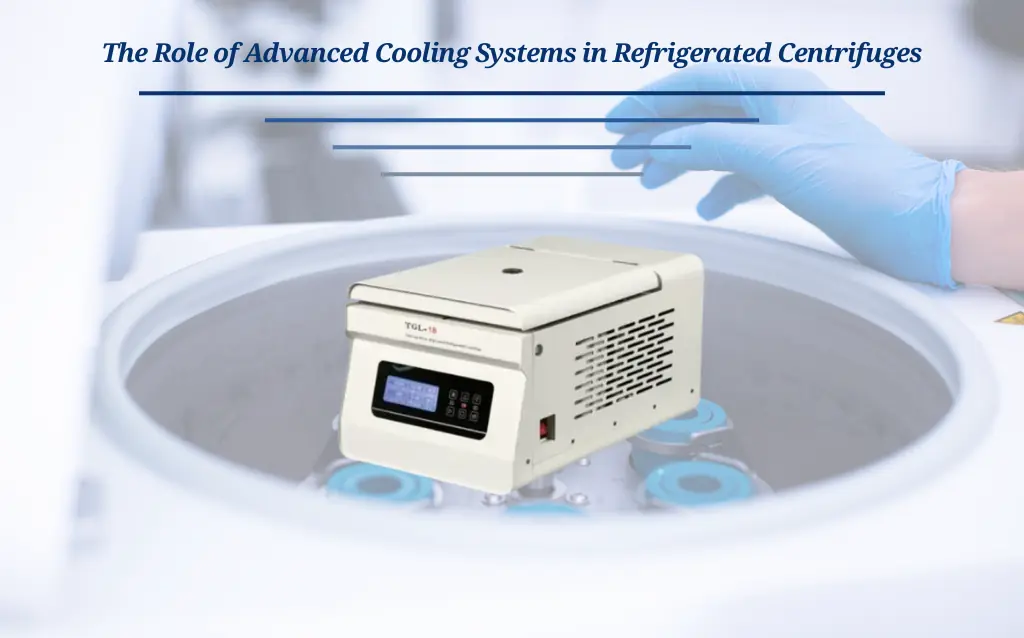
A refrigerated centrifuge is a laboratory device that separates mixture components based on density by applying high rotational speeds while maintaining a controlled, low temperature—often ranging from -20°C up to +40°C depending on the model and application. The refrigeration system counters the heat generated by rotor friction and motor operation, which could otherwise degrade sensitive samples.
Advanced cooling systems in these centrifuges utilize sophisticated technologies such as compressor-based refrigeration, cryogenic cooling with liquefied gases, precision thermal sensors, and adaptive algorithms. These systems create a uniformly cooled environment inside the centrifuge rotor chamber, preserving molecular integrity and ensuring reliable scientific results.
The Vital Role of Advanced Cooling Systems
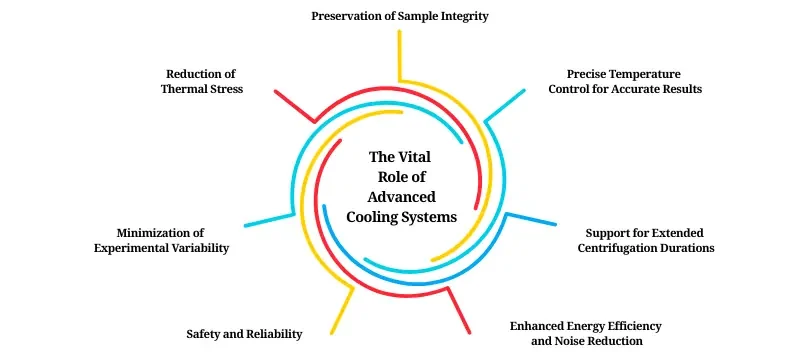
1. Preservation of Sample Integrity
Heat generated during centrifugation can cause denaturation, degradation, or chemical alteration of biological and chemical samples. AELAB’s advanced cooling systems maintain a steady, controlled temperature to protect delicate molecular structures from thermal stress, safeguarding experimental outcomes.
2. Precise Temperature Control for Accurate Results
Reproducible scientific experiments require exact temperature settings. These cooling systems enable researchers to program and maintain precise temperature profiles customized to specific sample types and experimental protocols, minimizing variability and enhancing data reliability.
3. Reduction of Thermal Stress
Mechanical forces combined with heat can induce thermal stress, negatively affecting samples. Effective heat dissipation ensures that samples experience minimal thermal shock, preserving their native properties and improving result fidelity.
4. Support for Extended Centrifugation Durations
Certain protocols necessitate longer centrifugation times to optimize separation quality. Advanced cooling technology in AELAB centrifuges allows for extended runs without compromising sample stability.
5. Minimization of Experimental Variability
Consistent temperature regulation throughout the centrifugation cycle reduces run-to-run variability caused by temperature fluctuations, leading to higher reproducibility of results.
6. Enhanced Energy Efficiency and Noise Reduction
Incorporating features such as variable speed compressors, optimized heat exchangers, and sound-dampening materials, AELAB cooling systems provide efficient energy use and operate quietly, creating a more sustainable and comfortable laboratory environment.
7. Safety and Reliability
Built-in safety mechanisms like overheat alarms and fail-safe shutdown systems protect both samples and equipment, ensuring continuous, secure operation.
Key Components of Advanced Cooling Systems
Cryogenic Cooling Technology: Utilizes liquefied gases (e.g., liquid nitrogen) for rapid and ultra-low temperature cooling, maintaining consistent conditions during prolonged runs.
Variable Speed Compressors: Dynamically adjust cooling output based on sample load and ambient conditions to ensure precise temperature control and energy savings.
Heat Exchangers: Efficiently remove excess heat to prevent temperature gradients and hotspots inside the centrifuge chamber.
High-Quality Insulation: Low thermal conductivity materials isolate the rotor chamber from external temperature influences, enhancing thermal stability.
Thermal Sensors and Real-Time Monitoring: Continuous temperature measurement feeds back to the control system for adaptive regulation.
Adaptive Cooling Algorithms: Intelligent software adjusts cooling parameters automatically in response to changing operational variables.
User-Programmable Cooling Protocols: Allow researchers to create customized temperature profiles for specific experimental needs, increasing flexibility.
Low-Noise Design: Sound-absorbing components reduce operational noise for a quieter lab environment.
Safety Features: Over-temperature protections and emergency shutdown mechanisms ensure system safety and reliability.
Applications and Importance in Modern Laboratories
Refrigerated centrifuges equipped with advanced cooling systems are essential in many laboratory applications including:
Separation of cellular components
Nucleic acid and protein purification
Enzyme and antibody preparation
Clinical diagnostics and pharmaceutical research
Combined with other laboratory instruments such as biosafety cabinets and sterilization equipment, these centrifuges contribute to sterile, contamination-free, and precisely controlled workflows.
Professional Recommendations for Optimal Performance
Regularly calibrate temperature sensors to maintain accuracy.
Avoid rotor overloading to ensure proper airflow and cooling efficiency.
Pre-cool samples when possible to reduce thermal shock.
Perform routine maintenance including air filter cleaning and refrigerant checks.
Utilize integrated temperature logging to monitor system performance.
Conclusion
Advanced cooling systems form the cornerstone of AELAB refrigerated centrifuge technology, delivering precise temperature control essential for protecting sensitive samples and guaranteeing experimental reproducibility. Innovations in compressor efficiency, cryogenic cooling, adaptive algorithms, and user programmability enhance centrifuge versatility and operational sustainability. As laboratory requirements continue to evolve, AELAB remains committed to advancing cooling solutions that empower researchers with the reliability and precision needed for cutting-edge scientific discovery.