

Utilizing Vortex Mixers for Precise Handling of Delicate Samples in Biochemistry and Molecular Biology
Vortex mixers are vital tools in biochemistry and molecular biology laboratories. They offer efficient mixing of small volumes of liquids, ensuring uniformity in reactions and sample preparation. These devices are essential for delicate sample handling, where precision and consistency are paramount.
Introduction
In the fast-paced world of biochemistry and molecular biology, accurate and reproducible results are crucial. Vortex mixers help achieve this by efficiently mixing samples in test tubes or vials. Their rapid and controlled mixing motion creates a vortex, ensuring even suspension of cells, proteins, and other biomolecules. This paper explores the applications and advantages of vortex mixers in handling sensitive biological samples.
Role of Vortex Mixers in Sample Preparation
Vortex mixers are primarily used to mix small quantities of liquid in research. They create a vortex motion in the sample, ensuring thorough mixing without requiring large volumes of liquid or complex machinery. In molecular biology, vortex mixers are essential for preparing reagents, buffers, and samples for various assays. They ensure complete homogenization, which is crucial for consistent experimental outcomes.
For instance, in enzyme analysis, vortex mixers help mix enzyme solutions and substrates, promoting optimal reaction conditions. In protein studies, they mix protein extracts with reagents, ensuring uniformity in protein assays. Furthermore, vortex mixers play a significant role in cell lysis by assisting in the mixing of cells with lysis buffers, breaking cell walls efficiently without damaging the sample.
Learn more: How to Select the Best Elemental Analyzer for Your Requirements
Optimizing Results with Vortex Mixers
In sensitive experiments, the precision of vortex mixing is essential. Many vortex mixers offer variable speeds to adjust the intensity of mixing according to the sample type. For microarray analysis, low-speed vortex mixing prevents splashing and ensures proper sample suspension. In contrast, high-speed vortex mixing is beneficial for protein denaturation or immunochemical reactions, where fast mixing can expedite the reaction process.
When handling delicate samples, controlling the vortex speed prevents over-shearing of cells or proteins, which can lead to degradation. It is crucial to choose the correct speed setting to achieve the desired mixing effect while preserving the integrity of sensitive biomolecules.
Maintenance and Safety Considerations
Proper maintenance ensures the longevity and performance of vortex mixers. Regular cleaning is necessary to avoid contamination, especially when working with biological samples. It is advisable to use mild detergents and warm water for cleaning. Abrasive cleaners may damage the rubber cup, reducing the efficiency of mixing.
Safety is another critical aspect. Vortex mixers should be used on stable, clean surfaces to minimize the risk of spills. Additionally, protective equipment such as gloves and goggles should be worn to prevent exposure to harmful reagents or biohazards.
Applications in Biochemical and Molecular Biology Research
Vortex mixers are indispensable in molecular biology for processes like enzyme assays, protein analysis, and DNA/RNA extraction. In immunochemistry, vortex mixers help mix antibodies with antigen samples, ensuring consistent reaction conditions. They also assist in cell culture applications by resuspending cells, mixing media, or preparing reagents.
For genetic research, vortex mixers aid in preparing DNA or RNA samples by ensuring complete mixing with reagents like primers or buffers. In biochemical research, vortex mixers help in preparing enzyme solutions, reducing variability and ensuring accurate concentrations for reactions.
Learn more: Sample Preparation for AAS Analysis: Sample Types and How to Prepare
Introduction to Vortex Mixer AVT-501
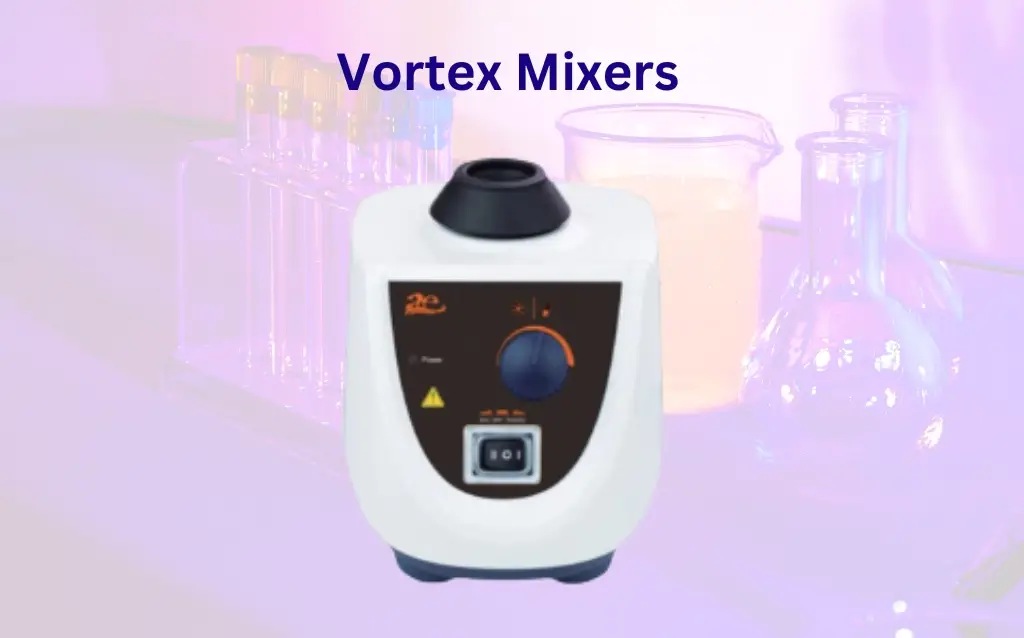
One highly effective vortex mixer designed for laboratory use is the AVT-501, a versatile tool that offers an adjustable speed range from 0 to 3000rpm. This device is particularly useful in applications requiring fast and efficient mixing of small volumes of liquid. The AVT-501 features a rubber or foam pad where sample containers are placed, and the motor’s action creates a rapid vortex motion in the liquid, ensuring uniform mixing. Some key specifications of the AVT-501 include:
- Speed adjustable from 0-3000rpm.
- Standard configuration with an adapter for Ø30mm tube or smaller.
- 3-position power switch with touch/continuous modes of operation.
- Shaded pole motor for less maintenance.
- Corrosion-resistant aluminum alloy casing.
- Small rubber vacuum grippers hold the unit during operation.
- LED power indicator.

The AVT-501’s motor type is a shaded pole motor, which minimizes the need for maintenance and ensures long-lasting, reliable performance. It has a small orbital diameter of 4mm, making it ideal for rapidly mixing small liquid samples. The ability to adjust speed from 0 to 3000rpm provides great versatility, making it suitable for various types of sensitive sample handling tasks.
This vortex mixer is also equipped with a durable, corrosion-resistant exterior and a user-friendly design that includes an LED power indicator and a touch operation mode for easy use. These features make the AVT-501 an excellent choice for laboratories focused on precise sample preparation and mixing in biochemical and molecular biology research.

Conclusion
Vortex mixers are indispensable tools in biochemistry and molecular biology laboratories. They provide efficient, reproducible mixing for sensitive samples. Whether in enzyme assays, protein analysis, or cell culture, vortex mixers ensure uniform sample preparation, contributing to consistent and reliable results. Their ability to handle small volumes with precision makes them a crucial component in the research of biomolecules and cell-based studies.
By selecting the appropriate vortex mixer and maintaining it properly, researchers can optimize their experimental workflows, ensuring both accuracy and reproducibility in their work.