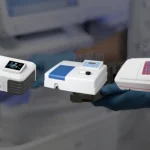


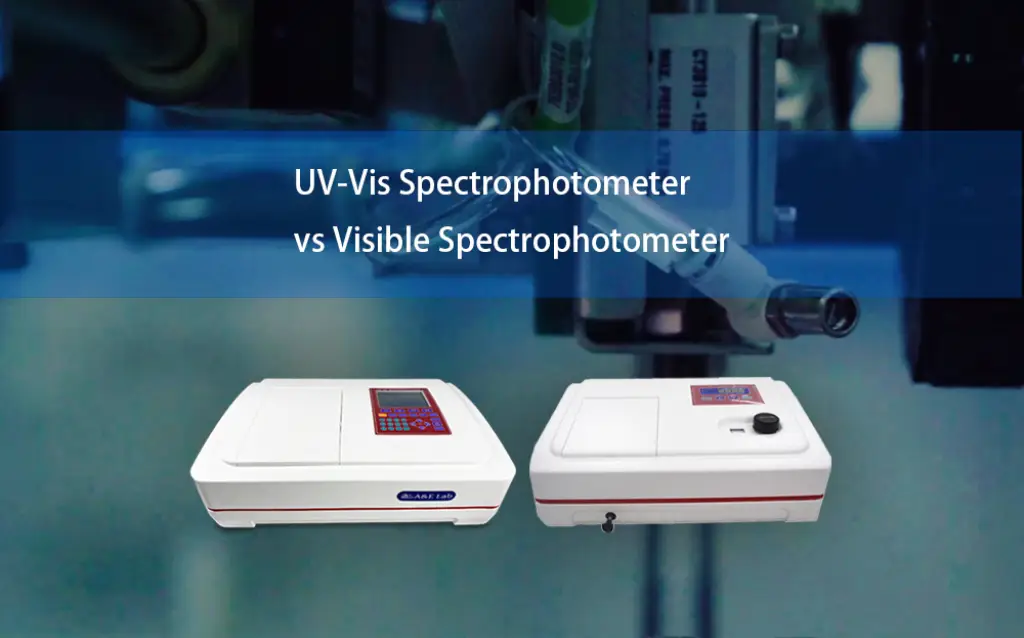
UV-Vis Spectrophotometer vs Visible Spectrophotometer
Visible spectrophotometer and UV-visible spectrophotometer is the difference between the determination of different wavelength ranges, UV generally use hydrogen or deuterium lamps, the determination of the wavelength range of 180 ~ 350nm, visible generally use tungsten lamps, the determination of the wavelength range of 320 ~ 1,000nm. the so-called UV-visible spectrophotometer, that is, the instrument can be replaced with a new source of light, the ability to determine the peak of the absorption in the UV and the visible portion of the compounds.
It is normal to find that the absorbance is no longer displayed when it exceeds 2.
Absorbance is the negative logarithm of transmittance, and an absorbance of more than 2 means that the transmittance is less than 1 per cent, which is below the detection limit of the instrument, and is no longer displayed.
Whether you can use a spectrophotometer or not depends on the wavelength you are measuring.
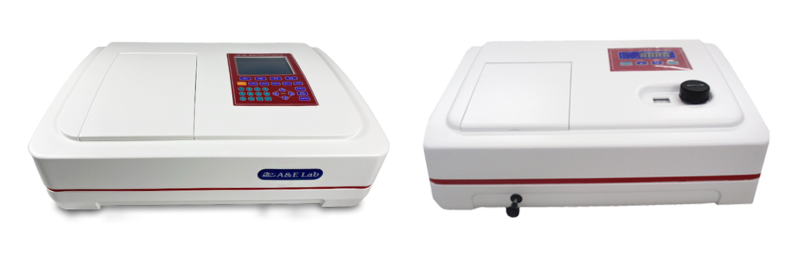
Specifically divided into the following points:
the wavelength range is different: ultraviolet-visible spectrophotometer wavelength range is: 200nm-1000nm, of which 200nm-330nm calibrated for the ultraviolet spectrum, 330nm-800nm calibrated for the visible spectrum, 800nm-1000nm calibrated for the near-infrared spectrum. The visible spectrophotometer wavelength range is only in the visible spectral region of 330nm-800nm.
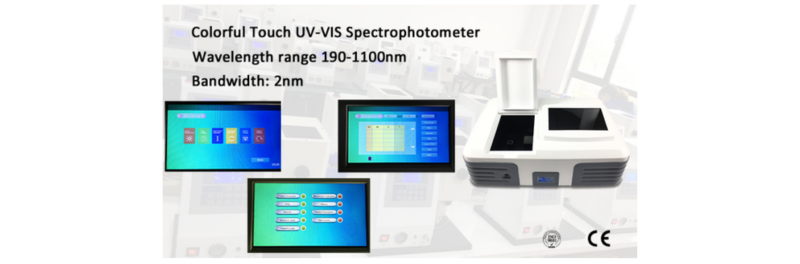
2) the light source is different: visible spectrophotometer light source is generally only tungsten lamps, while the UV-visible spectrophotometer is a tungsten lamp + deuterium lamp two light sources, but also more than the two light source lamp switching components. This is because the spectral range of tungsten lamps can be seen mainly in the near infrared, deuterium lamps are mainly in the ultraviolet end. It is also because the light source is not the same, ultraviolet-visible spectrophotometer also has a special deuterium lamp to provide deuterium lamp work deuterium lamp power supply.
3) the different optical devices: because the glass can absorb ultraviolet waves, and can be seen on the near infrared end of the better permeability, so some of the optical components of the visible spectrophotometer can be used in glass, while the UV-visible spectrophotometer can not be used in glass components, the general use of quartz optical components. At the same time for this reason, the choice of cuvette is also different, visible spectrophotometer can use glass cuvettes, while the UV-visible spectrophotometer generally use quartz cuvettes.
- the receiver is different: due to the ultraviolet-visible spectrophotometer more ultraviolet waves, so the choice of the receiver is not the same. More sensitive response to the ultraviolet wave function, the price of such receivers than the visible spectrophotometer receiver is much more expensive.
- the analysis of different substances: the majority of the analysis of the ultraviolet spectrum of organic matter, the majority of the analysis of the visible spectrum of inorganic matter, of course, is not absolute, just most of the absorption of organic matter sensitive point in the ultraviolet spectral region, the absorption of inorganic matter sensitive point in the visible spectral region.
Frequently Asked Questions about the two types of spectrophotometers
1.What is the difference between a visible spectrophotometer and a UV-visible spectrophotometer?
The difference between a visible spectrophotometer and a UV spectrophotometer is that the wavelength range of the measurement is different, generally the visible wavelength range is 400 ~ 1000nm, the UV wavelength range is 200 ~ 400nm. the so-called UV-visible spectrophotometer that is to say, the instrument can be replaced by changing the light source to form a UV and visible light area, able to determine absorption peaks in the ultraviolet and visible part of the compound. Generally, the wavelength of measurement is from 200 to 1000nm.
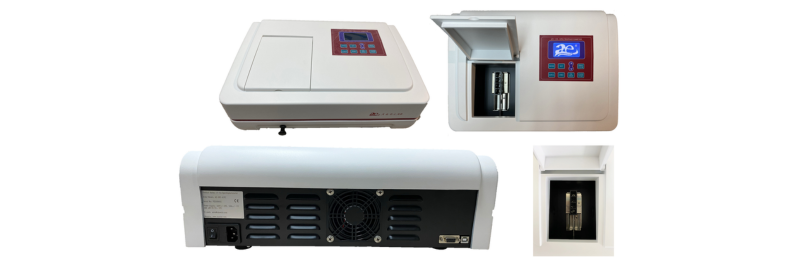
2.What are the key parameters of a UV spectrophotometer?
Selection of visible and UV-visible spectrophotometer concerned about the key indicators are three points: one is the wavelength range, the second is the wavelength accuracy, and the third is the stray light parameters. The choice of wavelength range is determined by the user’s experimental needs, the wider the wavelength range of the price of the more expensive; wavelength accuracy and stray light parameters of the lower the value of the performance is better.3. Ultraviolet spectrophotometer double beam and single beam how to distinguish between
Where the optical path to put two cuvettes, one for the sample, one for the reference, each corresponding to a set of through the light window, is a double beam. Where there is only one cuvette bit, or where you can only find one set of through-light windows (so that you can rule out confusion about multi-cell attachments), there are two cases: 1) Quasi double beam. There is also a reference light all the way inside the instrument (unfortunately you can’t see it, and there is no way to put a reference cuvette), and there is usually a reference detector inside (mostly silicon photocells). 2) Pure single-beam, light from the inside out only one way (not counted before switching the light source mirror), only a cuvette position, of course, there is only a detector.4.AELAB all kinds of uv/vis spectrophotometer as below for your reference.
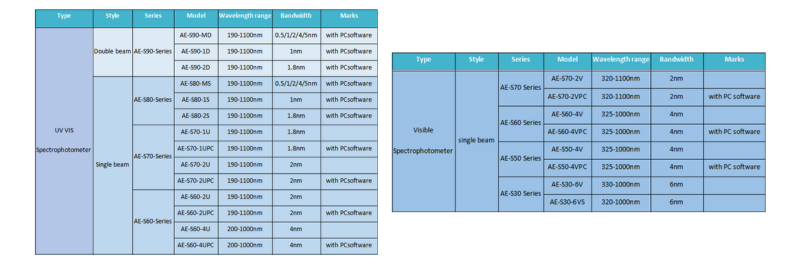
| Type | Style | Series | Model | Wavelength range | Bandwidth | Marks |
| UV VIS Spectrophotometer | Double beam | AE-S90-Series | AE-S90-MD | 190-1100nm | 0.5/1/2/4/5nm | with PCsoftware |
| AE-S90-1D | 190-1100nm | 1nm | with PCsoftware | |||
| AE-S90-2D | 190-1100nm | 1.8nm | with PCsoftware | |||
| Single beam | AE-S80-Series | AE-S80-MS | 190-1100nm | 0.5/1/2/4/5nm | with PCsoftware | |
| AE-S80-1S | 190-1100nm | 1nm | with PCsoftware | |||
| AE-S80-2S | 190-1100nm | 1.8nm | with PCsoftware | |||
| AE-S70-Series | AE-S70-1U | 190-1100nm | 1.8nm | |||
| AE-S70-1UPC | 190-1100nm | 1.8nm | with PCsoftware | |||
| AE-S70-2U | 190-1100nm | 2nm | ||||
| AE-S70-2UPC | 190-1100nm | 2nm | with PCsoftware | |||
| AE-S60-Series | AE-S60-2U | 190-1100nm | 2nm | |||
| AE-S60-2UPC | 190-1100nm | 2nm | with PCsoftware | |||
| AE-S60-4U | 200-1000nm | 4nm | ||||
| AE-S60-4UPC | 200-1000nm | 4nm | with PCsoftware | |||
| Visible Spectrophotometer | single beam | AE-S70 Series | AE-S70-2V | 320-1100nm | 2nm | |
| AE-S70-2VPC | 320-1100nm | 2nm | with PC software | |||
| AE-S60 Series | AE-S60-4V | 325-1000nm | 4nm | |||
| AE-S60-4VPC | 325-1000nm | 4nm | with PC software | |||
| AE-S50 Series | AE-S50-4V | 325-1000nm | 4nm | |||
| AE-S50-4VPC | 325-1000nm | 4nm | with PC software | |||
| AE-S30 Series | AE-S30-6V | 330-1000nm | 6nm | |||
| AE-S30-6VS | 320-1000nm | 6nm |