

info@aelabgroup.com
QR Code 1
QR Code 2

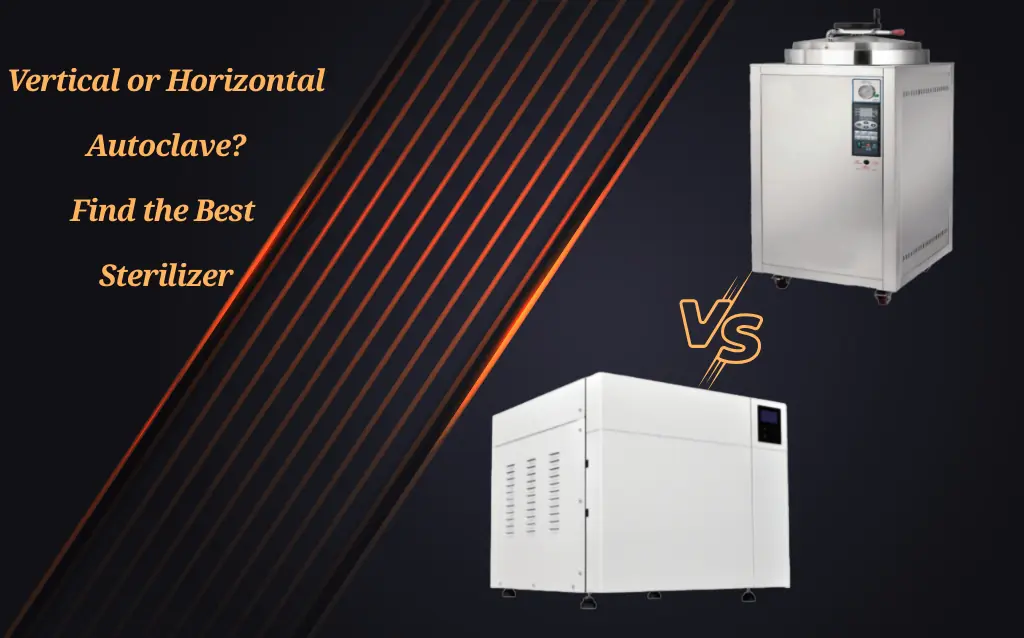
Vertical or Horizontal Autoclave? Find the Best Sterilizer

Vertical or Horizontal Autoclave? Find the Best Sterilizer AELAB

Vertical or Horizontal Autoclave? Find the Best Sterilizer

Introduction : Choosing Between a Vertical or Horizontal Autoclave

Autoclaves are essential tools for maintaining sterility in healthcare, research, and industrial settings. These high-pressure steam sterilizers are used to disinfect surgical instruments, lab media, glassware, and even biohazard waste. Among the various types, vertical (top-loading) and horizontal (front-loading) autoclaves are the most commonly used. Choosing between a vertical or horizontal autoclave depends on your available space, sterilization volume, and workflow demands.

This guide compares vertical and horizontal autoclaves in detail to help you determine the right fit for your facility.

What Is an Autoclave?

An autoclave is a sealed chamber that uses saturated steam at high temperatures (typically 121°C to 134°C) and pressures (15–30 psi) to sterilize equipment and materials. It is one of the most reliable and widely used sterilization methods in labs, hospitals, and industrial environments.

Class B Autoclave AE-C29/C45 Series

Vertical Pressure Steam Sterilizer AE-V100KBS Series

Vertical Autoclaves: Compact and Cost-Efficient

Design & Functionality

Vertical autoclaves, also known as upright autoclaves, feature a top-loading cylindrical chamber. They are ideal for smaller labs, clinics, and research units that need a compact solution for moderate sterilization loads.

How They Work:

  • Loading: Items are placed into the chamber from the top.

  • Steam Generation: Water is heated inside the unit to produce steam.

  • Pressurization & Sterilization: Once the proper temperature and pressure are reached, the sterilization cycle begins.

  • Depressurization & Drying: Some units offer partial or manual drying.

  • Unloading: After cooling, items are manually removed from the top.
Vertical or Horizontal Autoclave? Find the Best Sterilizer AELAB


Advantages

  • Space-saving design: Fits easily into small labs and tight spaces.

  • Budget-friendly: Lower upfront and maintenance costs.

  • Energy-efficient: Consumes less power and water.

  • Simple operation: Minimal training required.

  • Ideal for liquids and media: Great for sterilizing culture media, glassware, and upright items.

Limitations

  • Smaller capacity: Not suitable for bulk sterilization.

  • Ergonomic challenges: Top-loading can be inconvenient or physically demanding.

  • Limited drying features: Often requires external drying for wrapped instruments.

  • Manual processes: Lacks advanced automation features.

Horizontal Autoclaves: High Capacity and Automation-Ready

Design & Functionality

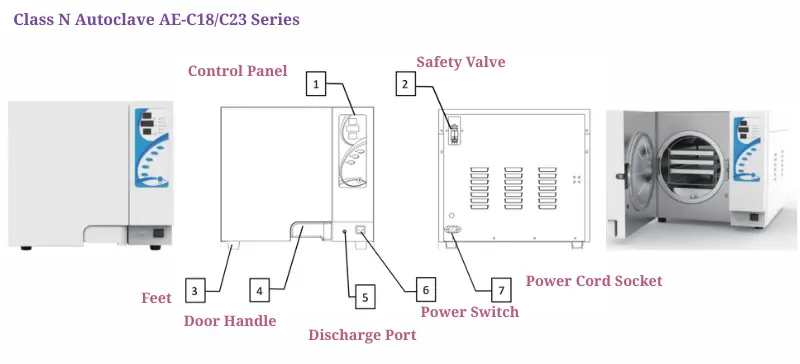
Horizontal autoclaves have a front-loading rectangular chamber, making them ideal for high-throughput facilities such as hospitals, pharmaceutical companies, and industrial labs. They offer advanced controls, ergonomic loading, and efficient drying systems.

How They Work:

  • Loading: Items are placed on trays or carts and inserted from the front.

  • Air Removal: Uses vacuum-assisted systems or gravity displacement.

  • Steam Injection & Sterilization: Chamber is filled with saturated steam to achieve sterilization.

  • Drying & Cooling: Integrated systems remove moisture and cool items.

  • Unloading: Items are easily removed using trays or trolleys.
Vertical or Horizontal Autoclave? Find the Best Sterilizer AELAB


Advantages

  • Large capacity: Suitable for sterilizing large batches, wrapped instruments, and textile loads.

  • Ergonomic design: Front-loading reduces physical strain.

  • Advanced air removal: Ensures better steam penetration in complex or porous items.

  • Full automation: Programmable cycles, remote monitoring, and compliance with GMP standards.

  • High throughput: Designed for demanding environments.

Limitations

  • Higher cost: Greater initial investment and maintenance requirements.

  • Larger footprint: Requires more space and infrastructure.

  • Installation complexity: Needs dedicated plumbing, power, and steam connections.

  • Less efficient for small loads: Not ideal for low-frequency sterilization.

Side-by-Side Comparison

FeatureVertical AutoclaveHorizontal Autoclave
Loading OrientationTop-loadingFront-loading
CapacitySmall to mediumMedium to large
FootprintCompactRequires more space
ErgonomicsManual loadingTray or cart-based loading
Control SystemBasic/manualAdvanced/programmable
Drying MethodManual or partialIntegrated/automatic
Air RemovalGravity displacementVacuum-assisted
CostLowerHigher
AutomationLimitedAutomation-ready
Best ForLabs, clinics, educationHospitals, pharma, biotech

How to Choose the Right Vertical or Horizontal Autoclave

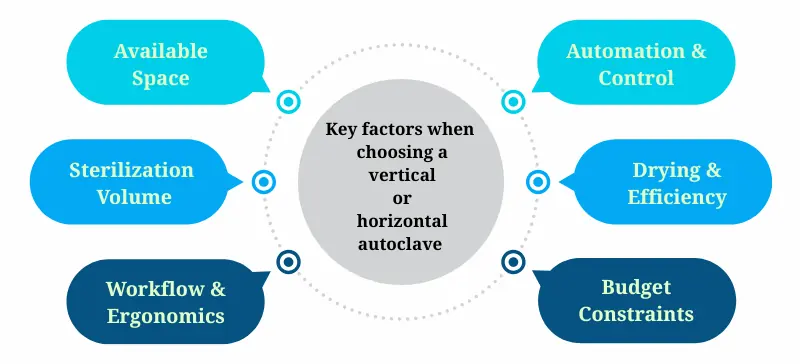
When choosing a vertical or horizontal autoclave, consider these key factors:

1. Available Space

  • Vertical autoclaves are compact and suitable for limited-space environments.

  • Horizontal autoclaves require larger dedicated space and utility connections.

2. Sterilization Volume

  • Vertical: Best for small, infrequent loads.

  • Horizontal: Designed for continuous, large-scale use.

3. Workflow & Ergonomics

  • Vertical loading can be tiring over time.

  • Horizontal loading is easier, especially with carts or trays.
Vertical or Horizontal Autoclave? Find the Best Sterilizer AELAB

4. Automation & Control

  • Horizontal autoclaves come with precise control systems suitable for regulatory compliance (GMP, ISO).

  • Vertical models usually offer basic control interfaces.

5. Drying & Efficiency

  • Horizontal models offer better drying and more efficient steam penetration.

  • Vertical autoclaves may require post-cycle manual drying.

6. Budget Constraints

  • Vertical autoclaves are more affordable and cost-effective for smaller labs.

  • Horizontal models justify their higher cost in high-demand environments with greater ROI.
Conclusion

Both vertical and horizontal autoclaves are effective, but their suitability depends on your specific needs. Vertical autoclaves are ideal for compact labs or educational institutions that require basic sterilization of liquids or small instruments. In contrast, horizontal autoclaves provide the capacity, efficiency, and automation required in hospitals, biotech companies, and production-scale facilities.

Still unsure whether a vertical or horizontal autoclave is best for your facility?

Contact our sterilization experts today for a personalized consultation and quote.

Frequently Asked Questions

1What is an autoclave, and how does it sterilize materials?
An autoclave is a sealed chamber that sterilizes equipment using high-pressure saturated steam at 121–134°C. It eliminates bacteria, viruses, and spores by penetrating materials and breaking down microbial proteins.
2What are the main advantages of a vertical autoclave?
Vertical autoclaves are compact, energy-efficient, and cost-effective. They're well-suited for small labs and ideal for sterilizing liquids, glassware, and upright items.
3Why might someone choose a horizontal autoclave over a vertical one?
Horizontal autoclaves offer larger capacity, advanced automation, ergonomic loading, and better drying systems, making them ideal for hospitals, pharmaceutical facilities, and high-volume workflows.
4What are some limitations of vertical autoclaves?
They have smaller capacities, limited automation, and often lack built-in drying, making them less ideal for frequent or large-scale sterilization needs.
5How does loading differ between vertical and horizontal autoclaves?
Vertical models are top-loading, which can be physically demanding. Horizontal units load from the front, often using trays or carts, which is easier and more ergonomic.
6What factors should be considered when choosing between the two types?
Key considerations include available space, sterilization volume, workflow ergonomics, automation needs, drying efficiency, and budget.
Share:

Categories

Laboratory and Science Knowledge

Leave a Reply

Leave a Reply

Your email address will not be published. Required fields are marked *