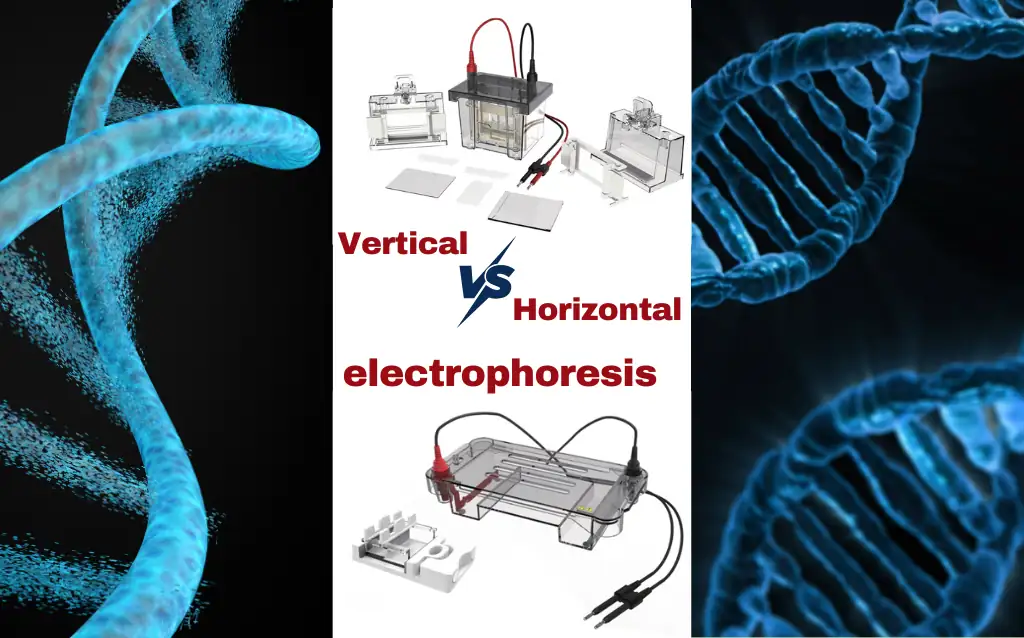
Introduction : Vertical vs Horizontal Electrophoresis
biotechnology, forensics, and clinical research — and understanding Vertical vs Horizontal electrophoresis is crucial for choosing the right setup. Whether you’re verifying PCR results, evaluating protein purity, or preparing samples for downstream applications, the accuracy of your data depends directly on selecting the proper electrophoresis system.
Although both horizontal and vertical gel electrophoresis are based on the same scientific principles, they differ significantly in gel type, resolution, workflow complexity, and overall application.
This comprehensive guide combines expert insights, technical comparisons, and practical laboratory considerations to help you confidently select the ideal system for DNA, RNA, or protein separation.
What Is Gel Electrophoresis?
Gel electrophoresis is a core analytical technique used to separate biomolecules based on size, electrical charge, and molecular structure. When an electric field is applied, negatively charged molecules migrate through a porous gel matrix, with smaller fragments traveling faster and forming clear, distinguishable bands for analysis.
In modern laboratories, two primary electrophoresis formats are used depending on the biomolecule of interest:
Quick Comparison: Vertical vs Horizontal electrophoresis
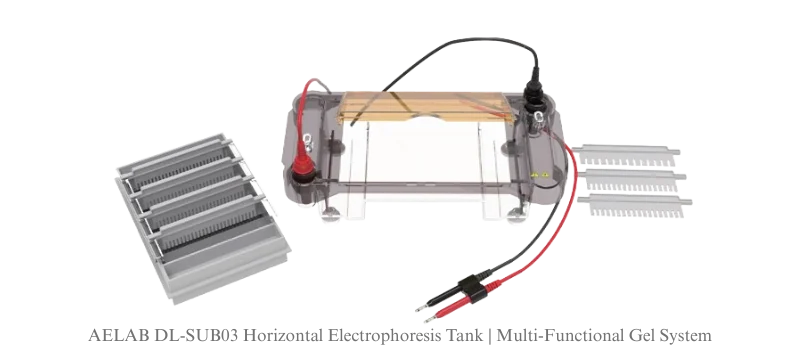
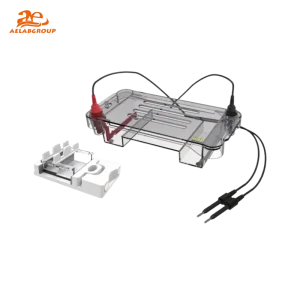
Horizontal Gel Electrophoresis (Agarose): Best for DNA & RNA
| Feature | Horizontal Gel (Agarose) | Vertical Gel (Polyacrylamide / PAGE) |
|---|
| Best For | DNA, RNA | Proteins |
| Gel Type | Agarose | Polyacrylamide |
| Resolution | Moderate | Very high |
| Difficulty Level | Beginner-friendly | Intermediate/Advanced |
| Buffer System | Continuous | Discontinuous (stacking + resolving gels) |
| Setup Time | Fast | More involved |
| Safety | Non-toxic | Acrylamide toxic before polymerization |
| Typical Uses | PCR checks, plasmid digestion, RNA integrity | SDS-PAGE, Western blotting, isoenzyme analysis |
How It Works
Agarose gel is cast in a tray and submerged horizontally in a buffer-filled tank. Electric current moves nucleic acids from cathode to anode through large gel pores.
Advantages
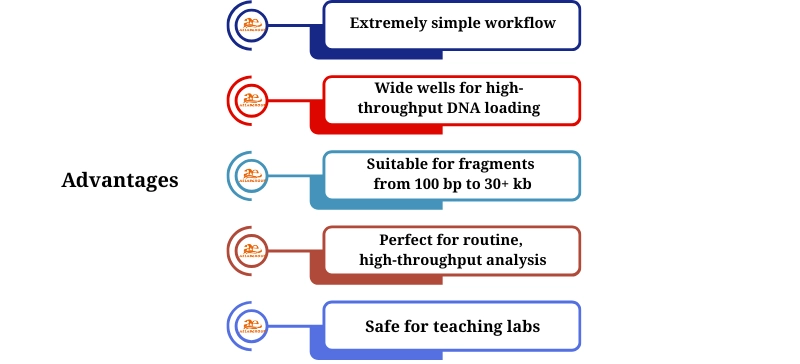
✔ Extremely simple workflow
✔ Wide wells – ideal for loading many DNA samples
✔ Suitable for fragments from 100 bp to 30+ kb
✔ Perfect for routine, high-throughput analysis
✔ Safe for teaching labs
Limitations
✖ Lower resolution—cannot resolve small molecular weight differences
✖ Not compatible with acrylamide
✖ Gels can tear if moved improperly
When to Choose Horizontal Systems
Choose this system if your lab focuses on:
PCR product verification
Restriction enzyme digestion analysis
Plasmid or genomic DNA checks
RNA quality assessment
Educational demonstrations
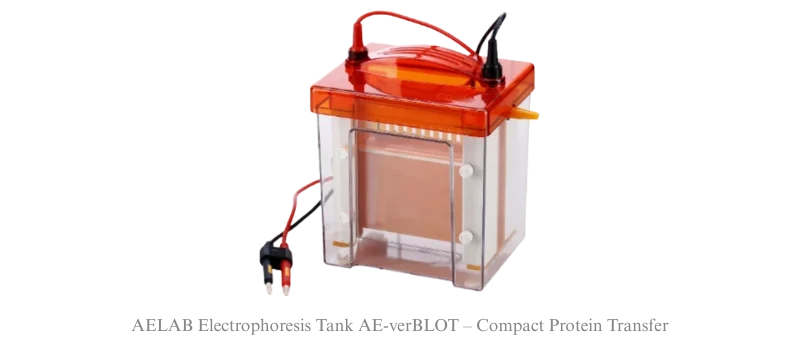
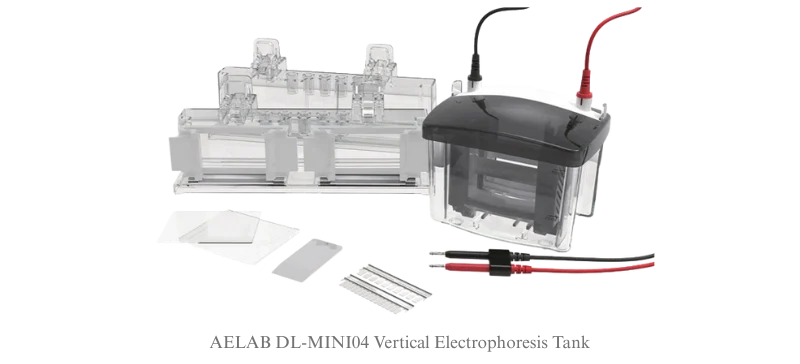
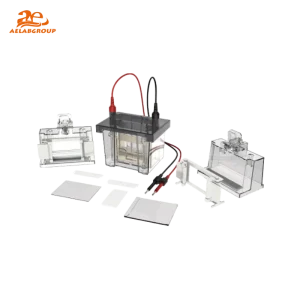
Vertical Gel Electrophoresis (PAGE): Best for High-Resolution Protein Analysis
How It Works
Polyacrylamide gel is formed between two glass plates. The gel sits vertically between an upper and lower buffer chamber, with a controlled voltage gradient running top-to-bottom.
A discontinuous buffer system compresses proteins into tight “stacked” bands before entering the resolving gel—dramatically increasing resolution.
Advantages
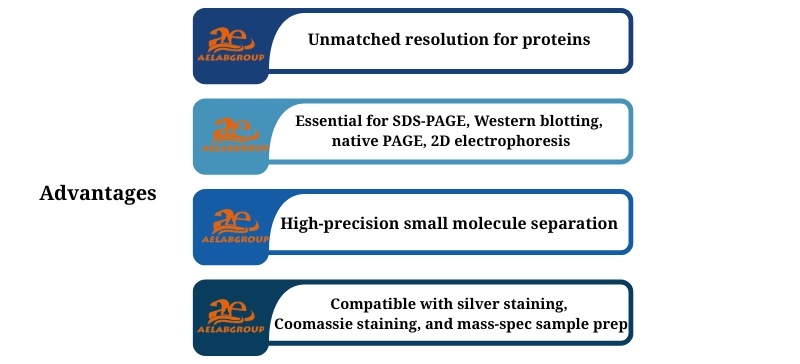
✔ Unmatched resolution for proteins
✔ Essential for SDS-PAGE, Western blotting, native PAGE, 2D electrophoresis
✔ Highly precise separation of small molecular weight differences
✔ Compatible with silver staining, Coomassie staining, and mass-spec sample prep
Limitations
✖ Requires careful setup (spacers, plates, leak-free casting)
✖ Acrylamide toxicity requires PPE and ventilation
✖ More expensive consumables compared to agarose
When to Choose Vertical Systems
Ideal for:
Protein purity analysis
Recombinant protein evaluation
Post-translational modification studies
Clinical protein diagnostics
High-resolution molecular separation
In-Depth Comparison of Vertical vs Horizontal Electrophoresis: Which System Fits Your Workflow?
1. Resolution
2. Ease of Use
3. Cost Considerations
Horizontal system → Low setup cost, inexpensive gels
Vertical system → Higher equipment cost, pricier consumables but lower buffer usage
4. Safety
5. Sample Type
DNA/RNA → Horizontal
Proteins → Vertical
AELAB DL-SUB01 Horizontal Electrophoresis Tank for DNA/RNA Separation
Conclusion: Vertical vs Horizontal Electrophoresis
Choosing the right system in Vertical vs Horizontal electrophoresis is more than a technical choice—it directly affects the accuracy and reliability of your scientific results.
If your lab handles nucleic acids, go horizontal.
If your work involves proteins, vertical PAGE delivers unmatched clarity and precision.
Both systems complement each other, and many modern laboratories use both to support diverse research needs.
👉 Ready to choose the right electrophoresis system for your lab? Explore AELAB’s range of vertical and horizontal electrophoresis tanks for precise DNA, RNA, and protein analysis. Contact us today for expert advice and the best solutions tailored to your needs .