

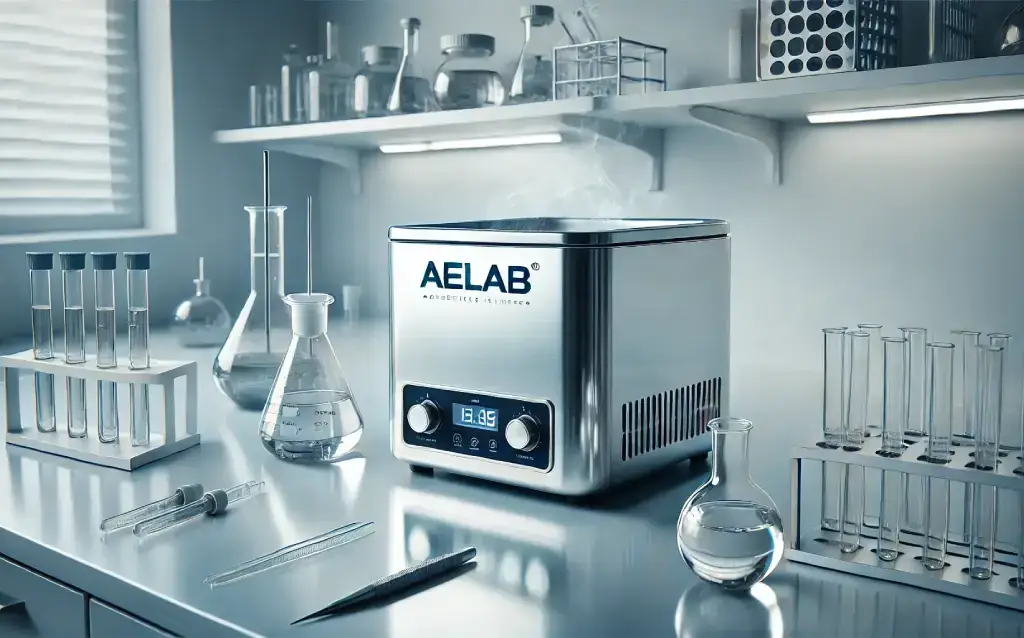
A water bath is a versatile laboratory device used for various applications, including sample incubation, chemical reactions, thawing, and warming reagents. It provides uniform heating and precise temperature control, making it ideal for environments where open flames aren’t suitable, especially with flammable materials. Advanced models, like AELAB water baths, feature digital temperature controls, over-temperature protection, and durable construction for reliability. They are commonly used alongside devices like incubators, micropipettes, and centrifuges to support both routine and specialized experiments in scientific research and industrial processes.
Everything About Water Bath: Definition, Principle, Parts,Features, Types, and Procedure, etc.
Water baths are essential laboratory equipment used in various settings, from educational institutions to clinical and microbiology labs. They maintain samples at a constant temperature using a heating unit and control interface. The working principle involves a sensor converting water temperature into resistance to control the heating power. Water baths are used for warming reagents, thawing samples, and conducting tests like bacteriological investigations.
Water Bath Applications: What Are Water Baths Used For?
Different types of water baths, such as circulating and shaking models, serve various applications, ensuring constant temperatures or sample agitation. They typically heat samples between 5°C and 99°C, while higher temperatures require alternatives like oil baths. Key components include a heating unit, water chamber, and control interface.The working principle of a water bath involves a sensor converting water temperature into resistance, which is then amplified to regulate the heating element, keeping the water at a constant temperature. This precise control is ideal for high-temperature heating without open flames.
Different Varieties of Water Baths in Laboratories:
1. Shaking Water Bath:
A water bath equipped with a shaking mechanism to agitate samples while maintaining a constant temperature. Used in microbiology, material analysis, and molecular biology for enhanced mixing and temperature control.
2. Circulating Water Bath:
This type features a pump to circulate water for uniform temperature distribution. Ideal for large sample volumes, especially in enzymatic and bacterial incubations.
3. Non-Circulating Water Bath:
Relies on natural convection, less precise in temperature control but suitable for smaller samples or simpler experiments.
4. Polycarbonate Water Bath:
Lightweight and chemically resistant water baths made from durable polycarbonate plastic, commonly used for incubating samples requiring chemical exposure.
5. Immersion Water Bath:
Simpler design where samples are immersed in water for gentle heating. Used for small sample volumes and is cost-effective.
laboratory water bath uses:
- Pharmaceutical and Biotechnology: Incubating enzyme reactions, bacterial culture growth, and thawing samples.
- Chemical: Controlling reaction temperatures and dissolving substances.
- Food and Beverage: Testing product stability and quality control.
- Clinical and Medical: DNA amplification, blood analysis, and diagnostics.
- Research and Academia: Experiments involving biological samples and chemical reactions.
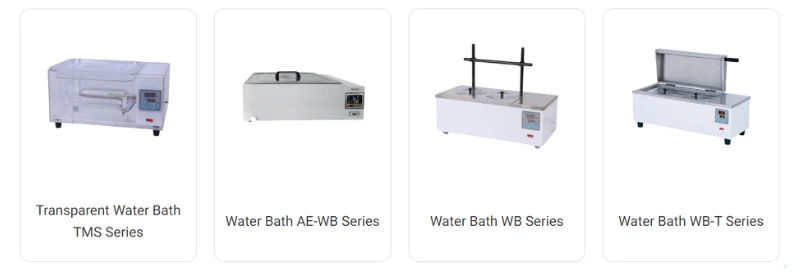
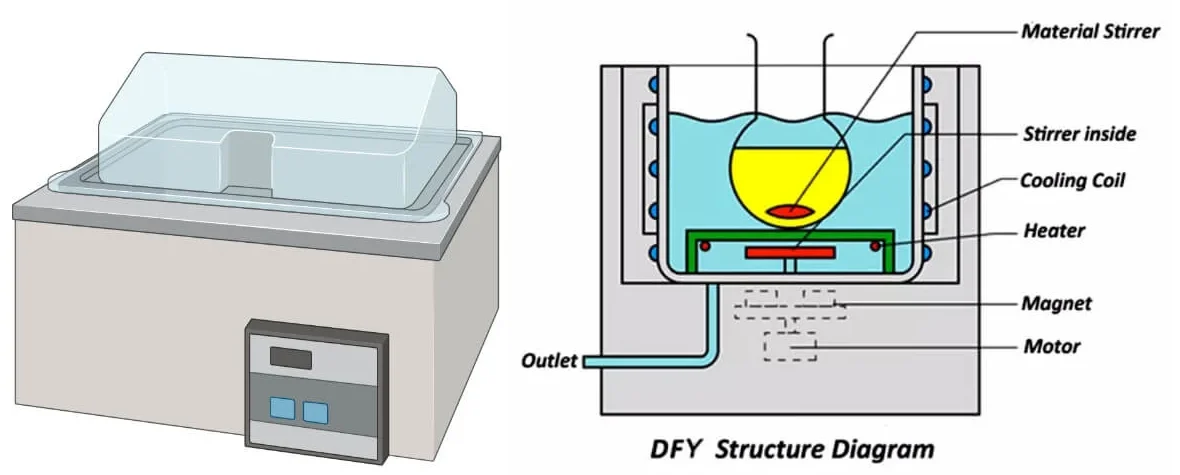
Key Parts of a Water Bath
- Container: Holds the samples in water, usually made of insulated metal.
- Lid: Prevents evaporation and maintains temperature.
- Heater: Generates heat, controlled by a sensor.
- Thermometer: Monitors the temperature.
- Thermostat: Regulates temperature to stay constant.
- Stirrer: Circulates water for even temperature.
- Outlet: For draining water.
- Indicator Light: Shows when heating is active.
- Interface: Digital or analog controls for temperature.
Operating Procedure of a Laboratory Water Bath
- Preparation: Ensure the equipment is clean, calibrated, and free from contaminants.
- Power On: Plug in the power source and switch on the water bath.
- Water Level: Ensure enough water covers the heating element or reaches the desired immersion depth.
- Temperature Setting: Press the SET key and use the controls to set the desired temperature.
- Temperature Check: Use a calibrated thermometer to verify the water temperature.
- Operation: The temperature sensor maintains the set temperature during use.
- Power Off: After use, turn off the power source.
- Drying: Thoroughly dry the interior and replace the lid to prevent contamination and evaporation.
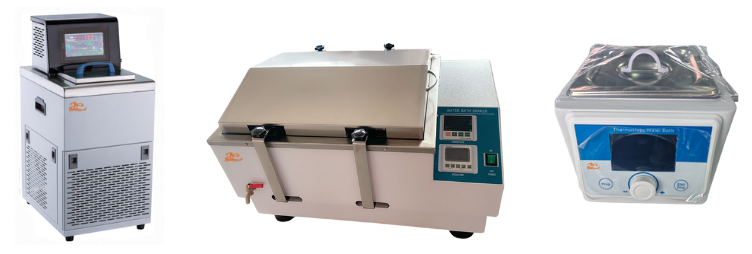
Safety Precautions and Maintenance of Water Baths
- Electrical Safety: Before use, ensure the water bath is electrically safe by checking connectors and switches. Keep your hands dry when operating the controls to avoid electrical hazards.
- Water Levels: Always maintain the correct water level, especially at higher temperatures. Use distilled water to prevent salt buildup, which can damage the heater.
- Preventing Contamination: Use appropriate algicides or fungicides when running the bath for extended periods. After use, clean thoroughly, especially if harmful substances were incubated.
- Regular Maintenance: Drain the water after each use and clean the bath to prevent corrosion. Only use mild detergents and avoid corrosive cleaners. Never immerse the unit in water.
- Unit Care: Always turn off the water bath daily to avoid overheating. Ensure proper grounding of the unit to prevent electrical shocks.