

CO2 Incubators: Essential Functions for Accurate Cell Culture and Research Applications
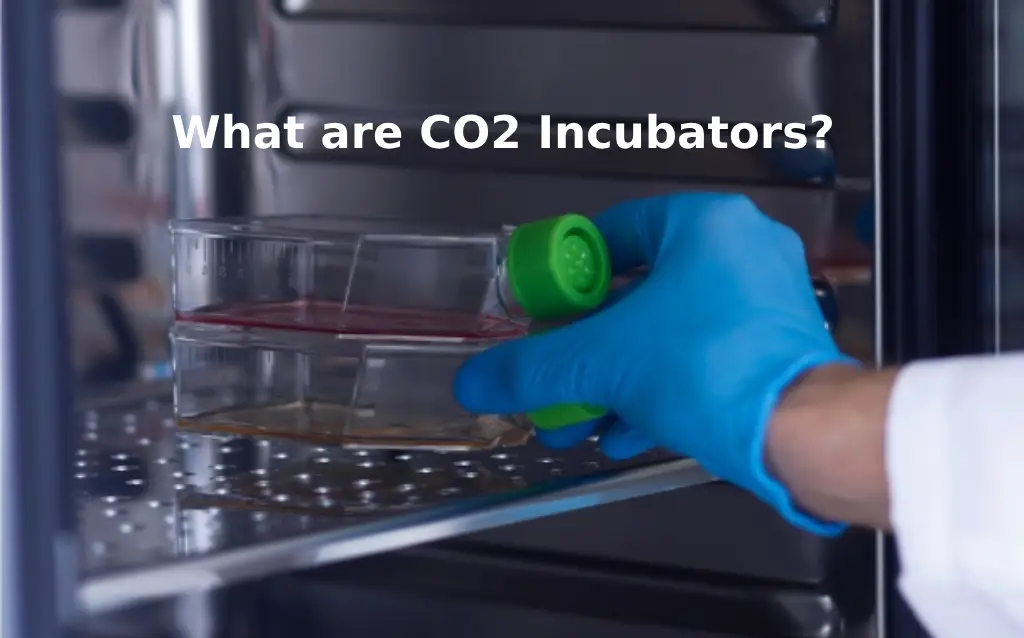
A CO2 incubator serves as a crucial tool in laboratory environments, particularly for cell culture, microbiology, and various research applications. Scientists design these incubators to provide a sterile, controlled environment that mimics the conditions of the human body, which is vital for the growth and maintenance of cells, tissues, and microorganisms. Researchers carefully regulate key parameters such as temperature, humidity, and CO2 concentration to ensure they maintain optimal conditions for cell growth and other scientific processes.
Key Features of a CO2 Incubator
A CO2 incubator maintains a sterile environment by regulating temperature, CO2 levels, and humidity. Typical features include:
Temperature Control
The incubator typically maintains a temperature of around 37°C (98.6°F), which is optimal for most mammalian cell cultures.
CO2 Control
The CO2 concentration is usually maintained at 5-6% to replicate the physiological conditions required for cell growth.
Humidity Control
A humidity level of approximately 95% is maintained to prevent evaporation of culture media and ensure the health of the cell cultures.
Sterilization
CO2 incubators often come equipped with sterilization features such as high-temperature sterilization cycles (hot-air sterilization) or UV light to eliminate contamination risks.
Advanced Sensors
CO2 incubators are equipped with infrared sensors for precise CO2 concentration monitoring, ensuring stable growth conditions.
User-friendly Interface
Many models feature easy-to-use digital interfaces that display real-time data for temperature, CO2, and humidity, often with logging capabilities for research documentation.

Figure 1: Components/Parts of a CO2 Incubator
This diagram illustrates the key components of a CO2 incubator, including the thermometer, temperature regulator, air heating fan, power indicator switch, and door mechanisms. These parts work together to maintain a stable, controlled environment essential for cell growth and research processes.
Applications of CO2 Incubators in Scientific Research
CO2 incubators are indispensable in various fields of life sciences, medicine, and diagnostics. Below are some of the primary applications:
Cell Culture
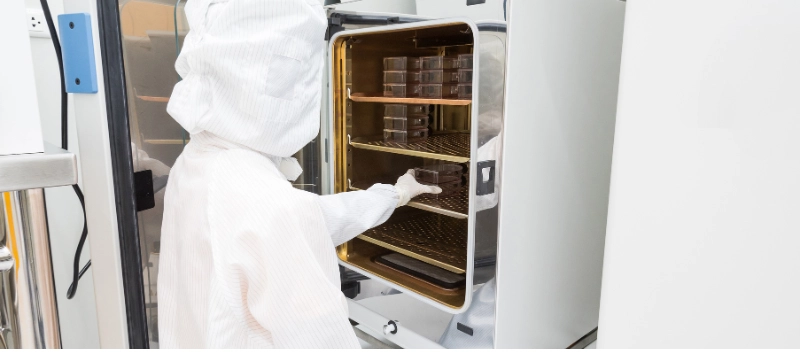
CO2 incubators are essential in cell culture research. They provide the ideal environment for growing and maintaining both adherent and suspension cell lines. The incubator’s precise control over temperature, CO2 levels, and humidity ensures that cells grow under optimal conditions for research, drug development, and vaccine production.
Tissue Engineering
In tissue engineering, CO2 incubators play a crucial role in supporting the growth of cells that scientists later use to regenerate or replace damaged tissue. Moreover, researchers rely on these incubators to create 3D tissue cultures, which, in turn, allows them to develop products such as artificial skin, cartilage, or bone.
In Vitro Fertilization (IVF)
CO2 incubators are crucial in IVF, where the fertilization of human or animal oocytes (eggs) occurs in controlled conditions. After fertilization, the embryos are kept in the incubator to grow and develop until they can be implanted in the uterus. These incubators maintain the precise temperature, CO2, and humidity conditions necessary for embryo development.
Diagnostics
CO2 incubators play a crucial role in diagnostic applications, such as pathogen research. In these settings, researchers expose cell cultures to viruses or other pathogens to test their resistance or susceptibility. The incubators provide the stable conditions needed to grow these cultures and obtain accurate diagnostic results.
Cancer Research
CO2 incubators are widely used in cancer research. Researchers use these incubators to grow cancer cell lines, test new drugs, or develop advanced 3D cell culture models that simulate tumor behavior. These incubators create both normoxic (normal oxygen levels) and hypoxic (low oxygen levels) environments to mimic various tumor conditions.
Learn more: Density Measurement Instruments in Laboratories
Technology Behind CO2 Incubators
CO2 incubators are designed to create and maintain a stable environment that is essential for cell and tissue growth. The advanced technologies that go into a CO2 incubator include:
Infrared CO2 Sensors
These sensors provide accurate CO2 measurements, which are essential for maintaining the correct level of CO2 inside the incubator.
Direct Heat or Water Jacket Systems
CO2 incubators use one of two methods to maintain temperature stability: direct heat or a water-jacketed system. Both systems ensure that the temperature remains consistent throughout the incubator.
Humidity Control
Incubators control humidity levels using a water reservoir, and some models include a humidification system. This system adds moisture to the air to maintain the ideal conditions required for cell growth and other biological processes.
Sterilization Systems
Automatic sterilization cycles, including hot-air sterilization and UV light exposure, help maintain a contamination-free environment.
Validation and Calibration of CO2 Incubators
Industries such as pharmaceuticals and biotechnology are required to adhere to strict regulatory standards when using CO2 incubators. Validation ensures that operators can verify the incubator maintains the required parameters—such as temperature, CO2 concentration, and humidity—within the specified limits.
Furthermore, technicians must regularly calibrate the CO2 and temperature sensors. This calibration ensures the incubator provides accurate and reliable readings, which is essential for maintaining consistent and optimal conditions for cell growth and biological processes.
- Good Laboratory Practice (GLP): Under GLP guidelines, operators must test and calibrate CO2 incubators at specific intervals. Researchers often use data loggers to record temperature, CO2, and humidity levels for validation purposes.Good Manufacturing Practice (GMP): GMP regulations require that operators maintain CO2 incubators used in pharmaceutical production or clinical settings according to specific standards to ensure product safety and consistency.
Applications in Biotechnology and Bioengineering
In biotechnology, CO2 incubators are critical for research involving biological products and systems. They provide the necessary conditions for experiments that require the growth of cells, tissues, and microorganisms. From basic research to advanced tissue engineering and drug testing, these incubators support a wide range of applications, including:
Biosensors Development: Scientists use CO2 incubators to grow cells that form the basis of biosensors. These biosensors detect specific substances, such as glucose or other biomolecules, and convert them into electrical or optical signals.
Cell Proliferation Studies: Researchers use CO2 incubators in studies to examine how cells proliferate under controlled conditions.
Researchers study how cells divide and grow to better understand diseases, drug responses, and other biological processes.
Key Features of a CO2 Incubator
| Feature | Description |
|---|---|
| Temperature Control | Typically maintains 37°C, ideal for mammalian cell growth. |
| CO2 Control | CO2 concentration maintained at 5-6%. |
| Humidity Control | Humidity level set to approximately 95% to prevent media evaporation. |
| Sterilization | Features like hot-air sterilization or UV light to eliminate contamination. |
| Infrared CO2 Sensor | Provides accurate CO2 level monitoring. |
| Material | Often constructed with stainless steel for easy cleaning and contamination prevention. |
| Advanced Monitoring | Digital interface for monitoring and logging data (temperature, CO2, humidity). |
CO2 Incubator AE-LAL Series
The CO2 Incubator AE-LAL Series is designed to maintain precise conditions for cell culture by regulating temperature, CO2 concentration, and humidity. Equipped with advanced PID microprocessor technology, this incubator ensures high accuracy in temperature control. It also uses infrared CO2 sensors to maintain accurate CO2 levels and natural evaporation for humidity control. The unit features forced convection for uniform temperature distribution and CO2 balance, along with alarms for overheating, low water levels, and unaspirated conditions. The chamber is made of polished stainless steel, and it includes a UV sterilization system to reduce contamination. Available in AE-WJ3-80 and AE-WJ3-160 models, it is ideal for biological and medical research.
CO2 Incubator
The CO2 Incubator provides a stable, controlled environment for cell culture, ensuring precise regulation of temperature, CO2, and humidity. This incubator is essential for research in medical and biological fields, supporting the growth and viability of cultured cells. With a focus on maintaining consistent environmental conditions, it includes safety features like automatic shutdown in case of abnormal CO2 levels or overheating, and it supports sterilization through UV light. This model ensures reliable performance and reproducibility for experiments requiring controlled conditions.