

Introduction
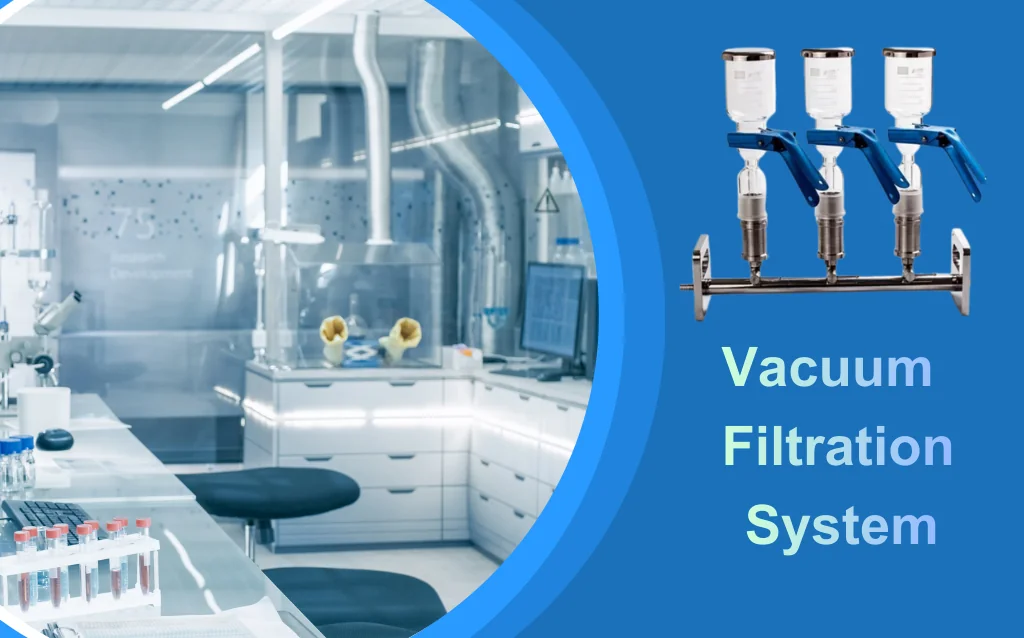
Vacuum filtration is an advanced laboratory technique widely used for rapid and precise separation of solids from liquids. From chemical analysis to pharmaceutical production and environmental testing, vacuum filtration plays a pivotal role in scientific and industrial processes.
Unlike traditional methods that depend solely on gravity, this technique uses pressure differences to greatly speed up the separation process. In this comprehensive guide, we’ll cover how the system operates, its main components, setup instructions, key advantages and disadvantages, and the contexts in which it delivers the best results.
What is a Vacuum Filtration System?
A vacuum filtration system is a lab apparatus designed to separate a solid from a liquid using a vacuum pump to create a pressure gradient. This negative pressure draws the liquid through a filter paper or membrane, leaving the solid residue behind on the filter surface.
This method is especially efficient when dealing with viscous, turbid, or slow-draining solutions—where gravity filtration would be insufficient.
How Does Vacuum Filtration Work?
A vacuum pump removes air from the filtration flask, reducing internal pressure.
This creates a pressure differential across the membrane.
Atmospheric pressure pushes the liquid through the membrane faster.
Solids are trapped on the filter surface; the filtrate collects in the flask below.
This mechanism significantly increases speed and improves filtration quality—making it perfect for high-volume or particulate-heavy samples.
Standard Components of System
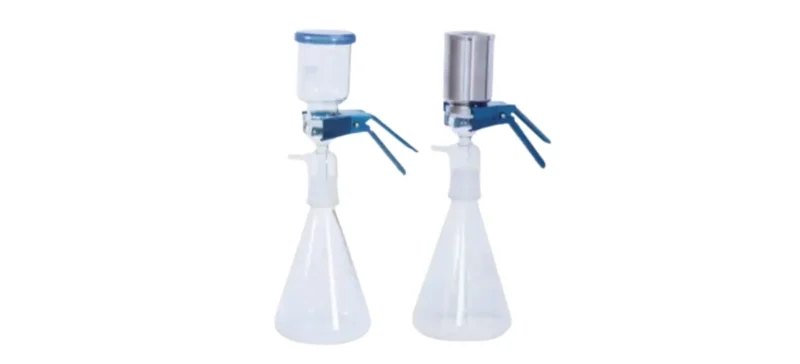
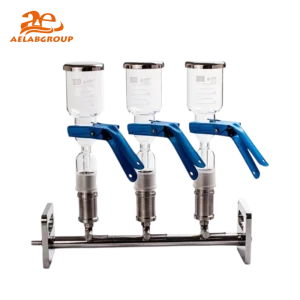
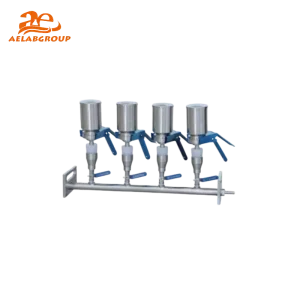
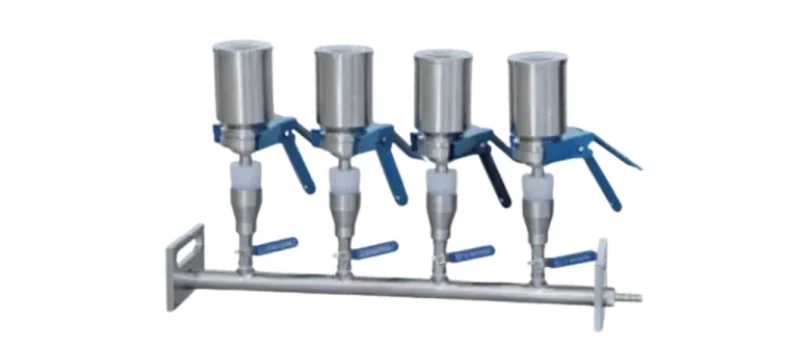
A typical AELAB vacuum filtration setup includes:
Büchner Funnel: Cylindrical with a perforated plate to hold filter paper securely.
Filter Membrane or Paper: Available in multiple pore sizes (commonly 0.45 µm), suitable for different filtration needs.
Vacuum or Filter Flask: A thick-walled flask with a sidearm designed to withstand vacuum pressure.
Vacuum Pump (by AELAB): Diaphragm-based or anti-corrosion pumps for strong, stable suction.
Rubber Tubing & Adapters: Ensures airtight connections between the flask and pump.
Filter Cup / Sample Cup: Holds the solution to be filtered. Some include volume markings and auto-inlet features.
Water-Blocking Protector: A PTFE membrane that prevents liquids from damaging the pump.
Collection or Waste Bottle: Collects the filtrate. May include drainage valves for easier disposal.
Membrane Support Base and Fixed Stand: Stabilizes the membrane and holds the assembly firmly in place.
Each part is essential; missing components can reduce filtration efficiency or cause equipment failure.
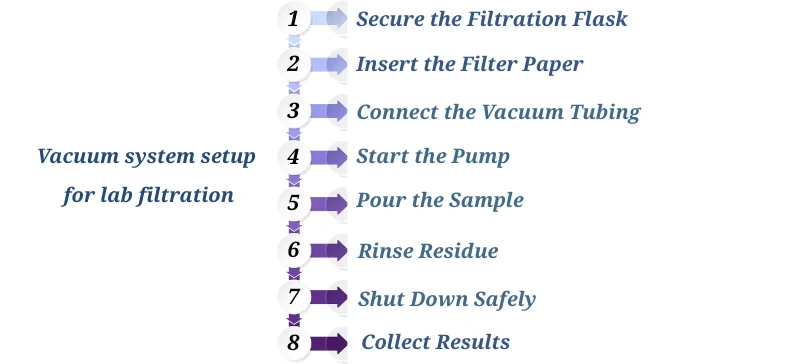
How to Set Up a Vacuum Filtration System (Step-by-Step)
Secure the Filtration Flask: Use a clamp to stabilize it on the lab bench.
Insert the Filter Paper: Wet it slightly to seal it in place.
Connect the Vacuum Tubing: Ensure a tight seal between the flask and pump.
Start the Pump: Confirm suction by testing airflow.
Pour the Sample: Let the vacuum do the work while solids collect on the membrane.
Rinse Residue: Use solvent to remove impurities from solids.
Shut Down Safely: Always turn off the pump before disconnecting tubing.
Collect Results: Retrieve solid or liquid as per your analysis needs.
Vacuum Filtration vs. Gravity Filtration
| Feature | Vacuum Filtration | Gravity Filtration |
|---|---|---|
| Driving Force | Vacuum (pressure difference) | Natural gravity |
| Filtration Speed | Very Fast | Slow |
| Best For | Solid recovery | Liquid recovery |
| Sample Type | Thick, particle-rich | Dilute solutions |
| Equipment | Specialized (pump, flask) | Basic (funnel, filter) |
Key Advantages of Vacuum Filtration
Fast filtration, ideal for time-sensitive lab tasks
Efficient with thick, viscous, or particulate-heavy solutions
Improved purity—minimizes cross-contamination
Dry solids better for storage or further testing
Excellent for large sample volumes
Compatible with a wide variety of filter membranes
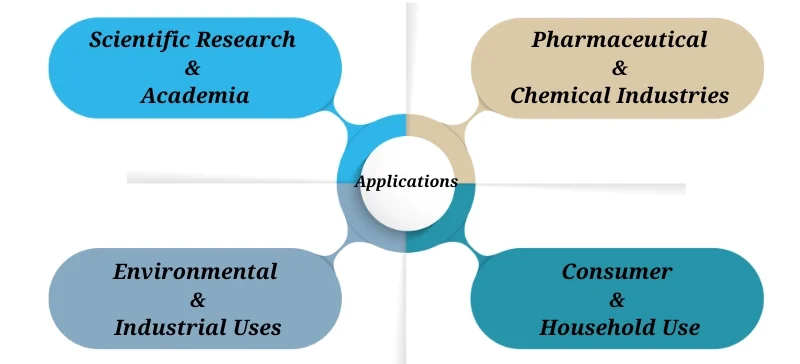
Where Vacuum Filtration Is Used (Applications)
Scientific Research & Academia
Crystallization and reaction product separation
Purification of aqueous and organic solutions
Biomolecule collection (DNA, proteins, enzymes)
Pharmaceutical & Chemical Industries
Final product purification
Quality control testing
Active compound isolation
Environmental & Industrial Uses
Airborne particle monitoring
Water and wastewater analysis
Sludge dewatering
Consumer and Household Use
Coffee makers (pressure-assisted filtration)
Air filtration in vacuum cleaners
Textile dye separation
Expert Tips for Effective Use
- Pre-wet filter paper with the same solvent as the sample for better sealing
- Always use a trap between pump and flask to avoid damage
- Never overfill the funnel—risk of backflow
- Check seals regularly to prevent pressure loss
- Use hydrophobic PTFE membranes for corrosive or aqueous samples
Conclusion
Vacuum filtration is more than just a lab method—it’s a cornerstone of efficient, high-precision separation in both academic and industrial environments. With the right setup and proper technique, this system can dramatically improve your experimental outcomes.
🔍 Ready to upgrade your lab’s filtration game? Explore premium AELAB vacuum filtration systems designed for accuracy, speed, and durability.