

Introduction
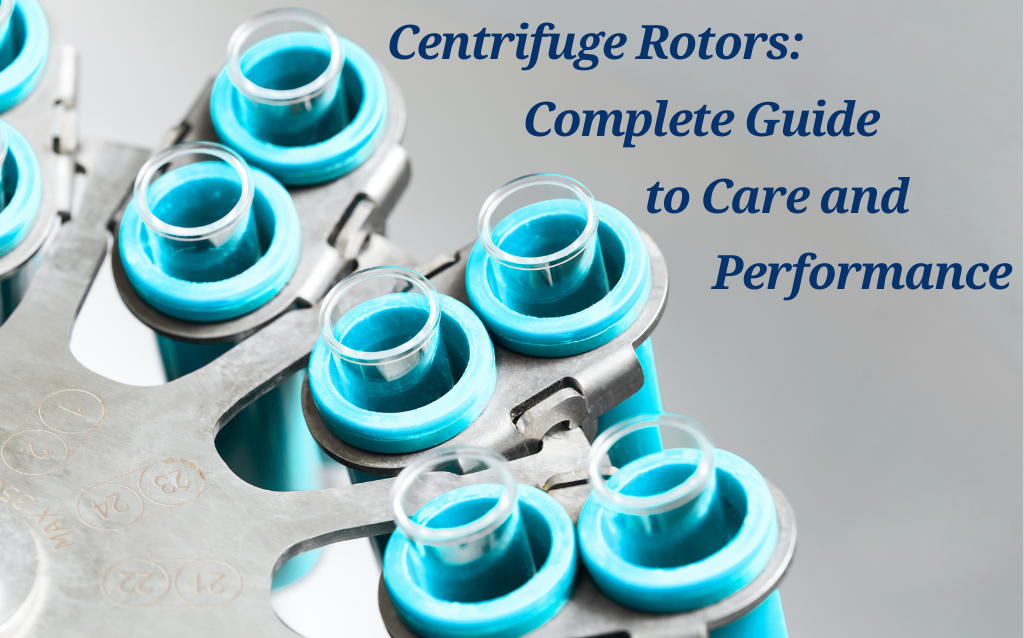
Centrifuge rotors are the core components of any laboratory centrifuge, responsible for applying centrifugal force to separate samples based on density. Proper selection and care of centrifuge rotors are essential for accurate results, safety, and long-term equipment performance. Experience shows that most centrifuge rotor failures can be prevented with routine maintenance and correct usage.
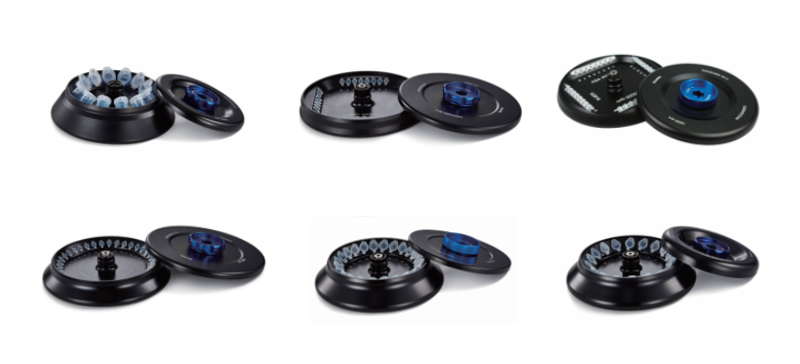
What Are Centrifuge Rotors?
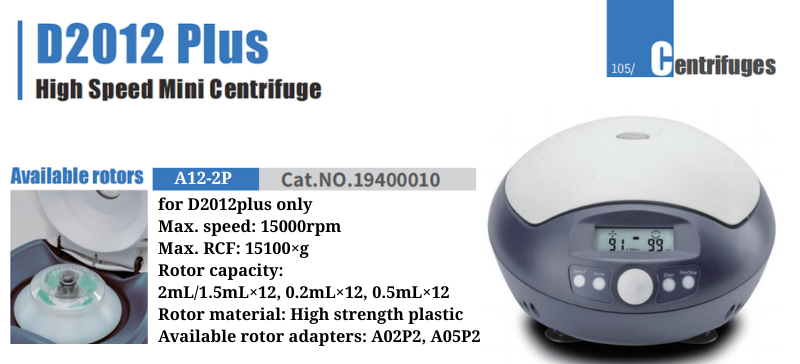
A centrifuge rotor is the rotating part of the centrifuge that holds sample tubes or containers. Centrifuge rotors must withstand extreme speeds — sometimes exceeding 28,000 rpm — and heavy mechanical stress. Materials commonly used include aluminum, titanium, and carbon fiber, which provide strength, durability, and corrosion resistance.
The quality of rotors directly affects separation efficiency, sample integrity, and overall centrifuge safety.
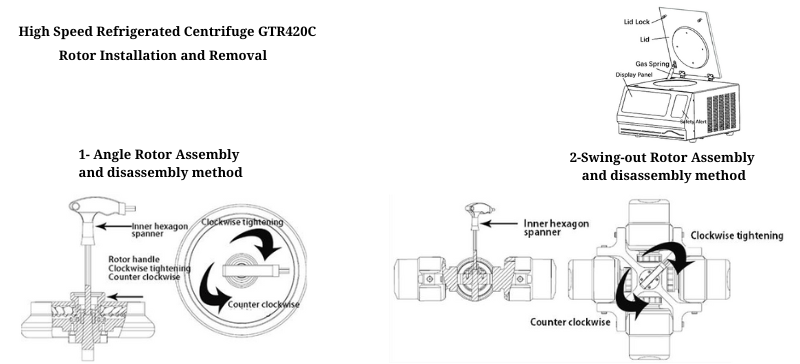
Main Types of Centrifuge Rotors
1. Fixed-Angle Rotors
Fixed-angle centrifuge rotors hold tubes at a consistent angle (typically 25°–45°) and are ideal for pelleting applications.
Uses: Cell pelleting, microfiltration, differential separation
Advantages: Fast, efficient, reliable
Limitation: Limited sample volume
2. Swinging-Bucket Rotors
Swinging-bucket centrifuge rotors allow horizontal movement during rotation, providing uniform separation layers.
Uses: Blood processing, high-volume cell harvesting
Advantages: Even layering, easy sample recovery
Add-ons: Adapters and sealing lids
3. Vertical Rotors
Vertical centrifuge rotors hold tubes parallel to the rotation axis, mainly for ultracentrifugation and isopycnic separation.
Advantages: Low K-factor, rapid separation
Limitations: Specialized applications only
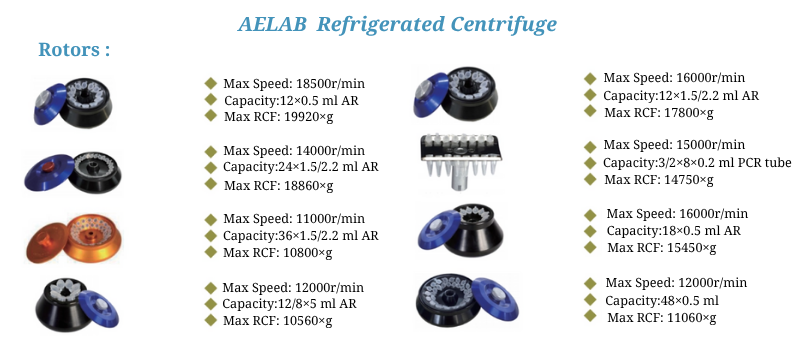
Rotor Design and Engineering
Each centrifuge rotor is designed using Finite Element Analysis (FEA) and vibration modeling to ensure balance and safety. Rotors undergo fatigue testing, spin testing, and destructive testing before certification.
Key design factors:
Material: Aluminum, titanium, carbon fiber
Dynamic balancing: Eliminates vibration and ensures safety
Compliance: UL, CE, ISO certification
Common Centrifuge Rotor Failures and Solutions
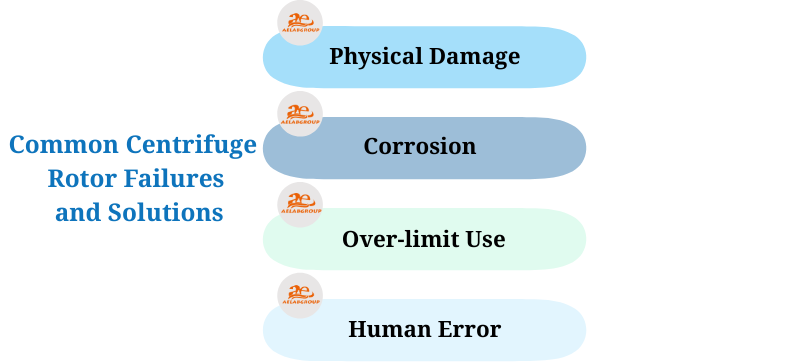
Based on data, centrifuge rotor failures usually fall into four types:
Physical Damage (40%)
Causes: Dropping, mishandling, imbalance
Solution: Stop use immediately and replace with certified rotors
Corrosion (30%)
Causes: Moisture, acids, salts
Solution: Clean after each run; consider titanium or composite centrifuge rotors for corrosive applications
Over-limit Use (20%)
Causes: Exceeding RPM, cycles, or sample density
Solution: Follow manufacturer limits; log usage digitally
Human Error (10%)
Causes: Incorrect installation, imbalance
Solution: Provide training and double-check rotor compatibility
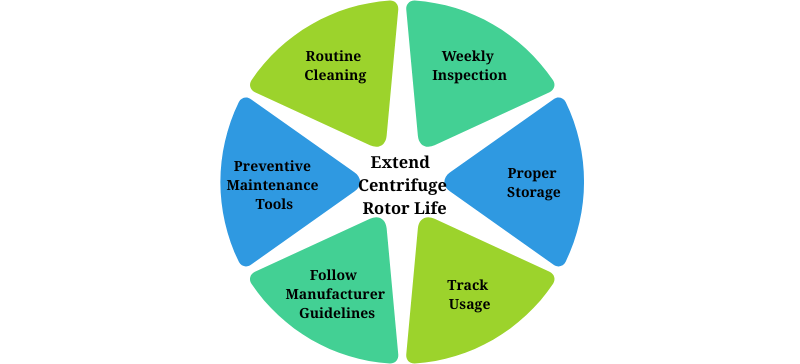
How to Extend Centrifuge Rotor Life
Routine Cleaning: Use mild detergent and soft brushes; avoid metal tools.
Weekly Inspection: Check for corrosion, pitting, or cracks.
Proper Storage: Keep rotors in dry, temperature-stable conditions.
Track Usage: Maintain digital logs for cycles and speed.
Follow Manufacturer Guidelines: Respect RPM, RCF, and lifespan limits.
Preventive Maintenance Tools: Tracking systems help prevent unexpected rotor failures.
Maintenance by Rotor Type
| Rotor Type | Maintenance Focus | Common Risks |
|---|---|---|
| Fixed-Angle | Bore cleaning, crack inspection | Stress fractures |
| Swinging-Bucket | Hinge lubrication, bucket balance | Pivot wear |
| Horizontal | Seal and plate inspection | Lid corrosion |
| 96-Well Plate | Uniform loading, well cleaning | Uneven stress |
Best Practices:
Balance loads within ±0.1 g
Replace worn seals or hinges promptly
Avoid corrosive samples for prolonged periods
Perform monthly calibration
Critical Operational Guidelines
| Rule | Description | Impact |
|---|---|---|
| Balance | Balance opposing tubes precisely | Prevents vibration and fatigue |
| Speed | Never exceed rated RPM or RCF | Avoids cracks or deformation |
| Environment | Operate in clean, dry, controlled conditions | Prevents corrosion and bearing damage |
Following these rules can reduce centrifuge rotors failures by over 90%.
Choosing a Reliable Rotor Supplier
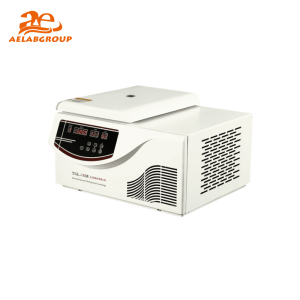
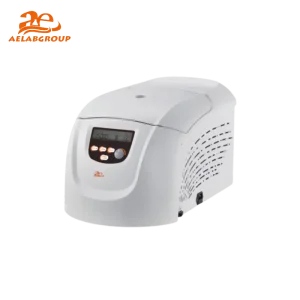
AELAB provides high-grade centrifuge rotors, including aluminum, titanium, and carbon-fiber models. Their rotors feature dynamic balancing, corrosion-resistant coatings, and detailed maintenance guidance to ensure safe and reliable lab performance.
Conclusion
Centrifuge rotors are the central component in every centrifuge system. Proper selection, routine inspection, and careful maintenance are key to preventing failures, extending rotor life, and ensuring safe, accurate laboratory results.
Key Takeaway: Inspect frequently, log usage, follow manufacturer guidelines, and replace rotors proactively to avoid catastrophic failures.
Explore AELAB centrifuges now and choose the perfect rotor for your lab!