

Introduction
In industries and laboratories where accurate analysis of liquid properties is essential, automatic refractometers have become indispensable tools. From food and pharmaceutical quality control to chemical analysis and scientific research, these devices deliver exceptional precision, speed, and reliability.
This guide provides a complete overview of what an automatic refractometer is, how it works, its features, key applications, and step-by-step usage — empowering professionals to make informed decisions and optimize their workflow.
What Is an Automatic Refractometer?
An automatic refractometer is a high-precision optical instrument used to measure the refractive index of liquids, gels, and in some cases, solid substances. The refractive index indicates how much light bends when passing through a substance, revealing information about the composition, concentration, or purity of the sample.
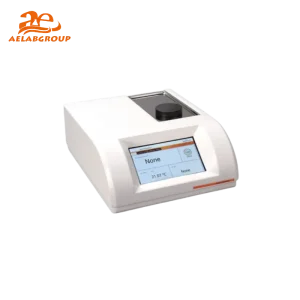
Compared to manual models, automatic refractometers incorporate digital light sources, high-quality prisms, sensitive detectors, and automated computation systems to streamline and improve the accuracy of measurements while reducing operator error.
How It Works
The operating principle is based on refraction — the bending of light as it moves between materials with different optical densities. The process involves:
Sample Placement: A small drop of liquid is applied to the prism surface.
Light Transmission: Light passes through the sample.
Detection: The light’s angle after refraction is captured by a detector.
Calculation: The device calculates the refractive index digitally.
Advanced models feature automatic temperature compensation to correct deviations caused by thermal fluctuations, ensuring high accuracy across varying conditions.
Key Features
Modern laboratory automatic refractometers offer numerous sophisticated features, such as:
Full Automation: Sample loading, measurement, and even cleaning are often automated.
High-Precision Optics: Ensures accurate and repeatable measurements.
Temperature Control: Integrated systems regulate temperature (typically 10°C to 120°C).
Digital Interface: Touchscreens, data logging, and software integration for real-time monitoring and export.
Flexible Measurement Modes: Adaptable to a variety of sample types and conditions.
Applications
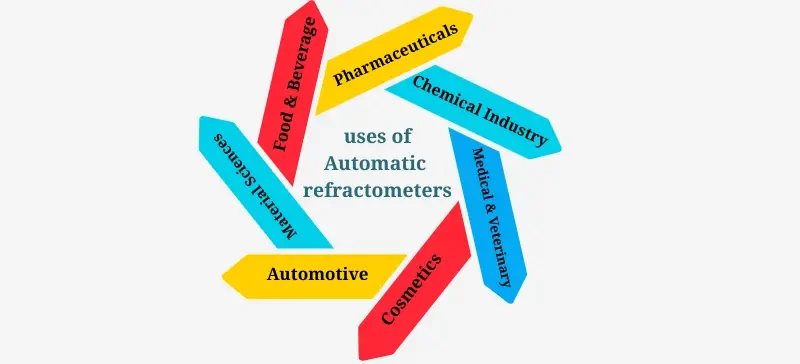
Automatic refractometers are used across a wide range of sectors:
Food & Beverage: Measuring sugar content (°Brix), alcohol concentration, and ingredient ratios.
Pharmaceuticals: Monitoring API concentration and solvent purity.
Chemical Industry: Analyzing solution concentrations and verifying formulations.
Medical & Veterinary: Measuring diagnostic indicators in bodily fluids.
Cosmetics: Ensuring proper formulation of creams, lotions, and serums.
Automotive: Evaluating antifreeze and coolant concentration.
Material Sciences: Assessing optical properties and transparency of plastics.
Advantages & Considerations
✅ High accuracy and repeatability
✅ Fast, automated measurement
✅ Low sample volume required
✅ Non-destructive testing
✅ User-friendly digital operation
❌ Higher upfront cost than manual refractometers
❌ Requires electricity and periodic maintenance
❌ Calibration required at regular intervals
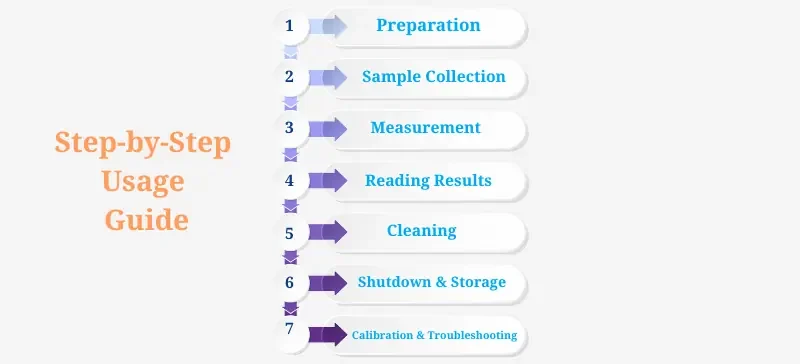
Step-by-Step Usage Guide
Preparation
Power on the device and allow it to stabilize.
Ensure it is clean and calibrated using standard reference materials.
Sample Collection
Prepare a homogeneous sample.
Bring the sample to the device’s operating temperature.
Measurement
Apply a drop of the sample on the prism.
Close the lid gently to ensure full surface contact.
Reading Results
Read the refractive index or concentration value on the digital display.
Export the data if supported via USB or internal memory.
Cleaning
Rinse the prism with distilled water.
Wipe with a lint-free cloth to avoid contamination.
Shutdown & Storage
Power off and store the device in a clean, dry environment.
Calibration & Troubleshooting
Regularly calibrate using certified standards.
Refer to the user manual for support if inconsistencies arise.
Comparison: Automatic vs. Manual Refractometers
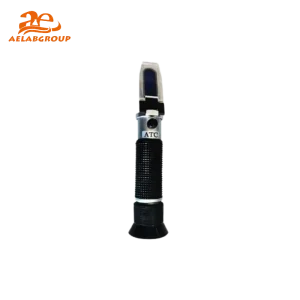
| Feature | Manual Refractometer | Automatic Refractometer |
|---|---|---|
| Accuracy | Moderate | High |
| Temperature Control | Manual or none | Automatic compensation |
| Data Recording | Manual | Digital + Exportable |
| User Dependence | High | Low |
| Speed | Moderate | Fast |
| Cost | Low | Higher |
Conclusion: For high-precision, high-volume environments, automatic refractometers are clearly the superior choice.
Expert Tips for Optimal Use
Always calibrate before critical measurements using certified standards.
Avoid touching the prism directly — use lint-free wipes for cleaning.
Follow the manufacturer’s maintenance schedule.
Operate within the recommended temperature range.
Use software features for efficient data management and traceability.
Conclusion
Automatic laboratory refractometers are powerful, versatile, and essential instruments for professionals who demand precision and efficiency. With their cutting-edge automation, real-time digital interfaces, and robust temperature control, these devices streamline operations across food, pharma, chemical, and research sectors.
For best-in-class performance, consider advanced models like those from AELAB, offering a balance of innovation, accuracy, and ease of use — the next step toward smarter, more reliable lab workflows.