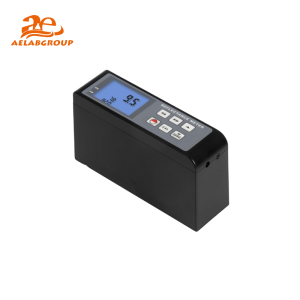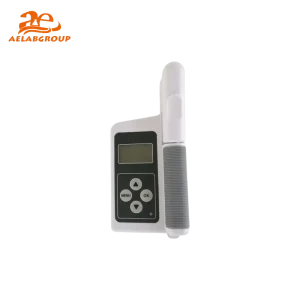
AELAB | Agricultural Testing Instruments | Chlorophyll Meter
The Laboratory Chlorophyll Meter is an essential instrument for measuring plant health through precise chlorophyll analysis. Chlorophyll, the pigment behind photosynthesis, also reflects a plant’s nitrogen status and overall vigor. In agricultural research, this meter provides real-time, non-destructive insight into plant nutrition, stress response, and growth efficiency — making it indispensable for precision agriculture and plant physiology studies.
A Laboratory Chlorophyll Meter is a scientific device that quantifies the relative chlorophyll content in plant leaves using optical sensors. By analyzing light transmission and reflection at specific wavelengths, it helps researchers assess plant health quickly and accurately. Laboratory-grade models provide enhanced calibration, better repeatability, and compatibility with data systems — ideal for controlled research environments.
| Feature | Details |
|---|---|
| Measurement Principle | Optical sensing via red/red-edge and infrared wavelengths |
| Measured Parameter | Relative chlorophyll index (e.g., SPAD value) |
| Accuracy | High precision with calibration and consistent leaf positioning |
| Light Source | LED emitters at multiple wavelengths |
| Data Interface | USB, Wi-Fi, or Bluetooth for data transfer |
| Power Supply | Rechargeable battery or AC adapter |
| Calibration | Species- and experiment-specific calibration support |
| Construction | Compact, portable, lab-grade housing with ergonomic design |
| Feature | Laboratory Chlorophyll Meter | Field Chlorophyll Meter |
|---|---|---|
| Precision | High, suitable for controlled experiments | Moderate, for quick field checks |
| Environment | Indoor labs and greenhouses | Outdoor agricultural fields |
| Data Integration | Advanced digital logging and export | Basic or manual data recording |
| Calibration | Flexible; species- and experiment-specific | Simplified; generalized for field crops |
| Primary Use | Research, modeling, academic studies | Farm management, quick diagnostics |
Q: What does a Laboratory Chlorophyll Meter measure?
A: It measures the relative chlorophyll content in plant leaves, providing an index correlated with plant health and nitrogen status.
Q: How is chlorophyll measurement useful in research?
A: It helps monitor nutrient uptake, detect plant stress, and assess photosynthetic activity without destroying the sample.
Q: Can a Laboratory Chlorophyll Meter measure absolute chlorophyll concentration?
A: Not directly — it provides relative indices that can be calibrated against lab chemical assays for absolute values.
Q: What affects chlorophyll readings?
A: Leaf thickness, species differences, surface moisture, and calibration quality all influence accuracy. Consistent methods minimize variation.
Q: How is a lab-grade chlorophyll meter different from a field model?
A: Lab versions offer higher precision, data connectivity, and calibration flexibility, making them suitable for controlled experiments rather than rapid field scouting.
Looking for specific lab equipment? Fill out the form below, and our team will get back to you with detailed information and a personalized quote.