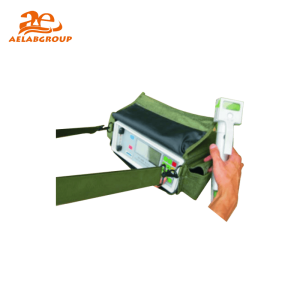
AELAB | Agricultural Testing Instruments | Plant Transpiration Rate Meter
A Plant Transpiration Rate Meter provides accurate, real-time, and non-destructive measurements of water loss from leaves. It helps growers and researchers optimize irrigation, monitor stress, and improve crop performance across field and lab settings.
A Plant Transpiration Rate Meter is an instrument that quantifies the rate at which plants lose water through transpiration. By monitoring water vapor release (and related gas-exchange signals), it reveals how effectively a plant regulates water and nutrients, supports temperature control, and responds to environmental conditions—informing irrigation scheduling, stress diagnosis, and yield optimization.
| Feature | Details |
|---|---|
| Measurement Methods | Gravimetric (mass loss), IRGA (H₂O/CO₂ differentials), Porometer (stomatal conductance) |
| Core Parameters | Transpiration rate, stomatal conductance, leaf temperature, ambient RH/temperature, PAR (optional) |
| Accuracy & Sensitivity | High sensitivity to small humidity/temperature changes; consistent readings under variable conditions |
| Chambers & Ranges | Multiple chamber sizes for diverse leaf morphologies; broad measurement range for different species |
| Data Logging & Integration | Onboard logging with USB/SD/Bluetooth; optional cloud/LIMS connectivity for long-term studies |
| Portability & Power | Compact, field-ready designs; rechargeable battery or AC power |
| User Interface | Intuitive calibration workflow; touchscreen/software with real-time graphing |
| Durability | Rugged construction for outdoor use; resistance to moisture, heat, and handling |
| Aspect | Plant Transpiration Rate Meter | Traditional Methods |
|---|---|---|
| Accuracy | High, quantitative, real-time | Visual: low/subjective; Manual weighing: moderate but laborious |
| Throughput | Continuous logging; multi-sample options | Manual, time-consuming |
| Data Management | Integrated storage/export; trend analysis | Paper notes/spreadsheets; limited traceability |
| Field Readiness | Portable, battery-powered options | Scales/weighing feasible but less practical |
| Cost & Complexity | Higher cost; training required | Lower cost; simple but limited precision |
Q: Which measurement method should I choose?
A: Use IRGA for high-resolution, real-time leaf data; gravimetric for whole-plant water loss; and porometers when stomatal conductance is your primary interest.
Q: Can these meters be used in the field?
A: Yes. Many systems are portable with robust casings and battery power for on-site measurements across plots or greenhouses.
Q: What factors can cause inaccurate readings?
A: Wind, sudden temperature/RH shifts, leaf damage, leaks in chambers/tubing, and poor calibration can bias results; control conditions and follow protocols to minimize error.
Q: Do I need specialized training?
A: Basic training is recommended for setup, calibration, and interpretation—especially for IRGA systems—to ensure data quality and repeatability.
Looking for specific lab equipment? Fill out the form below, and our team will get back to you with detailed information and a personalized quote.