AELAB | Agricultural Testing Instruments | Portable-Leaf-Area-Meter
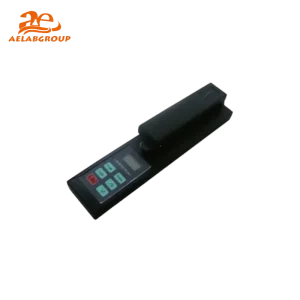
A Portable Leaf Area Meter delivers fast, accurate measurements of leaf surface area directly in the field or greenhouse. By quantifying leaf size without detaching tissue, researchers and agronomists can track growth, photosynthesis efficiency, and plant health in real time. Use a Portable Leaf Area Meter to streamline phenotyping, improve data quality, and accelerate decision-making.
A Portable Leaf Area Meter is a handheld or compact electronic device that measures the surface area of leaves in situ. Using optical scanning, digital imaging, or laser-based sensing, the meter computes leaf area—and often length, width, and shape metrics—within seconds. Many models pair on-board processing with data export options (USB/Bluetooth/Wi-Fi) for rapid field-to-lab workflows.
| Feature | Details |
|---|---|
| Measurement Principle | Optical scanning, digital imaging with edge detection, or laser triangulation |
| Accuracy & Resolution | High precision suitable for scientific research; user calibration recommended for best results |
| Measurement Range | Supports small to large leaves; check model-specific minimum/maximum area |
| Display & Interface | Real-time readout; intuitive controls; multilingual menus (model dependent) |
| Data Connectivity | USB, Bluetooth, or Wi-Fi; export to CSV/Excel or proprietary apps |
| Power & Battery Life | Rechargeable battery designed for extended field sessions |
| Portability & Build | Lightweight, rugged housings for outdoor environments |
| Software Compatibility | Integrates with analysis platforms (e.g., Excel, R, GIS) for downstream processing |
| Aspect | Portable Leaf Area Meter | Desktop Leaf Area Meter |
|---|---|---|
| Portability | Lightweight, field-ready | Stationary, lab-only |
| Real-Time Use | Yes, in situ | No—samples transported to lab |
| Accuracy | High (field-calibrated) | Very high (reference-grade) |
| Throughput | Rapid surveys and large plots | Batch processing with higher control |
| Cost | Moderate to high | High |
Q: Do I need to cut the leaf to measure it?
A: Not necessarily. Many portable meters support non-destructive in situ measurements; only complex shapes or overlapping leaves may require repositioning or manual separation.
Q: How accurate are portable leaf area meters?
A: Modern devices achieve high accuracy (often within research-grade thresholds) when properly calibrated and used with clean optics and consistent lighting.
Q: Can I connect the meter to my phone or PC?
A: Yes. Many models provide USB, Bluetooth, or Wi-Fi for real-time syncing and export to spreadsheets or analysis software.
Q: What are common limitations in the field?
A: Upfront cost, the need for periodic calibration, and challenges with shaded/overlapping leaves. Following best practices mitigates most issues.
Looking for specific lab equipment? Fill out the form below, and our team will get back to you with detailed information and a personalized quote.