AELAB | Agricultural Testing Instruments | Seed counter/Seed Blower
Seed Counters and Seed Blowers are essential instruments in modern seed testing and agricultural research. These devices ensure precision, consistency, and efficiency in counting, sorting, and purity assessment of seeds. Whether for breeding, certification, or commercial packaging, using these tools eliminates manual errors, reduces labor time, and enhances data accuracy in seed quality control operations.
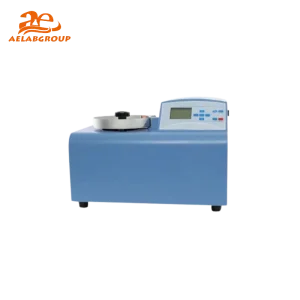
A Seed Counter is an automated optical or digital device that rapidly counts seeds with high accuracy. It replaces manual counting processes, minimizing human error and improving workflow in seed laboratories and packaging lines. Using sensors or imaging systems, the device delivers precise counts for different seed types and sizes.
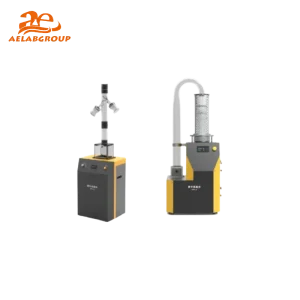
A Seed Blower is designed for purity testing by separating light impurities, chaff, or inert material from viable seeds using controlled air flow. Commonly used in quality control labs and certification agencies, it ensures that only pure, viable seeds are retained for further analysis or planting.
| Feature | Details |
|---|---|
| Counting Technology | Infrared beam interruption or digital imaging for precise detection |
| Counting Speed | Up to 2,000 seeds per minute (model dependent) |
| Accuracy | Over 99% with proper calibration and stable seed flow |
| Airflow Adjustment (Blower) | Variable control for separating light and heavy particles |
| Compatibility | Supports a wide range of seed sizes, from tiny flower seeds to large grains |
| Interface | Touchscreen with programmable batch sizes and data export options |
| Connectivity | USB, Wi-Fi, or printer support for data documentation |
| Maintenance | Low-maintenance design; easy to clean sensors and tubes |
| Feature | Seed Counter | Manual Counting |
|---|---|---|
| Speed | High (up to 2,000 seeds/min) | Very slow |
| Accuracy | >99% with calibration | Variable; prone to error |
| Labor Requirement | Low; automated | High |
| Repeatability | Excellent | Inconsistent |
| Long-term Cost Efficiency | High | Low |
Q: What types of seeds can these devices handle?
A: Seed counters and blowers can process a wide range of seeds—from fine grass and flower seeds to large grains like corn or beans—using adjustable feed and airflow settings.
Q: Are these tools suitable for small-scale labs?
A: Yes. Compact models are designed for small labs and on-site research facilities while maintaining professional-grade accuracy and performance.
Q: How often should I clean or maintain my seed counter and blower?
A: Clean both devices after each use or major batch to prevent contamination and maintain consistent accuracy across tests.
Q: Can seed counters connect to lab data systems?
A: Absolutely. Most modern seed counters include USB, Wi-Fi, or printer integration for real-time data transfer and traceability.
Looking for specific lab equipment? Fill out the form below, and our team will get back to you with detailed information and a personalized quote.