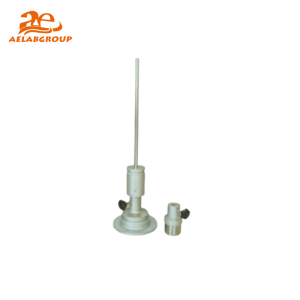
AELAB | Agricultural Testing Instruments | Soil bulk density tester
A Soil Bulk Density Tester measures the mass of soil per unit volume to reveal soil structure, porosity, and compaction. This information guides irrigation, fertilization, and land management while supporting environmental assessments and restoration planning.
A Soil Bulk Density Tester is a device or kit used to determine bulk density (g/cm³) by collecting an undisturbed soil core of known volume, drying or weighing the sample, and dividing mass by volume. It helps quantify compaction, aeration status, and water/nutrient-holding capacity for research, agriculture, and environmental studies.
| Feature | Details |
|---|---|
| Measurement Principle | Bulk density = dry (or field) mass / known core volume; alternative in-situ volume via sand displacement |
| Units & Range | g/cm³ (typ. 0.6–1.8 g/cm³ across most soils) |
| Sampling Rings | Stainless steel, known inner diameter/height (e.g., 100 cm³, 250 cm³) |
| Balance/Scale | Readability 0.01–0.1 g; tare function for cans/rings |
| Moisture Determination | Oven-drying at ~105 °C (gravimetric water content) for dry bulk density; field-moist option with correction |
| Accessories | Core driver, extractor, trimming tools, moisture cans, labels, sample bags |
| Data Handling | Manual worksheets or digital logging (mass, ring volume, moisture) |
| Durability & Field Use | Rugged case; corrosion-resistant steel/aluminum components for outdoor work |
| Aspect | Soil Bulk Density Tester | Penetrometer |
|---|---|---|
| Primary Output | Bulk density (g/cm³): mass/volume | Penetration resistance (MPa/kPa) |
| What It Indicates | Porosity/compaction and aeration potential | Instantaneous mechanical resistance to roots |
| Sensitivity to Moisture | Requires moisture correction or oven-dry step | Strongly affected by soil moisture at test time |
| Throughput | Moderate; multiple cores for representativeness | High; rapid field screening |
| Best Use | Definitive compaction/porosity quantification | Quick diagnostics; mapping hardpans |
Q: Do I need to oven-dry samples for bulk density?
A: For dry bulk density, yes—drying at ~105 °C yields consistent mass. Field-moist density can be measured with a moisture correction when drying isn’t feasible.
Q: How many samples should I take?
A: Take multiple cores per management zone or depth (commonly 3–5+) and average them to reduce spatial variability.
Q: Which method is best: core, clod, or sand displacement?
A: The core method is most common for undisturbed soils; clod suits cohesive, structured aggregates; sand displacement is useful when intact cores are difficult to obtain.
Q: Can a penetrometer replace bulk density testing?
A: No. Penetrometers indicate resistance at test time (moisture-dependent), while bulk density provides direct mass/volume information about porosity and compaction.
Looking for specific lab equipment? Fill out the form below, and our team will get back to you with detailed information and a personalized quote.