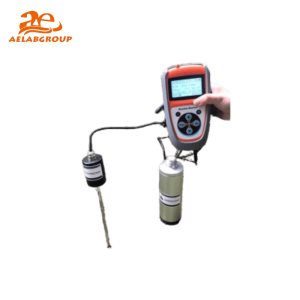
AELAB | Agricultural Testing Instruments | Soil PH Moisture Meter/Recorder
A Soil pH Moisture Meter/Recorder provides real-time readings of soil pH and moisture—two critical drivers of plant health and yield. These tools help gardeners, farmers, and soil managers optimize irrigation and nutrient availability with confidence. Use a Soil pH Moisture Meter/Recorder to monitor conditions and prevent costly over- or under-corrections.
A Soil pH Moisture Meter/Recorder measures soil acidity/alkalinity (pH) and moisture content using probes inserted into the soil profile. The pH probe senses hydrogen ion activity to classify soil as acidic, neutral, or alkaline, while the moisture probe infers water content from electrical response in the soil. Recorder-enabled models log readings over time to reveal trends that guide irrigation and soil amendment strategies.
| Feature | Details |
|---|---|
| Measured Parameters | Soil pH and moisture; some models add temperature or EC |
| Measurement Principles | pH via electrodes sensing hydrogen ion activity; moisture via electrical response/resistance |
| Accuracy & Precision | High-accuracy digital options for decision-grade data; periodic calibration recommended |
| Display & Readout | Analog scales or digital LCD; some offer color-coded ranges for quick checks |
| Recorder / Data Logging | Selectable intervals to track pH & moisture trends over time (model dependent) |
| Probe Length & Depth | Probes sized for topsoil and root zone; deeper readings require longer probes |
| Durability | Weather-resistant housings; stainless or robust polymer probes for outdoor use |
| Power | Battery powered; some rechargeable units |
| Aspect | Soil pH Moisture Meter/Recorder | Soil pH Testing Kit |
|---|---|---|
| Parameters | Measures pH and moisture (some add temp/EC) | Measures pH only |
| Speed & Convenience | Instant, in-situ readings; minimal prep | Sample prep and reagents; slower |
| Data Logging | Available on recorder models for trend tracking | Typically none |
| Ongoing Monitoring | Ideal for routine checks across seasons | Best for one-time or periodic spot tests |
| Ease of Use | Beginner-friendly; clear displays | Requires mixing and interpreting color changes |
Q: What pH range is suitable for most plants?
A: Many plants thrive in soils with pH between about 6.0 and 7.5; always check crop-specific recommendations.
Q: How does the meter measure moisture?
A: The probe senses the soil’s electrical response; drier soils show higher resistance while wetter soils show lower resistance, which the meter converts into a moisture reading.
Q: Do I need to calibrate my meter?
A: Yes. Regular calibration helps maintain accuracy, especially before key fertilization or irrigation decisions and after heavy use.
Q: Can one depth reading represent my whole garden?
A: Not always. Conditions can vary by depth and location; take multiple readings across zones and depths for a reliable picture.
Q: How do I use readings to adjust care?
A: Use pH data to plan lime or sulfur applications and moisture readings to fine-tune irrigation schedules; re-test to confirm improvements.
Looking for specific lab equipment? Fill out the form below, and our team will get back to you with detailed information and a personalized quote.