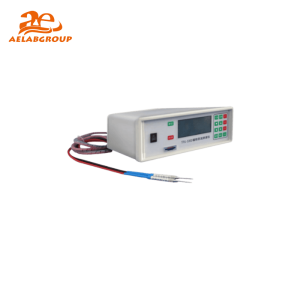
AELAB | Agricultural Testing Instruments | Stem Psychrometer
A stem psychrometer (wet-dry bulb psychrometer) measures air humidity using paired thermometers and is widely used in meteorology, HVAC, and environmental control. By relating wet-bulb cooling to dry-bulb temperature, a stem psychrometer delivers dependable relative humidity data for safety, comfort, and process optimization. This guide explains how a stem psychrometer works, what to look for, and how to use it effectively.
A stem psychrometer (wet-dry bulb) uses two adjacent thermometers—one dry bulb for ambient temperature and one wet bulb wrapped with a moist wick. Airflow over the wet bulb causes evaporation and cooling; the temperature depression between bulbs is converted to relative humidity using a psychrometric chart or formulas. This simple, robust method provides precise humidity, dew point, and vapor pressure insights without electronics.
| Feature | Details |
|---|---|
| Measurement Principle | Wet-bulb evaporation vs. dry-bulb temperature; RH derived via psychrometric chart/formulas |
| Accuracy | High with proper calibration and adequate airflow; suitable for research and climate control |
| Materials | Durable thermometer stems; stainless steel and quality wicking for resilience and stable readings |
| Temperature Range | Select model to match expected ambient conditions for intended use |
| Humidity Range | Covers typical environmental humidity; verify scale/readability for target RH span |
| Ease of Use | Ergonomic stems and clear scales enable efficient field readings |
| Power Requirement | None (no batteries); airflow provided by movement, fan, or aspiration |
| Calibration & Care | Routine thermometer calibration; clean, moist wick maintained for accuracy |
| Aspect | Stem Psychrometer | Digital Hygrometer |
|---|---|---|
| Operating Principle | Wet/dry bulb temperature difference with psychrometric chart | Electronic humidity sensor (e.g., capacitive) |
| Power Requirement | None | Batteries or external power |
| Speed & Convenience | Manual reading/calculation; airflow control needed | Instant digital display, optional logging |
| Accuracy in Extremes | High with proper technique and shielding | May drift in extreme conditions; depends on sensor |
| Cost | Generally lower | Generally higher |
Q: How does a stem psychrometer determine relative humidity?
A: It measures dry-bulb and wet-bulb temperatures; the difference is applied to a psychrometric chart to obtain relative humidity, dew point, and related properties.
Q: What factors can skew readings?
A: Direct sunlight, insufficient airflow over the wet bulb, or a dry/contaminated wick can bias results. Use shielding, ensure airflow, and maintain the wick.
Q: Do I need batteries to operate a stem psychrometer?
A: No. It relies on thermometers and evaporation, requiring only adequate airflow (manual movement, fan, or aspiration).
Q: When should I choose a digital hygrometer instead?
A: If you need rapid, continuous readouts or data logging with minimal manual steps, a digital hygrometer is convenient—though it requires power and may cost more.
Looking for specific lab equipment? Fill out the form below, and our team will get back to you with detailed information and a personalized quote.