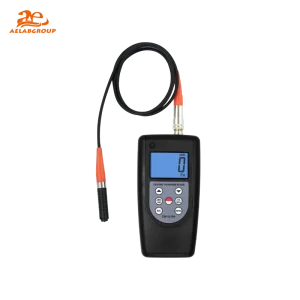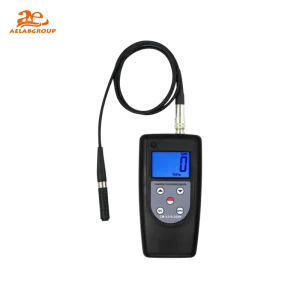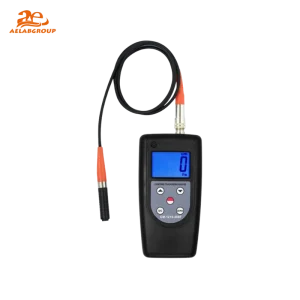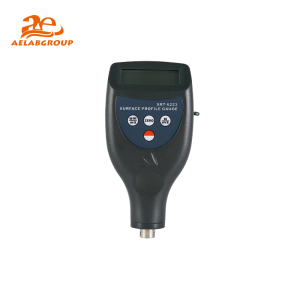
AELAB | Agricultural Testing Instruments | Thickness Gauge
A Thickness Gauge is a critical precision instrument used across industries like manufacturing, automotive, aerospace, and coatings. It measures the thickness of materials and coatings to ensure consistency, safety, and compliance with quality standards. Whether assessing metal integrity, paint uniformity, or material wear, thickness gauges deliver fast, accurate, and non-destructive results for both field and laboratory applications.
A Thickness Gauge is an instrument that measures the thickness of a surface or material—ranging from metals and plastics to coatings, films, and rubber. Depending on the application, various technologies are available, such as ultrasonic, magnetic, eddy current, and mechanical types. These instruments are indispensable for quality assurance, material inspection, and research analysis.
📌 Featured Snippet Answer: A thickness gauge is a precision instrument used to measure the thickness of materials or coatings without damaging the surface, commonly used in manufacturing, automotive, and quality control industries.
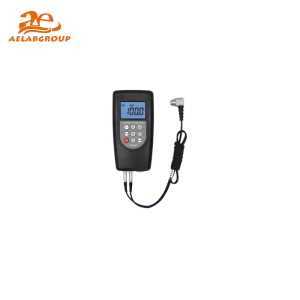
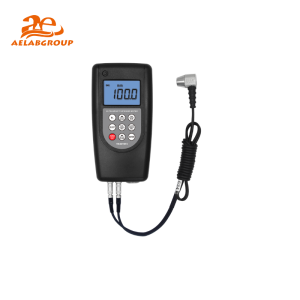
Use Case: Non-destructive testing (NDT) of metals, plastics, and composites.
Working Principle: Emits ultrasonic sound waves into the material and measures the time for the echo to return. The device calculates thickness using the known sound velocity of the material.
Use Case: Measures paint, powder, or coating thickness on metals (steel, aluminum, etc.).
Some advanced models combine both technologies for multi-surface testing.
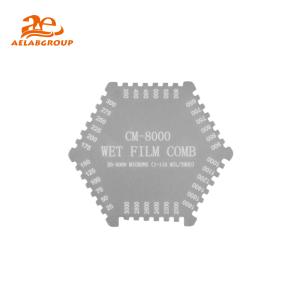
Use Case: Manual measurement of soft materials like paper, rubber, or plastic film.
| Specification | Description |
|---|---|
| Accuracy | ±1% or better for precision testing |
| Resolution | As low as 0.001 mm (model dependent) |
| Measurement Range | 0.1 μm to several centimeters |
| Data Storage & Output | Internal memory with USB/Bluetooth data export |
| Display | Backlit LCD or touchscreen interface |
| Calibration | Single-point, two-point, or multi-material calibration |
| Portability | Compact, battery-powered for fieldwork |
| Feature | Ultrasonic Gauge | Coating Thickness Gauge |
|---|---|---|
| Measurement Material | Metal, plastic, composites | Paint, powder, coatings |
| Substrate Requirement | Independent of substrate | Dependent on magnetic/electrical properties |
| Non-Destructive | ✅ Yes | ✅ Yes |
| Price Range | Medium to High | Low to Medium |
| Use Cases | Structural inspection, NDT | Coating quality verification |
Q: Can a thickness gauge measure through paint?
A: Yes. Ultrasonic thickness gauges with “echo-to-echo” functionality can measure metal thickness beneath paint or coatings without removing the surface layer.
Q: What’s the difference between a micrometer and a thickness gauge?
A: A micrometer is a mechanical device for highly precise surface measurements, while a thickness gauge—especially ultrasonic types—can measure internal or coated thicknesses non-destructively.
Q: Do thickness gauges require calibration?
A: Yes. Regular calibration ensures accuracy and compliance with ISO or ASTM standards, especially in regulated industries.
Q: Are digital gauges suitable for outdoor or field use?
A: Many modern digital models are designed to be waterproof, shock-resistant, and portable for harsh field environments.
Looking for specific lab equipment? Fill out the form below, and our team will get back to you with detailed information and a personalized quote.