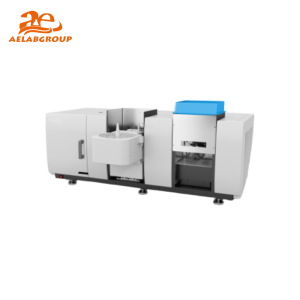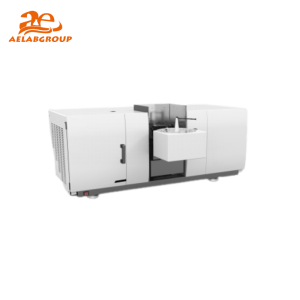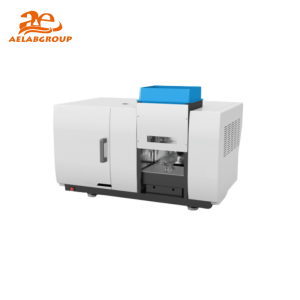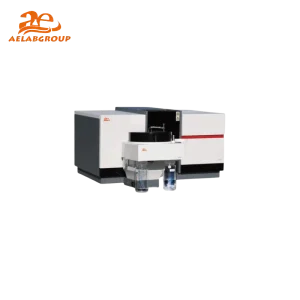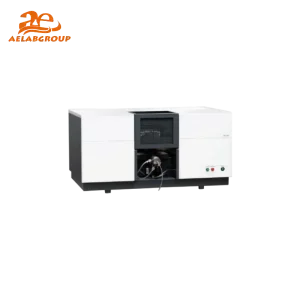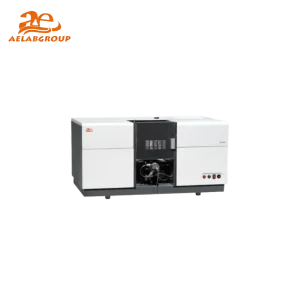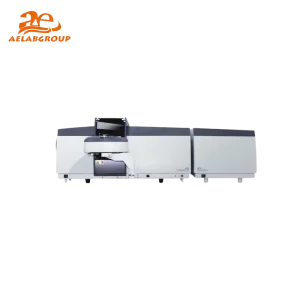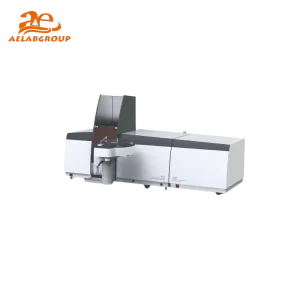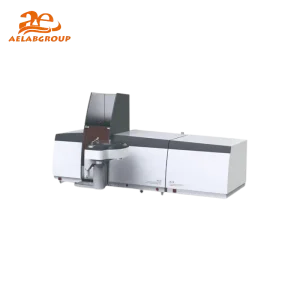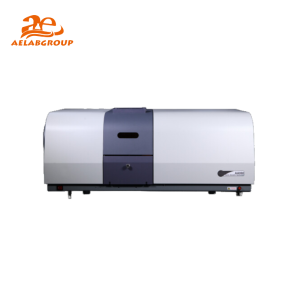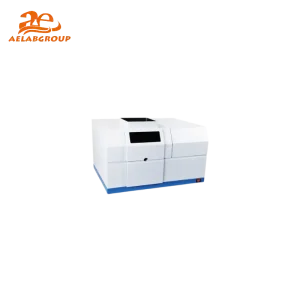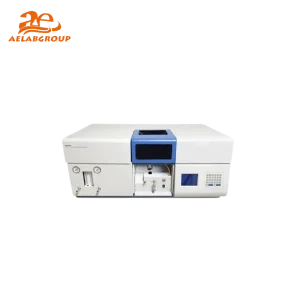
AELAB | Analytical Equipment | Atomic Absorption Spectrophotometer (AAS)
The Laboratory Atomic Absorption Spectrophotometer (AAS) is one of the most trusted tools in elemental analysis, offering precise and reliable quantification of metal concentrations in diverse samples. From drinking water and soil to food and pharmaceuticals, AAS enables laboratories to detect trace metals with remarkable accuracy and consistency.
An Atomic Absorption Spectrophotometer (AAS) is a scientific instrument that measures metal concentrations by analyzing how much light vaporized atoms absorb at specific wavelengths. Each element absorbs light at a unique wavelength, allowing for selective and quantitative analysis of trace metals in complex matrices.
| Feature | Details |
|---|---|
| Measurement Principle | Determines metal concentration by light absorption of vaporized atoms at element-specific wavelengths. |
| Light Source | Hollow cathode lamp or electrodeless discharge lamp for element-specific emission. |
| Atomizer | Flame (air–acetylene) or graphite furnace for high-temperature atomization. |
| Monochromator | Isolates a single wavelength corresponding to the target element. |
| Detector | Photomultiplier or solid-state detector measuring absorbed light intensity. |
| Detection Limit | Typically down to parts per billion (ppb). |
| Software Interface | Intuitive software for calibration curves, automation, and data reporting. |
| Safety Features | Automatic flame shut-off, gas interlocks, and overheat protection. |
| Feature | AAS | ICP-OES | ICP-MS |
|---|---|---|---|
| Sensitivity | Medium (ppb) | High (ppb–ppt) | Very High (ppt) |
| Multi-element Analysis | Single element per run | Simultaneous multi-element | Simultaneous multi-element |
| Cost | $$ | $$$ | $$$$ |
| Maintenance | Low | Moderate | High |
| Throughput | Sequential | Fast | Very Fast |
Q: What elements can be analyzed using AAS?
A: AAS can analyze more than 70 metals, including lead, copper, zinc, iron, cadmium, and mercury, in various matrices such as water, soil, and biological fluids.
Q: What’s the difference between flame and graphite furnace AAS?
A: Flame AAS is suited for moderate concentrations and high throughput, while graphite furnace AAS provides higher sensitivity for trace-level analyses.
Q: Why is AAS preferred over ICP for some applications?
A: AAS offers a cost-effective, simple, and low-maintenance option for routine single-element testing where extreme sensitivity or speed is not required.
Q: How can interferences be minimized in AAS?
A: Use matrix modifiers, appropriate sample dilution, and clean atomizers regularly to reduce physical or chemical interference during atomization.
Looking for specific lab equipment? Fill out the form below, and our team will get back to you with detailed information and a personalized quote.