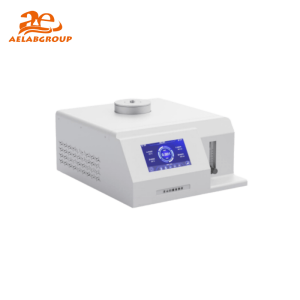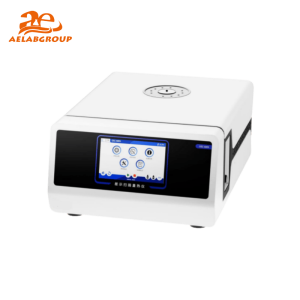
AELAB | Analytical Equipment | Differential Scanning Calorimeter
The Differential Scanning Calorimeter (DSC) is one of the most important thermal analysis instruments used to study material behavior under controlled temperature changes. From pharmaceuticals and polymers to food and metallurgy, DSC thermal analysis provides critical data on melting points, glass transitions, crystallization, and more, helping scientists ensure product performance and stability.
A Differential Scanning Calorimeter (DSC) is a thermoanalytical instrument that measures how a material’s heat capacity changes with temperature. It identifies endothermic and exothermic transitions such as melting, crystallization, glass transition, and thermal degradation, providing insights into material composition and stability.
| Feature | Details |
|---|---|
| Temperature Range | Typically from -150°C to 700°C |
| Heating Rate | Up to 100°C/min, adjustable |
| Sample Size | 2–20 mg (solid or liquid) |
| Atmosphere Control | Inert gas (N₂ or He) or air |
| Sensor Type | Heat-flux or power-compensated |
| Measurement Outputs | Enthalpy, Tg, melting/crystallization peaks |
| Calibration Materials | Indium, zinc, tin |
| Aspect | Differential Scanning Calorimeter (DSC) | Thermogravimetric Analyzer (TGA) |
|---|---|---|
| Measures | Heat flow and enthalpy changes | Mass loss versus temperature |
| Primary Data Output | Thermal transitions (Tg, melting) | Decomposition and moisture loss |
| Sample Mass | 2–20 mg | Up to several grams |
| Main Use | Phase transitions, crystallinity | Thermal stability and composition |
| Output Type | Enthalpy curve | Weight vs. temperature curve |
Q: What does a Differential Scanning Calorimeter measure?
A: It measures the heat flow associated with material transitions such as melting, crystallization, and glass transition under controlled temperature conditions.
Q: What are common calibration standards for DSC?
A: Indium, zinc, and tin are commonly used calibration materials for accurate temperature and enthalpy calibration.
Q: What is the difference between heat-flux and power-compensated DSC?
A: Heat-flux DSC uses one furnace to heat both pans, while power-compensated DSC uses separate furnaces for the sample and reference, allowing higher sensitivity and faster response.
Q: How much sample is required for DSC analysis?
A: Typically 2–20 milligrams of material is sufficient, depending on sample type and instrument sensitivity.
Q: Can DSC be used to determine polymer crystallinity?
A: Yes, DSC is widely used to calculate the degree of crystallinity in polymers by analyzing the melting enthalpy compared to that of 100% crystalline reference material.
Looking for specific lab equipment? Fill out the form below, and our team will get back to you with detailed information and a personalized quote.