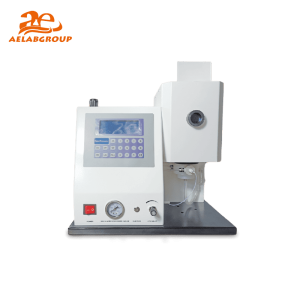
AELAB | Analytical Equipment | Flame Photometer
The Laboratory Flame Photometer is a vital analytical instrument designed for rapid and accurate determination of alkali and alkaline earth metals such as sodium, potassium, lithium, calcium, and cesium. Offering a simple and cost-effective approach to elemental analysis, it is widely applied in clinical, agricultural, pharmaceutical, environmental, and food testing laboratories.
A Laboratory Flame Photometer measures the concentration of specific metal ions in a sample by detecting the characteristic emission of light produced when the sample is introduced into a flame. The emitted light intensity is directly proportional to the element’s concentration, making it an essential tool for routine elemental analysis of alkali and alkaline earth metals.
| Feature | Details |
|---|---|
| Elements Detected | Na, K, Li, Ca, Cs (alkali and alkaline earth metals) |
| Detection Range | ppm to ppb levels, depending on instrument sensitivity |
| Emission Wavelengths | Na: 589 nm, K: 766 nm, Li: 670 nm, Ca: 622 nm, Cs: 852 nm |
| Flame & Fuel | Propane, butane, or acetylene with air/oxygen mixture; up to 2000°C |
| Display | Analog or digital readout with concentration display |
| Automation | Optional auto-dilution, calibration, and multi-sample processing |
| Connectivity | USB/RS-232 data export, software for calibration curve plotting |
| Safety Features | Flame monitoring, gas pressure control, and automatic shutoff |
| Feature | Flame Photometry | AAS | ICP-AES |
|---|---|---|---|
| Principle | Light emission in flame | Light absorption by atoms | Emission spectroscopy using plasma |
| Elements Detected | Alkali and alkaline earth metals | Most metals | Almost all elements |
| Sensitivity | Moderate | High | Very High |
| Analysis Speed | Fast | Moderate | Moderate |
| Cost | Low | Higher | Very High |
| Complexity | Simple | Moderate | High |
Q: What elements can be measured using a flame photometer?
A: Flame photometers are designed for alkali and alkaline earth metals including Na, K, Li, Ca, and Cs.
Q: Why is flame photometry preferred for clinical electrolyte testing?
A: It provides quick, accurate, and affordable measurement of sodium and potassium levels in blood and urine, critical for assessing electrolyte balance.
Q: How can interference be minimized in flame photometry?
A: Use proper filters, calibration standards, and background correction techniques to eliminate inter-element interference.
Q: What are the advantages of a digital flame photometer?
A: Digital models offer better precision, data storage, and easy integration with computer systems for automated reporting and analysis.
Looking for specific lab equipment? Fill out the form below, and our team will get back to you with detailed information and a personalized quote.