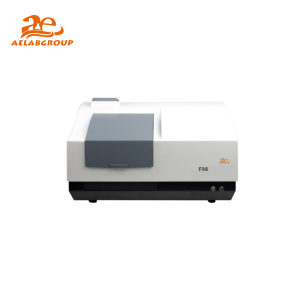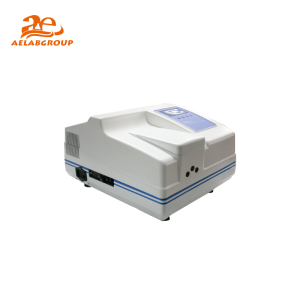
AELAB | Analytical Equipment | Fluorescence Spectrometer
A fluorescence spectrometer is a highly sensitive analytical instrument used to detect and quantify fluorescent molecules. This guide explains how fluorescence spectrometers work, their applications, features, and how to choose the best model. Whether for research or industrial use, understanding fluorescence spectrometers helps ensure accurate and reliable analysis.
A fluorescence spectrometer measures the fluorescence emitted by molecules after they absorb specific wavelengths of light. Using an excitation source, monochromators, a sample holder, and a detector, it captures emission and excitation spectra with exceptional sensitivity. Applications span life sciences, pharmaceuticals, environmental testing, food analysis, and material science due to its ability to detect trace-level analytes and generate molecular fingerprints.
| Feature | Details |
|---|---|
| Excitation Source | Xenon lamp, laser, or LED |
| Detector Type | PMT, CCD, or photodiode |
| Wavelength Range | Typically 200–900 nm depending on model |
| Spectral Resolution | High-resolution monochromators for precise spectra |
| Sensitivity | Detection limits down to ppb or lower |
| Measured Parameters | Intensity, excitation/emission spectra, lifetime, quantum yield |
| Software Features | 3D mapping, lifetime analysis, quantification, compliance tools |
| Aspect | Fluorescence Spectrometer | UV-Vis Spectrophotometer |
|---|---|---|
| Sensitivity | Extremely high | Moderate |
| Detection Principle | Fluorescence emission | Absorbance measurement |
| Sample Requirements | Fluorescent analytes | Any absorbing sample |
| Detection Limit | ppb–ppt | Higher limits |
| Typical Use | Biomolecules, impurities | General concentration analysis |
Q: What types of samples can a fluorescence spectrometer analyze?
A: Liquids, solutions, polymers, nanoparticles, biological samples, and fluorescent materials can all be analyzed.
Q: How sensitive is a fluorescence spectrometer?
A: It can detect analytes down to ppb or even ppt levels, far more sensitive than UV-Vis spectroscopy.
Q: Do samples require extensive preparation?
A: Typically no; most samples only need dilution or filtration to remove particulates.
Q: Can non-fluorescent samples be analyzed?
A: Yes, by adding fluorescent tags or reagents that bind to the target molecules.
Looking for specific lab equipment? Fill out the form below, and our team will get back to you with detailed information and a personalized quote.