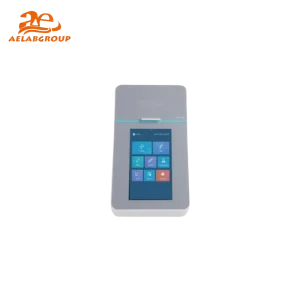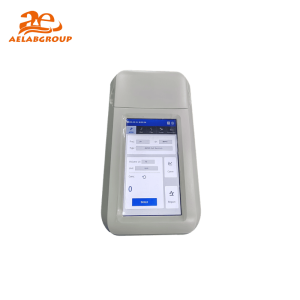
AELAB | Analytical Equipment | Fluorometer
A fluorometer is a highly sensitive analytical instrument used across biotechnology, pharmaceuticals, environmental testing, and materials science. Modern fluorometers provide rapid, precise fluorescence measurements for trace-level detection. This guide explains the principles, applications, and key features of a fluorometer to help you choose the best model for your laboratory.
A fluorometer measures the intensity of fluorescence emitted by a sample when illuminated with a specific excitation wavelength. It detects trace fluorescent compounds in liquids or solids with exceptional sensitivity, making it ideal for research, diagnostics, and industrial applications.
| Feature | Details |
|---|---|
| Excitation Source | LED or xenon lamp depending on model |
| Detection Range | Trace-level ppb to ppt sensitivity |
| Optical System | Filters or monochromators for wavelength selection |
| Detector Type | Photodiode or PMT for high sensitivity |
| Sample Formats | Cuvettes, vials, microplates, microtubes |
| Wavelength Range | Covers common excitation/emission wavelengths for dyes and biomolecules |
| Data Output | Real-time intensity, concentration, and calibration curves |
| Connectivity | USB, WiFi, and software integration for data export |
| Aspect | Fluorometer | Fluorescence Spectrometer |
|---|---|---|
| Function | Fluorescence intensity measurement | Full excitation/emission spectral analysis |
| Complexity | Simple | Advanced |
| Sensitivity | High | Very high |
| Cost | Lower | Higher |
| Best Use | Routine quantification | Research & structural analysis |
Q: What types of samples can a fluorometer analyze?
A: It can test water samples, biological materials, polymers, chemicals, food extracts, and nucleic acids.
Q: How sensitive is a fluorometer?
A: Modern fluorometers detect concentrations down to low ppb or ppt levels.
Q: Can a fluorometer quantify DNA and RNA?
A: Yes, especially when used with appropriate fluorescent dyes.
Q: Do fluorometers require special training?
A: Most models are user-friendly and require minimal training to operate.
Looking for specific lab equipment? Fill out the form below, and our team will get back to you with detailed information and a personalized quote.