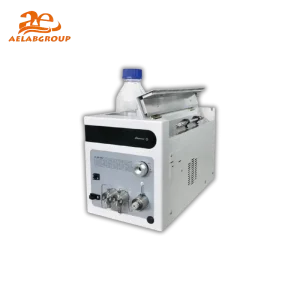
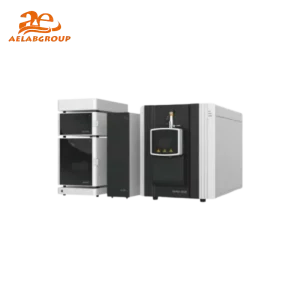
Laboratory HPLC: A Comprehensive Guide to High-Performance Liquid Chromatography
Introduction
High-Performance Liquid Chromatography (HPLC) is an essential analytical technique used in various fields like pharmaceuticals, environmental testing, and clinical diagnostics. It allows for precise separation, identification, and quantification of complex mixtures, making it an indispensable tool in modern laboratories.
What Is Laboratory HPLC?
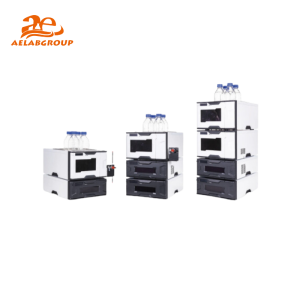
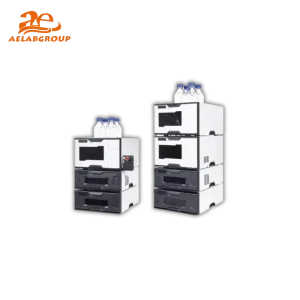
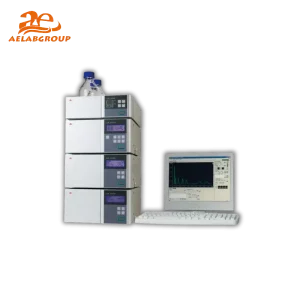
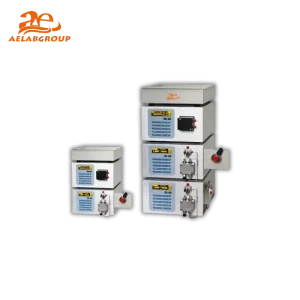
High-Performance Liquid Chromatography (HPLC) is an advanced form of liquid chromatography that uses high-pressure pumps to push liquid solvents through a packed column. Components in the sample interact with the stationary phase and separate based on their chemical properties, allowing for precise analysis.
Key Applications of HPLC
- Pharmaceutical Industry: Drug formulation analysis, stability testing, and quality control.
- Clinical & Biomedical Research: Measurement of biomarkers, hormones, and vitamins.
- Food & Beverage Industry: Detection of contaminants, additives, and preservatives.
- Environmental Testing: Monitoring pollutants in water, soil, and air.
- Forensic Science: Identification of drugs, toxins, and unknown compounds in biological samples.
How Does HPLC Work?
HPLC operates through the following steps:
- Injection: The liquid sample is introduced into the system.
- Separation: The sample passes through a high-pressure column filled with a stationary phase.
- Detection: Components elute at different times and are detected based on absorbance, fluorescence, or other properties.
- Data Analysis: A chromatogram is generated to interpret results.
Key Technical Specifications of HPLC
| Feature |
Details |
| Types of HPLC Systems |
Analytical, Preparative, UHPLC |
| Mobile Phase |
Water, methanol, acetonitrile, buffers |
| Pumps |
Isocratic, Gradient |
| Columns |
Reverse-Phase, Normal-Phase, Size-Exclusion, Ion-Exchange |
| Detectors |
UV-Vis, Fluorescence, Mass Spectrometry (LC-MS) |
| Flow Rate |
0.1–2.0 mL/min |
| Operating Pressure |
1000–6000 psi (up to 15,000 psi for UHPLC) |
Advantages and Limitations of HPLC
✅ Advantages of HPLC
- High Sensitivity & Accuracy: Detects trace-level analytes in complex mixtures.
- Versatile Applications: Used across multiple industries.
- Fast & Automated: Provides rapid analysis with minimal manual intervention.
- Reproducibility: Consistent and precise results for regulatory compliance.
❌ Limitations
- High Initial Cost: Expensive instrumentation and maintenance.
- Requires Skilled Operation: Sample preparation and method development require expertise.
- Solvent & Waste Disposal: Requires careful handling of organic solvents.
Laboratory HPLC vs. Other Chromatographic Techniques
| Feature |
HPLC |
Gas Chromatography (GC) |
Thin-Layer Chromatography (TLC) |
| Principle |
Liquid-phase separation |
Gas-phase separation |
Stationary-phase on a flat plate |
| Sample Type |
Liquids & dissolved solids |
Volatile & semi-volatile compounds |
Solids & liquids |
| Sensitivity |
High |
High |
Moderate |
| Speed |
Fast |
Faster |
Slower |
| Automation |
Fully automated |
Fully automated |
Manual operation |
| Cost |
High |
High |
Low |
Expert Tips for Optimizing HPLC Performance
- Choose the Right Column: Select the appropriate column chemistry and particle size for your application.
- Maintain a Stable Mobile Phase: Use high-purity solvents and properly degas the mobile phase.
- Optimize Flow Rate & Pressure: Adjust to achieve the best separation without excessive backpressure.
- Regularly Clean & Maintain the System: Prevent blockages and contamination by flushing the system with solvents.
- Use Proper Sample Preparation Techniques: Filter and dilute samples as needed to avoid column damage.
- Calibrate & Validate the System: Ensure compliance with analytical method standards and quality control guidelines.