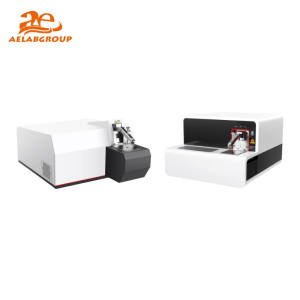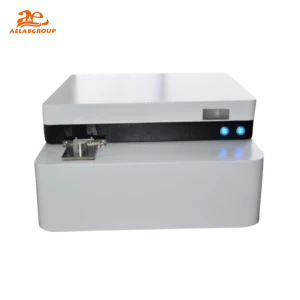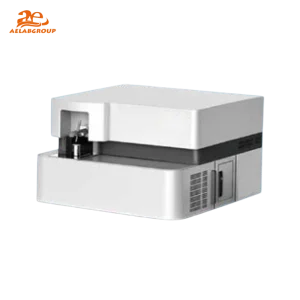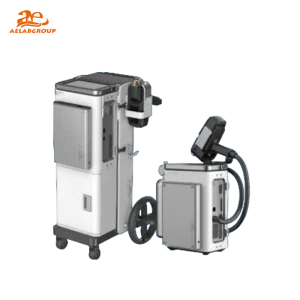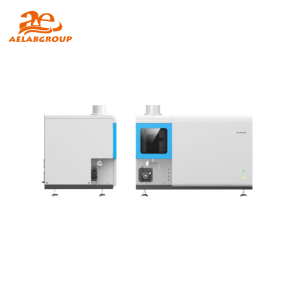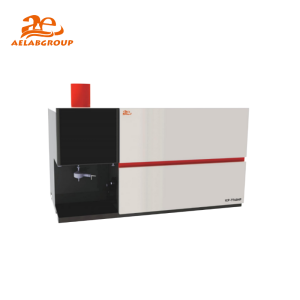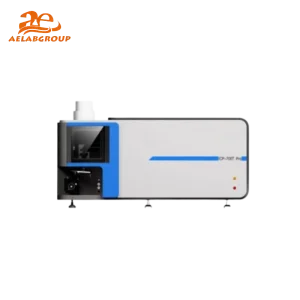
AELAB | Analytical Equipment | ICP Emission Spectrometer(ICP-AES/OES/MS)
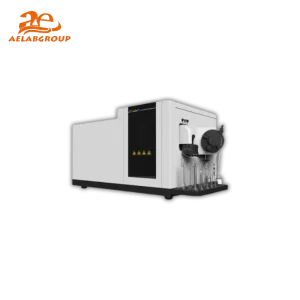
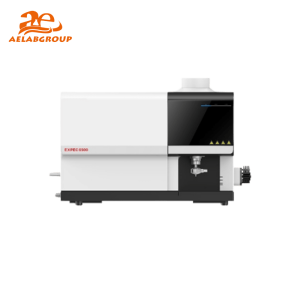
The Laboratory ICP Spectrometer is a critical instrument for precise elemental analysis across research and industry. It enables multi-element detection at trace levels with high sensitivity and throughput. From environmental monitoring to pharmaceuticals, it ensures confident, regulatory-ready results.
A Laboratory ICP Spectrometer uses Inductively Coupled Plasma to atomize and excite samples for elemental analysis via optical emission (ICP-OES) or mass spectrometry (ICP-MS). The plasma’s high temperature ionizes atoms; emitted light (OES) or ion mass-to-charge signals (MS) are measured to identify and quantify elements—metals, non-metals, and trace species—with high precision and low detection limits.
| Feature | Details |
|---|---|
| Analytical Technique | ICP-OES (optical emission) and ICP-MS (mass spectrometry) |
| Wavelength / Mass Range | ICP-OES ~160–800 nm; ICP-MS measures ions by m/z with broad elemental coverage |
| Sensitivity & Detection Limits | ICP-MS to ppt levels; ICP-OES suitable for low ppb to high ppm |
| Plasma Source | Inductively Coupled Plasma (RF-driven) providing stable, high-temperature ionization |
| Sample Introduction | Nebulizer + spray chamber; solid samples require digestion/prep |
| Interference Management | Spectral correction (OES); collision/reaction cell & mathematical corrections (MS) |
| Throughput | Rapid, multi-element analysis with autosampler support for high sample volumes |
| Software & Data | Integrated calibration, quantification, libraries for element ID, and QA/QC reporting |
| Aspect | Laboratory ICP Spectrometer | AAS (Atomic Absorption Spectroscopy) |
|---|---|---|
| Element Detection | Simultaneous multi-element (metals & some non-metals) | Primarily single-element (metals) |
| Sensitivity | Very high; ICP-MS to ppt | Moderate to high; typically ppb |
| Speed & Throughput | Fast, high throughput | Moderate; often sequential |
| Sample Types | Liquids; solids after digestion; gases (specialized) | Liquids and digested solids |
| Cost | High capital; low per-element cost when multi-element | Moderate capital; per-element runs add time/cost |
Q: What is the difference between ICP-OES and ICP-MS?
A: ICP-OES measures light emitted by excited atoms/ions for robust multi-element analysis at ppb–ppm levels, while ICP-MS measures mass-to-charge of ions and achieves ultra-trace (ppt) detection with broader dynamic range.
Q: What sample types can be analyzed?
A: Most liquid samples directly; solids typically require digestion. Specialized setups can handle gases or nanoparticles depending on the method.
Q: How are interferences managed?
A: ICP-OES uses spectral correction and optimized wavelength selection; ICP-MS employs collision/reaction cells and mathematical corrections to reduce polyatomic and matrix interferences.
Q: What are typical detection limits?
A: ICP-MS reaches parts-per-trillion for many elements; ICP-OES typically achieves low ppb and is ideal for routine multi-element work.
Q: Why choose ICP over AAS or XRF?
A: ICP offers simultaneous multi-element capability, faster throughput, and significantly lower detection limits (with ICP-MS), making it preferred for trace analysis and complex matrices.
Looking for specific lab equipment? Fill out the form below, and our team will get back to you with detailed information and a personalized quote.