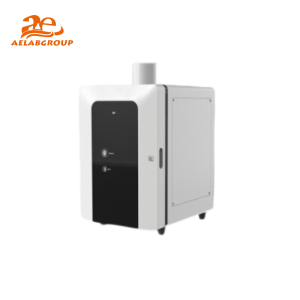
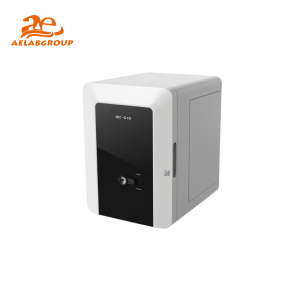
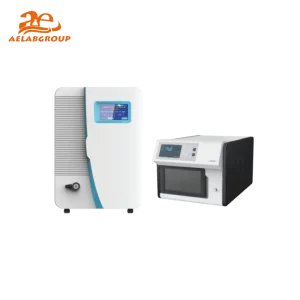
Ion Chromatography
Introduction
Ion Chromatography (IC) is an essential analytical technique widely used in environmental testing, food safety, pharmaceuticals, and industrial quality control. This method allows for precise separation and quantification of ionic species in a variety of samples, making it indispensable for laboratories in multiple industries.
What Is Ion Chromatography?
Ion Chromatography (IC) is a type of liquid chromatography that separates ions and polar molecules based on their affinity for an ion exchanger. It is primarily used to analyze both anions (e.g., fluoride, chloride, nitrate, sulfate) and cations (e.g., sodium, potassium, calcium, magnesium) in aqueous samples.
How Does Ion Chromatography Work?
Ion Chromatography involves three main components:
- Ion Exchange Column: Packed with resin that selectively interacts with ions.
- Eluent: A mobile phase that helps transport ions through the column.
- Detector: Typically a conductivity detector, used to measure ion concentrations.
The step-by-step process is as follows:
- Sample Injection: The liquid sample is introduced into the IC system.
- Separation: Ions bind to and move through the ion exchange resin at different rates.
- Detection: A suppressor reduces background conductivity, improving signal clarity.
- Data Output: The detector measures and quantifies the separated ions.
Types of Ion Chromatography
- Cation Exchange Chromatography: Used for separating positively charged ions (e.g., Na⁺, Ca²⁺).
- Anion Exchange Chromatography: Used for separating negatively charged ions (e.g., Cl⁻, NO₃⁻).
Advantages of Ion Chromatography
- High sensitivity, capable of detecting ions in the ppb (parts per billion) range.
- Automated and fast, with many systems offering rapid run times and batch processing.
- Wide applicability across industries including water testing, pharmaceuticals, and food safety.
- Minimal sample preparation, reducing the risk of contamination and saving time.
Limitations and Challenges
- High initial cost for equipment, which may be prohibitive for small labs.
- Requires skilled personnel for proper operation and maintenance.
- Sensitivity to sample matrix, with complex samples requiring pre-treatment.
Ion Chromatography vs HPLC
| Feature |
Ion Chromatography (IC) |
High-Performance Liquid Chromatography (HPLC) |
| Analytes |
Ions and polar compounds |
Broad range (organic, pharmaceutical, etc.) |
| Mobile phase |
Aqueous ionic solution |
Water-organic solvent mix |
| Detector type |
Conductivity |
UV-Vis, fluorescence, MS |
| Typical applications |
Water testing, food safety |
Drug analysis, organic compound separation |
Key Applications of Ion Chromatography
- Environmental Monitoring: Detect pollutants in drinking water and wastewater.
- Pharmaceuticals: Ensure proper ion concentrations in formulations.
- Food and Beverage: Monitor preservatives, additives, and contaminants.
- Power Plants: Control water purity in boilers and steam systems.
- Forensics and Clinical Labs: Analyze biological fluids for ion content.
Expert Tips for Using Ion Chromatography Efficiently
- Use high-purity water and reagents to prevent contamination.
- Calibrate frequently with known standards to ensure accuracy.
- Regularly clean and regenerate the column for consistent performance.
- Optimize eluent strength based on sample type.
- Use autosamplers and software for high-throughput environments.
Maintenance Best Practices
- Clean the ion exchange column regularly to avoid blockages.
- Replace the suppressor as needed to maintain optimal sensitivity.
- Monitor the conductivity detector for drift and recalibrate if necessary.
- Ensure proper storage of the column to prevent drying out.
- Perform periodic system checks to identify any malfunctions.
FAQ
Q: What is Ion Chromatography used for?
A: Ion Chromatography is used to separate and quantify ions and polar molecules in aqueous samples, with applications in environmental testing, food safety, pharmaceuticals, and industrial quality control.
Q: How does Ion Chromatography differ from HPLC?
A: Ion Chromatography focuses on separating ions and polar compounds using conductivity detection, while HPLC is used for a broad range of analytes, including organic compounds, using UV-Vis, fluorescence, or mass spectrometry detection.
Q: What are the main components of an Ion Chromatography system?
A: The main components of an Ion Chromatography system are the ion exchange column, eluent (mobile phase), and conductivity detector.