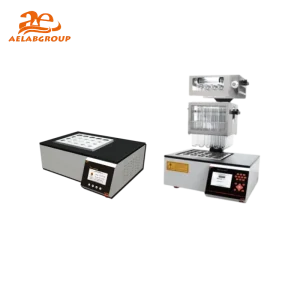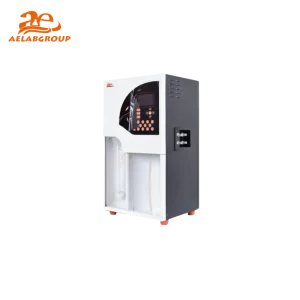
AELAB | Analytical Equipment | Kjeldahl Nitrogen Analyzer
The Kjeldahl Nitrogen Analyzer is an automated laboratory instrument used to determine nitrogen content in organic and inorganic substances. This method is critical for industries like agriculture, food science, pharmaceuticals, and environmental analysis to ensure accurate protein and nitrogen content measurement.
The Kjeldahl Nitrogen Analyzer automates the traditional Kjeldahl method, which includes digestion, distillation, and titration to measure nitrogen content. This system enhances precision and compliance with international standards, streamlining nitrogen analysis across various applications.
| Feature | Details |
|---|---|
| Automation | Fully automated digestion, distillation, and titration |
| Time per Sample | 30–90 minutes |
| Reagents | Sulfuric acid, NaOH, boric acid |
| Detection Method | Titration (colorimetric) |
| Sample Types | Organic and inorganic substances |
| Data Logging | Integrated software for data traceability |
| Feature | Kjeldahl Method | Dumas Method |
|---|---|---|
| Principle | Wet digestion & titration | Combustion & gas analysis |
| Time per Sample | 30–90 minutes | 3–5 minutes |
| Reagents | Sulfuric acid, NaOH, boric acid | Oxygen, high-temperature furnace |
| Detection | Titration (colorimetric) | Thermal conductivity detector |
| Sample Type Flexibility | High | Moderate |
| Cost per Analysis | Lower | Higher |
Q: What is the Kjeldahl method used for?
A: The Kjeldahl method is used for determining nitrogen content in organic and inorganic compounds, typically for protein content analysis.
Q: Can Kjeldahl Nitrogen Analyzers handle both solid and liquid samples?
A: Yes, they can process both solid and liquid samples, making them versatile for various applications.
Q: How long does it take to perform a nitrogen analysis with a Kjeldahl Nitrogen Analyzer?
A: The process typically takes between 30 and 90 minutes per sample, depending on the sample type and the analyzer’s capabilities.
Looking for specific lab equipment? Fill out the form below, and our team will get back to you with detailed information and a personalized quote.