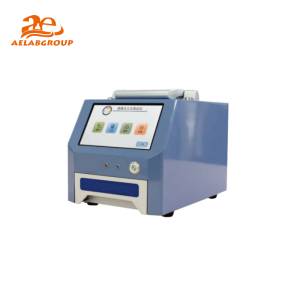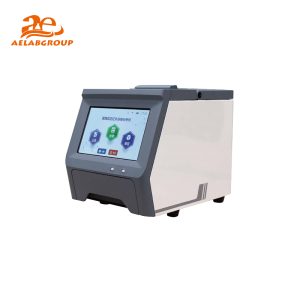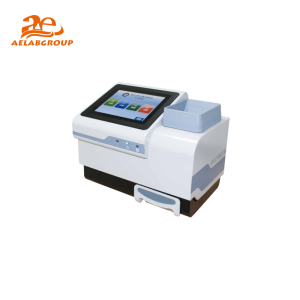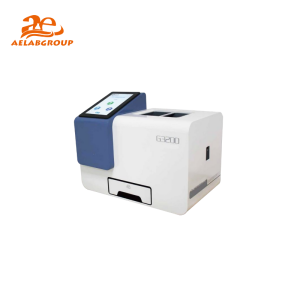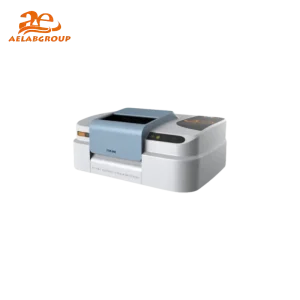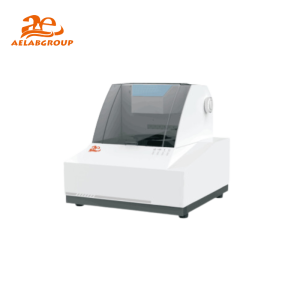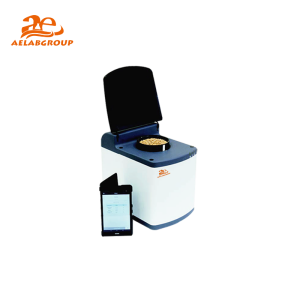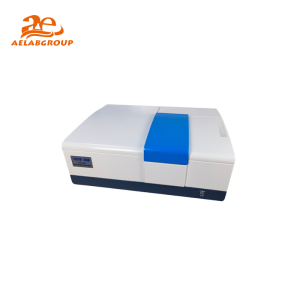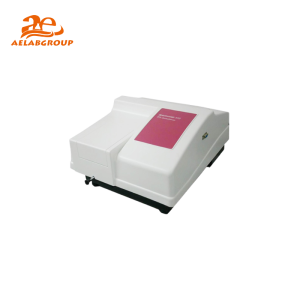
AELAB | Analytical Equipment | NIR Spectrophotometer
The NIR spectrophotometer is widely used for rapid, accurate, and non-destructive analysis across laboratories and industries. This powerful Near-Infrared technology enables fast measurement of moisture, protein, fat, fiber, and chemical composition. Its versatility makes the NIR spectrophotometer a key instrument for quality control and research applications.
An NIR spectrophotometer measures how a sample absorbs or reflects near-infrared light (780–2500 nm) to determine its chemical and physical properties. It supports rapid, non-destructive analysis and is essential for composition testing, moisture analysis, raw material identification, and real-time process monitoring across various industries.
| Feature | Details |
|---|---|
| Spectral Range | 780–2500 nm typical; common ranges include 900–1700 nm or 1100–2500 nm |
| Detector Types | Silicon, InGaAs, PbS/PbSe |
| Measurement Modes | Reflectance, transmission, transflectance |
| Calibration Models | Pre-built libraries, custom model creation, chemometric tools (PLS, PCA, ANN) |
| Speed | 1–10 seconds per test |
| Software Features | Real-time analytics, SQC, cloud storage, multi-parameter display |
| Sample Types | Solids, powders, grains, tablets, liquids, pastes |
| Stability & Repeatability | Designed for long-term industrial use and consistent performance |
| Aspect | NIR Spectrophotometer | UV-Vis Spectrophotometer |
|---|---|---|
| Wavelength Range | 780–2500 nm | 190–1100 nm |
| Primary Use | Composition and structure analysis | Concentration and absorbance measurement |
| Sample Preparation | Minimal | Sometimes required |
| Analysis Type | Quantitative modeling with chemometrics | Absorbance-based measurement |
| Industries | Food, agriculture, pharma, chemicals | Chemistry, biology, clinical labs |
Q: What materials can an NIR spectrophotometer analyze?
A: It can analyze solids, powders, grains, tablets, slurries, pastes, and liquids with minimal preparation.
Q: How long does an NIR measurement take?
A: Most tests are completed within 1–10 seconds, depending on the instrument and sample.
Q: Do NIR instruments require calibration?
A: Yes. Calibration models are essential for accurate quantitative analysis and should be updated periodically.
Q: Is NIR suitable for industrial quality control?
A: Absolutely. With proper calibration and maintenance, NIR provides highly reliable, real-time quality control data.
Looking for specific lab equipment? Fill out the form below, and our team will get back to you with detailed information and a personalized quote.