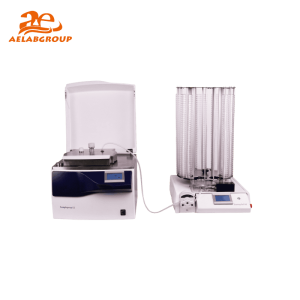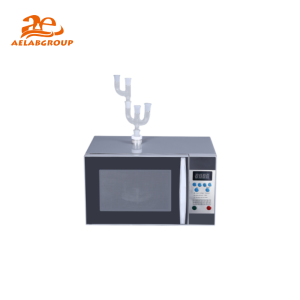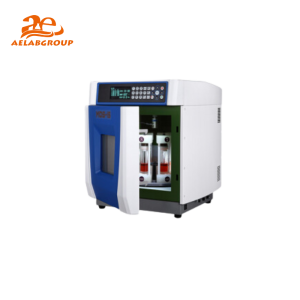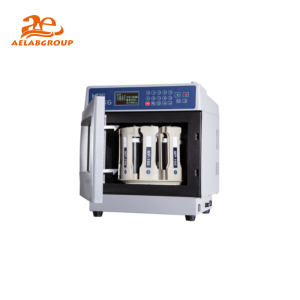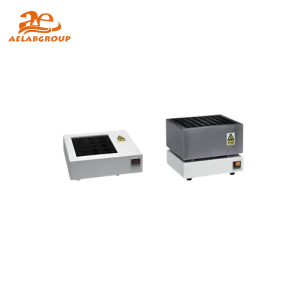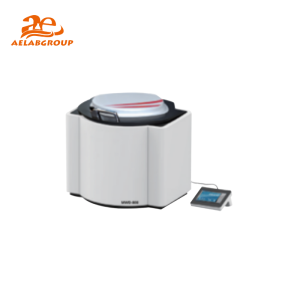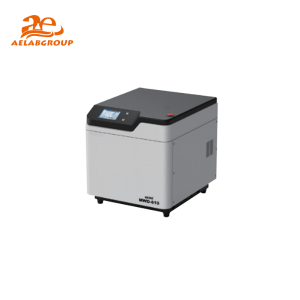
AELAB | Analytical Equipment | Sample Preparation Instruments
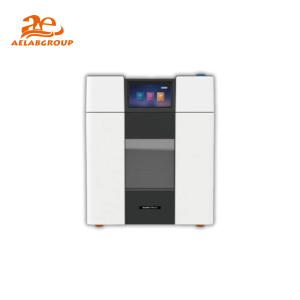
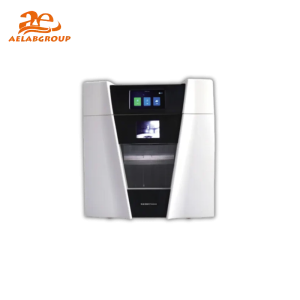
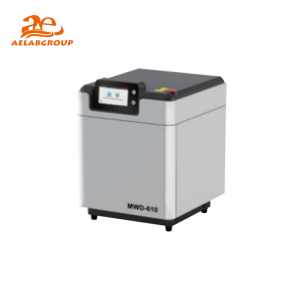
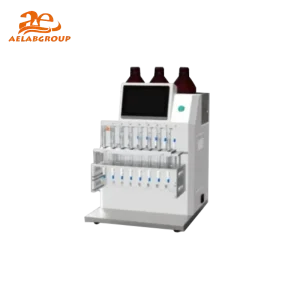
Sample Preparation Instruments ensure raw materials are processed into analysis-ready form, safeguarding accuracy and reproducibility across methods. Investing in reliable sample preparation instruments reduces contamination risk, protects analytical systems, and streamlines laboratory workflows.
Sample preparation instruments are devices used to convert raw samples into a suitable state for analysis through grinding/milling, homogenization, digestion, filtration, drying, and related steps. The required process depends on sample type, analytical technique (e.g., spectroscopy, chromatography), and the precision needed.
| Feature | Details |
|---|---|
| Process Capabilities | Grinding/milling, homogenization, digestion, drying/evaporation, filtration, centrifugation |
| Throughput | Single-sample to batch processing; manual, semi-automated, or fully automated options |
| Particle Size/Uniformity | From coarse crushing to fine milling for uniform, analysis-ready particles |
| Temperature Control | Cryogenic or cooled milling; controlled heating for ovens, blocks, and microwave digestion |
| Materials & Compatibility | Contact parts in steel, PTFE, glass, ceramics; compatible with acids/solvents as required |
| Safety Features | Closed systems, venting/pressure monitoring (microwave), interlocks, splash/aerosol control |
| Control & Data | Digital timers, setpoints/recipes, run logs for traceability and method compliance |
| Utilities | Electric power standard; some devices require vacuum, cooling water, or compressed air |
| Aspect | Sample Preparation Instruments | Manual Preparation |
|---|---|---|
| Time Efficiency | High throughput; minimal supervision | Time-consuming |
| Operator Dependence | Consistent regardless of operator | Skill-sensitive |
| Reproducibility | Highly consistent | Variable |
| Initial Cost | Higher investment upfront | Low |
| Long-Term Cost | Lower with volume processing | Higher due to labor |
Q: What are sample preparation instruments used for?
A: They process raw samples—via grinding, digestion, drying, filtration, or homogenization—so the material is uniform, stable, and ready for accurate analytical measurement.
Q: Which instrument should I use for trace metal analysis?
A: Microwave digestion systems or acid digestion blocks are commonly used to dissolve samples for ICP-MS/ICP-OES, delivering clean matrices and controlled conditions.
Q: How can I avoid cross-contamination during sample prep?
A: Use dedicated tools/consumables per matrix, clean equipment thoroughly after each run, and document each step for traceability.
Q: Is automated sample preparation worth the investment?
A: For moderate to high throughput, automation reduces labor, improves reproducibility, and lowers long-term cost, though it requires higher initial capital and training.
Looking for specific lab equipment? Fill out the form below, and our team will get back to you with detailed information and a personalized quote.