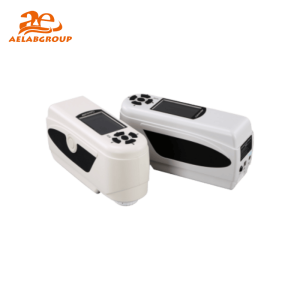
AELAB | Environmental Testing Equipment | Colorimeter
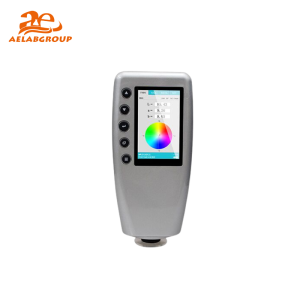
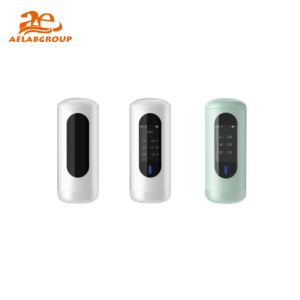
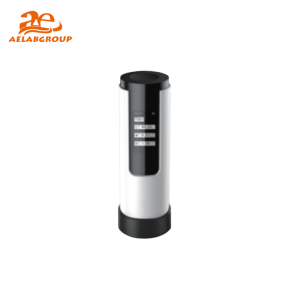
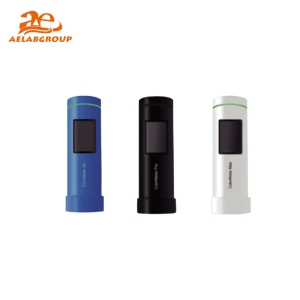
A colorimeter is a precision instrument for accurate color measurement and solution absorbance analysis. Colorimeter tools help manufacturers and labs maintain consistent color quality across products and batches. This guide explains how a colorimeter works, where it’s used, and how to choose the right model.
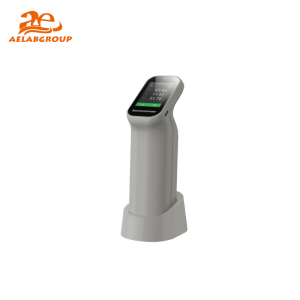
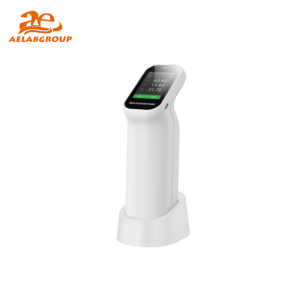
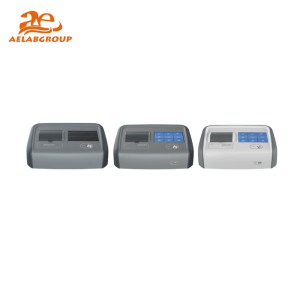
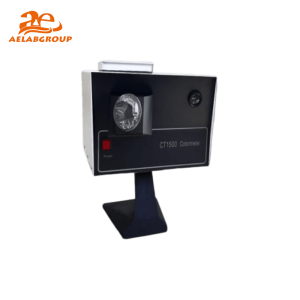
A colorimeter is an analytical device that determines the concentration of a substance by measuring light absorbance at selected wavelengths and, in color science, quantifies human color perception. Typical systems combine a stable light source (LED or tungsten), RGB optical filters that approximate human vision, and a photodetector to measure transmitted or reflected light. Readouts are commonly expressed in CIE color spaces (e.g., CIELAB) or RGB values for quality control, color matching, and routine testing.
| Feature | Details |
|---|---|
| Light Source | LED or tungsten lamp with stable output |
| Optical Filters | Tristimulus RGB filters simulating human vision |
| Photodetector | Silicon photodiode measuring transmitted/ reflected light |
| Measurement Modes | Transmittance (%T), absorbance (A), and reflectance |
| Color Spaces/Output | CIELAB, ΔE, XYZ, Yxy, RGB; pass/fail tolerance |
| Aperture/Cell | Interchangeable apertures for surfaces; 10–50 mm cuvettes for liquids |
| Connectivity & Data | USB/Bluetooth/Ethernet; onboard logging; software export |
| Calibration & Standards | White/black reference tiles or blanks; ISO/ASTM compliant workflows |
| Aspect | Colorimeter | Spectrophotometer |
|---|---|---|
| Principle | Measures absorbance via RGB filter set (tristimulus) | Measures full spectrum via monochromator/grating |
| Accuracy & Sensitivity | Good for routine checks and field work | Higher precision; detects subtle color differences |
| Cost | Lower | Higher |
| Use Case | Routine QC, education, on-the-go testing | R&D, production color formulation, compliance labs |
| Spectral Detail | Limited to selected bands | Full spectral profile for advanced analysis |
Q: Is a colorimeter suitable for digital color matching?
A: Yes. Many digital colorimeters export CIELAB/RGB data to color-matching software for consistent results across batches.
Q: Can a colorimeter detect very subtle color differences?
A: It can detect small variations, but for ultra-fine differences and spectral analysis, a spectrophotometer is preferred.
Q: How should I maintain my colorimeter?
A: Clean optics and cuvettes regularly, store in a protective case, and recalibrate frequently to ensure accuracy.
Looking for specific lab equipment? Fill out the form below, and our team will get back to you with detailed information and a personalized quote.