AELAB | Environmental Testing Equipment | Fume Hood
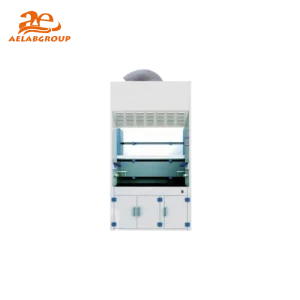
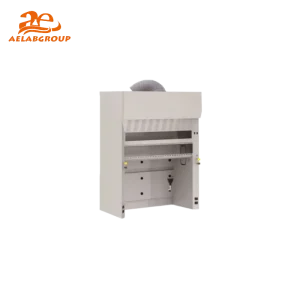
A Fume Hood is a ventilated enclosure that captures and exhausts hazardous fumes, vapors, and particulates to protect users and laboratories. By maintaining controlled airflow and effective containment, fume hoods reduce exposure risks and support compliance in academic, industrial, and pharmaceutical labs.
A fume hood (laboratory or chemical fume hood) is a safety device that draws contaminated air away from the operator and either filters and recirculates it (ductless) or exhausts it outside (ducted). Using a sash, baffles, and monitored face velocity, it provides primary protection against VOCs, corrosive gases, and toxic aerosols generated during experiments.
| Feature | Details |
|---|---|
| Face Velocity | Typically 80–120 fpm (feet per minute) for safe containment |
| Sash | Vertical or combination; adjustable opening (often ≤ 18 in) with position marks |
| Baffles & Aerodynamics | Internal panels manage uniform airflow and minimize turbulence |
| Construction Materials | Epoxy-coated steel, stainless steel, or polypropylene work surfaces/liners |
| Monitoring & Alarms | Airflow monitor with low-flow alarm; optional auto-sash controls |
| Filtration/Exhaust | Ducted to atmosphere or ductless with carbon/HEPA filtration modules |
| Certifications | ASHRAE 110 performance test; OSHA/ANSI/AIHA Z9.5; CE, ISO 9001 (manufacturer) |
| Utilities & Ergonomics | Gas/vacuum fixtures, electrical outlets, spill lip, chemical-resistant worksurface |
| Aspect | Fume Hood | Biosafety Cabinet |
|---|---|---|
| Purpose | Chemical safety & ventilation | Biological safety & contamination control |
| Airflow/Filtration | Inward capture; ducted exhaust or filtered recirculation | HEPA downflow + HEPA exhaust; inward inflow |
| Protection | User from chemicals | User, product, and environment |
| Suitable For | Acids, solvents, corrosives | Pathogens, sterile culture work |
| Standards | ASHRAE 110, ANSI/AIHA Z9.5, SEFA | NSF/ANSI 49, EN 12469 |
Q: How often should a fume hood be tested?
A: At least every 3–6 months or as required by local policies; verify face velocity and containment (e.g., per ASHRAE 110).
Q: Can a ductless fume hood be used with acids?
A: Only with appropriate acid-compatible filters and within manufacturer limits—consult application guidance before use.
Q: What is face velocity and why does it matter?
A: Face velocity is the airflow speed at the hood opening; maintaining ~100 fpm (within 80–120 fpm) ensures effective capture of fumes.
Looking for specific lab equipment? Fill out the form below, and our team will get back to you with detailed information and a personalized quote.