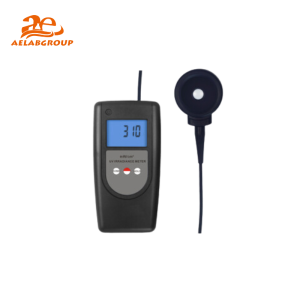
AELAB | Environmental Testing Equipment | Ozone Analyzer
An Ozone Analyzer measures ozone (O₃) concentrations to protect public health, optimize industrial processes, and ensure regulatory compliance. Deployed in environmental networks, laboratories, and factories, Ozone Analyzer systems provide the real-time insight needed to keep ground-level ozone within safe limits.
An ozone analyzer is a device that quantifies ozone in air using detection technologies such as UV absorption (254 nm), electrochemical cells, photometric reagent-based methods, or fluorescence. These instruments support ambient air quality monitoring, industrial hygiene, and process control by delivering accurate, continuous measurements and actionable alarms for compliance with air quality standards.
| Feature | Details |
|---|---|
| Detection Methods | UV absorption (254 nm), Electrochemical, Photometric (reagent-based), Fluorescence |
| Measurement Range | Typical ambient ranges from ppb to low ppm; extended ppm ranges for industrial/process applications |
| Accuracy & Precision | High accuracy suitable for regulatory monitoring (method & model dependent) |
| Response Time | Real-time/near real-time reporting (technology dependent) |
| Outputs & Connectivity | Analog 4–20 mA, digital (Modbus/RS485/Ethernet), alarm relays; data logging |
| Portability | Handheld/battery-powered options for field use; benchtop and rack-mounted for fixed stations |
| Operating Conditions | Designed for ambient networks, laboratories, and industrial environments; appropriate sampling and filtration recommended |
| Maintenance & Calibration | Routine zero/span checks, certified calibration gases or transfer standards; periodic sensor/reagent replacement |
| Aspect | Ozone Analyzer | General Gas Detector |
|---|---|---|
| Specificity | Optimized for O₃; method-specific calibration | Multi-gas capable; less precise for ozone |
| Sensitivity | High (ppb-level with UV/fluorescence) | Moderate; typically higher detection limits |
| Monitoring Mode | Continuous, real-time trending and reporting | Often alarm-only or periodic sampling |
| Compliance Use | Suitable for regulatory networks | Limited compliance applicability |
| Cost | Higher, with precision and logging | Lower, but less accurate for O₃ |
Q: How does a UV absorption ozone analyzer work?
A: It measures ozone’s absorption of 254 nm ultraviolet light; the reduction in light intensity through a sample cell is proportional to O₃ concentration.
Q: Which ozone analyzer technology offers the highest sensitivity?
A: UV absorption and fluorescence methods typically provide ppb-level sensitivity suitable for regulatory ambient monitoring.
Q: Are portable ozone analyzers accurate enough for field work?
A: Yes—electrochemical and compact UV-based units can deliver reliable field data when properly calibrated and maintained.
Q: How often should an ozone analyzer be calibrated?
A: Follow manufacturer recommendations and site conditions; routine zero/span checks and periodic full calibrations ensure long-term accuracy.
Looking for specific lab equipment? Fill out the form below, and our team will get back to you with detailed information and a personalized quote.