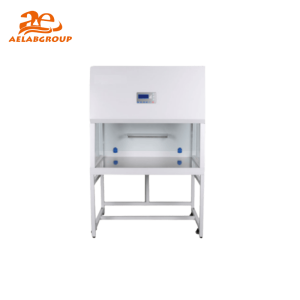
AELAB | Environmental Testing Equipment | PCR Cabinet
A PCR Cabinet is a specialized workstation that safeguards pre-PCR workflows from contamination through clean, laminar airflow and UV decontamination. It helps ensure reliable amplification by protecting DNA/RNA sample preparation from airborne and surface-borne nucleic acids. This guide explains how PCR cabinets work, key features, and how to choose and use them effectively.
A PCR cabinet (Polymerase Chain Reaction cabinet) is a contamination-control enclosure designed for pre-PCR sample and reagent preparation. It typically combines HEPA or ULPA filtration for particle-free laminar airflow with UV-C sterilization to neutralize nucleic acids on interior surfaces, creating a clean, ergonomic workspace that reduces carry-over and false positives in amplification assays.
| Feature | Details |
|---|---|
| Filtration | HEPA (99.97% ≥0.3 μm) or ULPA (up to 99.999%) for particle-free airflow |
| Airflow | Vertical laminar flow to minimize turbulence and cross-contamination |
| UV-C Sterilization | Built-in UV-C lamp with programmable timer and safety interlocks |
| Controls & Alerts | UV timers, airflow indicators, filter status lights, door/UV alarms |
| Workspace & Ergonomics | Spacious work deck, armrests, low-noise fans for comfortable, long sessions |
| Construction | Non-porous interior, easy-clean surfaces, tempered glass sash |
| Power & Integration | Internal outlets for thermocyclers/pipettes; optional UV-safe viewing window |
| Form Factor | Benchtop or floor-standing; ductless options for flexible placement |
| Aspect | PCR Cabinet | Biosafety Cabinet (BSC) |
|---|---|---|
| Primary Purpose | Prevent DNA/RNA contamination during pre-PCR prep | Protect user, product, and environment from biohazards |
| Airflow | Vertical laminar, clean airflow | HEPA-filtered with containment zones and exhaust |
| UV Sterilization | Typically included for nucleic acid neutralization | Optional; not the primary control method |
| User Protection | Not intended for biohazard protection | Yes (e.g., Class II BSCs provide personnel/product protection) |
| Typical Use | DNA/RNA amplification setup and reagent handling | Infectious samples, cell culture, biohazardous work |
Q: Is a PCR cabinet the same as a laminar flow hood?
A: Not exactly. Both provide clean airflow, but PCR cabinets add UV sterilization and workflow features tailored to nucleic acid prep.
Q: Can I use a biosafety cabinet for PCR setup?
A: You can, but it’s not ideal for preventing DNA carry-over. Use a PCR cabinet for dedicated pre-PCR prep and a BSC for biohazardous materials.
Q: How often should the HEPA filter be replaced?
A: Typically every 1–3 years depending on use and environment; monitor airflow indicators to determine replacement timing.
Q: Does the UV lamp replace chemical cleaning?
A: No. UV is a supplement. Always wipe down surfaces before and after use; UV helps neutralize residual nucleic acids.
Looking for specific lab equipment? Fill out the form below, and our team will get back to you with detailed information and a personalized quote.