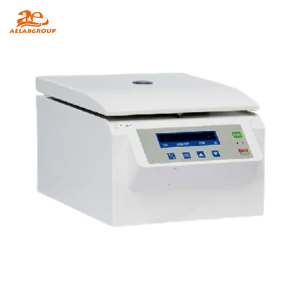
AELAB | Laboratory Equipment | Centrifuge | Haematocrit Centrifuge
A haematocrit centrifuge is a specialized laboratory instrument used to measure the packed cell volume (PCV) of red blood cells in blood samples. It is essential in clinical laboratories, hospitals, and research facilities for diagnosing conditions such as anemia, dehydration, and other hematological disorders with high precision and efficiency.
A haematocrit centrifuge is designed to separate blood into its components—plasma, buffy coat, and red blood cells—through rapid spinning at high speeds. By measuring the proportion of red cells in relation to total blood volume, it provides critical data for evaluating a patient’s hematological health and diagnosing various blood-related conditions.
| Feature | Details |
|---|---|
| Speed Range | 10,000 – 15,000 RPM |
| Relative Centrifugal Force (RCF) | Up to 18,000 × g |
| Sample Capacity | 12–24 capillary tubes per run |
| Rotor Type | Fixed-angle rotor for capillary tubes |
| Display & Controls | Digital speed and time control with LCD readout |
| Safety Features | Lid-lock mechanism and imbalance detection |
| Dimensions | Compact benchtop design for space efficiency |
| Aspect | Haematocrit Centrifuge | Standard Laboratory Centrifuge |
|---|---|---|
| Primary Use | Measuring packed cell volume (PCV) | General sample separation |
| Speed Range | 10,000–15,000 RPM | 1,000–30,000 RPM |
| Sample Type | Capillary blood tubes | Microtubes, vials, or bottles |
| Rotor Design | Fixed-angle rotor for small capillaries | Interchangeable rotors |
| Key Application | Hematology and clinical testing | Research and analytical separation |
Q: What does a haematocrit centrifuge measure?
A: It measures the packed cell volume (PCV) or hematocrit, indicating the proportion of red blood cells in blood.
Q: How long does it take to run a haematocrit test?
A: Most haematocrit centrifuges complete separation within 5 minutes, depending on sample size and speed.
Q: Can a standard centrifuge perform haematocrit testing?
A: While possible, dedicated haematocrit centrifuges provide more accurate and faster results for blood PCV analysis.
Q: Is calibration required for haematocrit centrifuges?
A: Yes, periodic calibration ensures accurate speed, balance, and measurement consistency.
Looking for specific lab equipment? Fill out the form below, and our team will get back to you with detailed information and a personalized quote.