AELAB | Laboratory Equipment | Gloss Meter
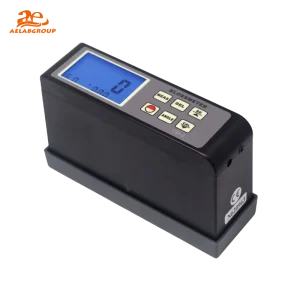
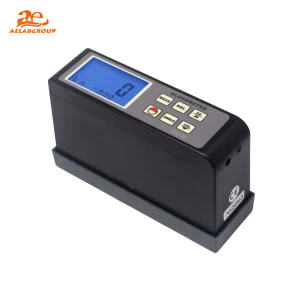
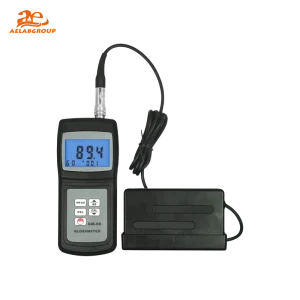
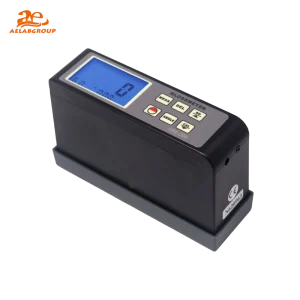
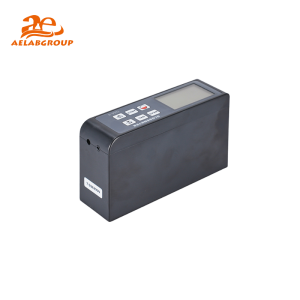
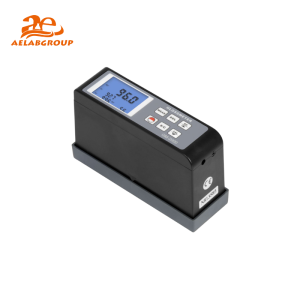
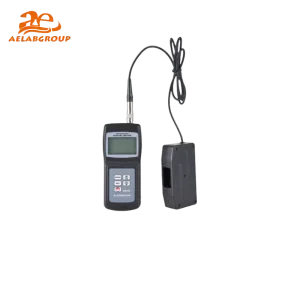
A Gloss Meter is a precise optical instrument used to quantify surface reflectivity and shine. In industries like automotive, coatings, plastics, and electronics, gloss measurement directly correlates with product quality and customer perception, making the gloss meter an essential tool for surface inspection and finish control.
A gloss meter measures the amount of light reflected from a surface at a specific geometry, expressed in gloss units (GU). It provides objective data to evaluate how shiny or reflective a material appears. Using a calibrated light source and detector, it assesses gloss levels at standard angles of 20°, 60°, or 85° to match the surface’s reflectivity profile.
| Feature | Details |
|---|---|
| Measurement Angles | 20°, 60°, 85° (high, medium, and matte gloss levels) |
| Measurement Range | 0–2000 Gloss Units (GU) |
| Light Source | LED or tungsten lamp with fixed geometry |
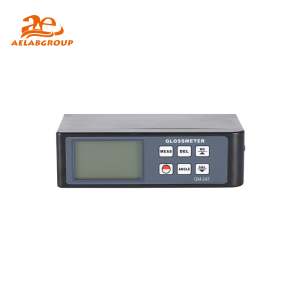
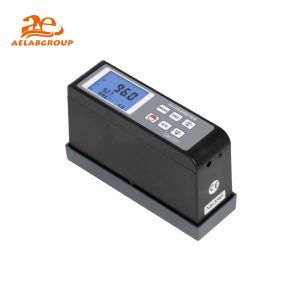
| Display | Digital LCD or color touchscreen interface |
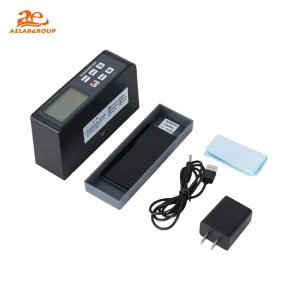
| Calibration | Certified black glass standard included |
| Data Storage | Internal memory with USB/Bluetooth transfer |
| Standards | ASTM D523, ISO 2813, DIN 67530 compliant |
| Power Supply | Rechargeable battery or AC adapter |
| Aspect | Gloss Meter | Visual Inspection |
|---|---|---|
| Measurement Type | Objective and quantitative | Subjective and qualitative |
| Repeatability | High; standardized readings | Low; influenced by lighting and observer |
| Environmental Influence | Minimal; controlled geometry | High; dependent on ambient conditions |
| Data Output | Numerical gloss units (GU) | Visual perception only |
| Standard Compliance | ASTM, ISO compliant | Non-standardized |
Q: What is a good gloss value?
A: It varies by application: below 10 GU indicates matte, 10–70 GU is semi-gloss, and above 70 GU is high gloss.
Q: Can I measure curved surfaces with a gloss meter?
A: Most devices are designed for flat surfaces. For curved or textured materials, use specialized adapters or non-contact gloss meters.
Q: Are gloss meters easy to use?
A: Yes, modern models feature intuitive interfaces and automatic calibration, making them simple to operate.
Q: Which standards apply to gloss measurement?
A: Common standards include ASTM D523, ISO 2813, and DIN 67530, which define measurement geometry and calibration procedures.
Looking for specific lab equipment? Fill out the form below, and our team will get back to you with detailed information and a personalized quote.