AELAB | Laboratory Equipment | Pipette Filler
A pipette filler is an essential tool for accurate and efficient liquid handling in laboratories. Modern pipette fillers enhance safety, ergonomics, and reproducibility across diverse workflows. Choosing the right pipette filler ensures precision and comfort during medium- to large-volume liquid transfers.
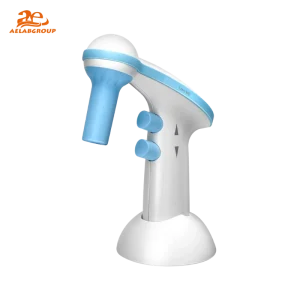
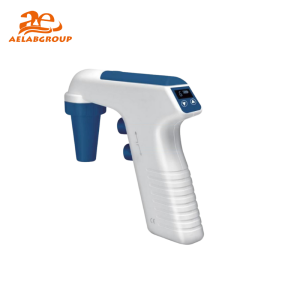
A pipette filler, also known as a pipette controller or pipette aid, is a handheld device used to aspirate and dispense liquids safely into volumetric or serological pipettes. It replaces unsafe mouth pipetting and provides controlled airflow, ergonomic handling, and contamination protection for routine laboratory tasks.
| Feature | Details |
|---|---|
| Aspirate/Dispense Control | Dual-button or bulb system for suction and release |
| Motor Type | Electronic motor or manual bulb for airflow generation |
| Pipette Compatibility | Works with 1–100 mL glass and plastic pipettes |
| Filtration System | Hydrophobic filters prevent backflow and contamination |
| Battery Life | Rechargeable batteries support full-day operation (electronic models) |
| Ergonomics | Lightweight, balanced design for long-term comfort |
| Speed Control | Adjustable suction strength and gravity dispense mode |
| Aspect | Pipette Filler | Micropipette |
|---|---|---|
| Pipette Type | Serological/Volumetric (1–100 mL) | Micro-volume (0.1–1000 µL) |
| Applications | Cell culture, media prep, titrations | PCR, assays, molecular biology |
| Volume Range | High-volume transfers | Low-volume precision |
| Control Mechanism | Buttons or bulb | Plunger-driven |
| Usage Frequency | Ideal for high-throughput volume handling | Ideal for high-precision small volumes |
Q: What types of pipettes can a pipette filler be used with?
A: Pipette fillers work with most glass and plastic serological or volumetric pipettes ranging from 1–100 mL.
Q: Are electronic pipette fillers more accurate than manual ones?
A: Yes, electronic models provide more consistent suction control, improving accuracy and reducing user fatigue during repetitive tasks.
Q: How often should pipette filler filters be replaced?
A: Filters should be replaced regularly or immediately if wetted, clogged, or contaminated to ensure proper airflow and sample safety.
Q: Can pipette fillers be used for precise volumetric measurements?
A: Yes, when paired with volumetric pipettes and used with gravity dispense mode, they support accurate and repeatable measurements.
Looking for specific lab equipment? Fill out the form below, and our team will get back to you with detailed information and a personalized quote.