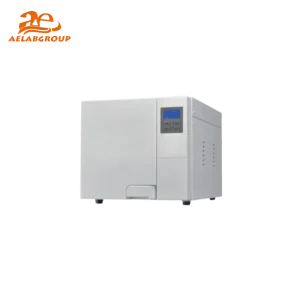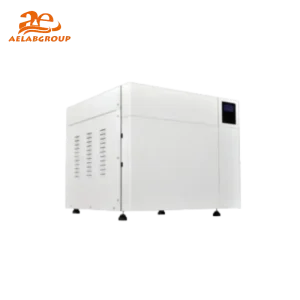
AELAB | Laboratory Equipment | Sterilizer/Autoclave | Class B Sterilizer
The Class B Sterilizer is a high-performance autoclave engineered to handle the most demanding sterilization tasks in medical, dental, and laboratory environments. Using saturated steam under high pressure and temperature, it ensures complete microbial destruction—even in porous and complex instruments. This makes it the preferred choice for facilities requiring reliable and validated sterilization outcomes.
A Class B Sterilizer is a vacuum-assisted autoclave that uses pre-vacuum and post-vacuum cycles to remove air before steam injection and to ensure complete drying afterward. This allows steam to fully penetrate porous loads, wrapped instruments, and hollow materials—something standard gravity or Class N autoclaves cannot achieve. It operates at 121–134°C, delivering high-pressure steam to guarantee complete sterilization of medical and laboratory tools.
| Feature | Details |
|---|---|
| Sterilization Temperature | 121–134 °C depending on cycle |
| Pressure Range | 15–30 psi during sterilization |
| Air Removal System | Pre-vacuum pump for complete air evacuation |
| Drying Cycle | Post-vacuum drying for wrapped and porous loads |
| Capacity Options | From 8 L to 60 L chamber sizes |
| Control Interface | Digital or touchscreen control with pre-set programs |
| Safety Features | Door interlock, temperature and pressure sensors, auto shut-off |
| Standards | Complies with EN 13060 and ISO 13485 |
| Aspect | Class B Sterilizer | Class N Autoclave |
|---|---|---|
| Air Removal | Vacuum-assisted (pre- and post-vacuum) | Gravity displacement only |
| Load Type | Porous, wrapped, and hollow instruments | Solid, unwrapped instruments |
| Drying Capability | Yes (vacuum drying) | No |
| Cycle Time | Fast and programmable | Slower and less efficient |
| Typical Use | Hospitals, dental clinics, research labs | Basic lab or small clinic applications |
Q: What makes a Class B Sterilizer different from other autoclaves?
A: It uses a vacuum pump for air removal and drying, enabling complete sterilization of porous and wrapped loads, unlike Class N or S autoclaves.
Q: Where is a Class B Sterilizer typically used?
A: In hospitals, dental practices, laboratories, and any facility requiring sterilization of complex instruments.
Q: How long does a typical Class B sterilization cycle take?
A: Depending on load and program, full cycles usually last between 20 and 45 minutes, including drying.
Q: What maintenance does a Class B Sterilizer need?
A: Regular cleaning, descaling, seal inspection, and annual validation are essential for optimal performance and safety compliance.
Looking for specific lab equipment? Fill out the form below, and our team will get back to you with detailed information and a personalized quote.