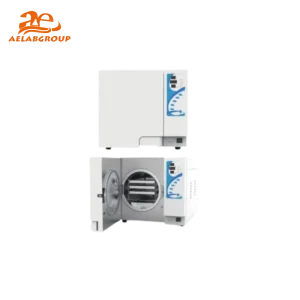
AELAB | Laboratory Equipment | Sterilizer/Autoclave | Class N Sterilizer
The Class N Sterilizer is a standard autoclave used for sterilizing non-porous, heat-resistant instruments through saturated steam. Designed for simplicity and reliability, it provides effective sterilization of solid tools without requiring vacuum-assisted air removal. Ideal for basic medical, dental, and laboratory applications, it meets essential sterilization needs efficiently and safely.
A Class N Sterilizer is a non-vacuum autoclave that relies on gravity displacement to remove air and allow steam to sterilize the load. It is best suited for unwrapped, solid, non-porous items that do not require steam penetration into cavities or complex surfaces. Operating at standard autoclave conditions—typically 121°C to 134°C—it effectively eliminates bacteria, viruses, fungi, and spores on basic laboratory and medical instruments.
| Feature | Details |
|---|---|
| Sterilization Temperature | 121–134 °C |
| Pressure Range | 15–30 psi (cycle-dependent) |
| Air Removal Method | Gravity displacement (no vacuum) |
| Suitable Load Types | Unwrapped, solid, non-porous items |
| Cycle Duration | 15–30 minutes (varies by load size) |
| Chamber Capacity | From 8 L to 60 L |
| Safety Features | Pressure relief valve, door interlock, overheat protection |
| User Interface | Manual or digital control panel |
| Aspect | Class N Sterilizer | Class B Sterilizer |
|---|---|---|
| Air Removal | Gravity displacement only | Pre- and post-vacuum system |
| Suitable Loads | Unwrapped, non-porous items | Wrapped, porous, and hollow instruments |
| Drying Capability | No drying cycle | Full vacuum drying |
| Cycle Complexity | Basic, simple operation | Advanced programmable cycles |
| Application | Small labs, clinics | Hospitals, dental practices, high-level labs |
Q: What items can be sterilized in a Class N Sterilizer?
A: Solid, non-porous, unwrapped items such as metal instruments and glassware are suitable for Class N autoclaves.
Q: Can a Class N Sterilizer handle wrapped or hollow instruments?
A: No. For wrapped or hollow items, a Class B Sterilizer with vacuum technology is required for full steam penetration.
Q: What temperature does a Class N Sterilizer operate at?
A: Typically between 121°C and 134°C, depending on the selected sterilization program.
Q: Who should use a Class N Sterilizer?
A: It’s ideal for small clinics, dental offices, and laboratories that need reliable sterilization of basic, non-porous instruments.
Looking for specific lab equipment? Fill out the form below, and our team will get back to you with detailed information and a personalized quote.