AELAB | Laboratory Equipment | Sterilizer/Autoclave | Vertical Sterilizer
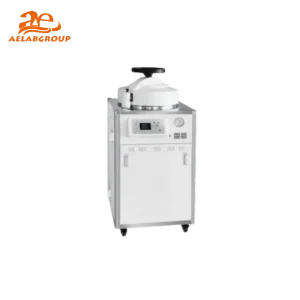
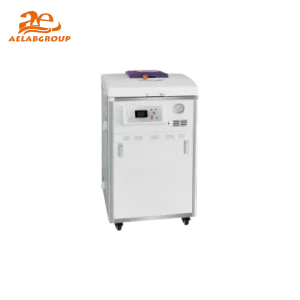
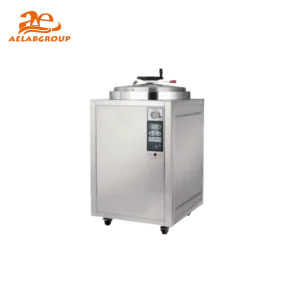
A Vertical Sterilizer is a steam-based autoclave that uses high pressure and temperature to eliminate microorganisms on instruments and supplies. Its vertical, space-efficient design and programmable controls enable precise, reliable sterilization in medical and laboratory environments.
A Vertical Sterilizer is a top-loading autoclave commonly used in healthcare and research labs to render tools and materials free from bacteria, viruses, and fungi. It operates with saturated steam under pressure and typically offers programmable cycles for exact control of temperature, pressure, exposure time, and drying—helping ensure validated, contamination-free results while optimizing floor space.
| Feature | Details |
|---|---|
| Sterilization Method | Saturated steam under high pressure and temperature |
| Typical Temperature | 121–134 °C (cycle-dependent) |
| Operating Pressure | ~15–30 psi (≈1–2 bar) gauge during sterilization |
| Controls | Programmable cycles with time/temperature/pressure settings; digital display |
| Chamber Orientation | Vertical, top-loading for efficient floor-space usage |
| Capacity Range | Approx. 20–100+ liters (model-dependent) |
| Construction | Stainless-steel chamber; corrosion-resistant fittings |
| Safety | Lid interlock, over-pressure protection, overheat cut-off, cycle abort |
| Aspect | Vertical Sterilizer | Horizontal Autoclave |
|---|---|---|
| Footprint | Space-saving, small floor area | Larger footprint, bench or floor lengthwise |
| Loading Orientation | Top-loading; ideal for tall items | Front-loading; easy tray access |
| Typical Capacity | Small to medium volumes | Medium to large volumes/high throughput |
| Use Case | General lab/clinic loads, tall flasks, baskets | High-frequency instrument sets and packs |
| Complexity | Straightforward operation with programmable cycles | More advanced options (e.g., pre/post vacuum, larger trays) |
Q: How does a Vertical Sterilizer eliminate microorganisms?
A: It exposes items to saturated steam at high temperature and pressure for a defined time, denaturing proteins and effectively killing bacteria, viruses, and fungi.
Q: What types of loads are suitable for vertical autoclaves?
A: Common loads include instrument sets, glassware, culture media, and certain autoclavable plastics; always verify material compatibility with steam sterilization.
Q: Are cycles programmable?
A: Yes. Most vertical sterilizers provide programmable controls to set temperature, pressure, exposure time, and optional drying to match specific protocols.
Q: Why choose a vertical design over a horizontal one?
A: The vertical, top-loading layout optimizes floor space and accommodates tall vessels, making it practical for compact labs or clinics with limited bench length.
Looking for specific lab equipment? Fill out the form below, and our team will get back to you with detailed information and a personalized quote.