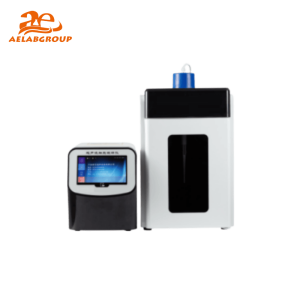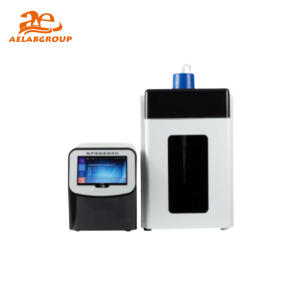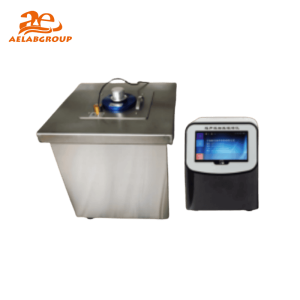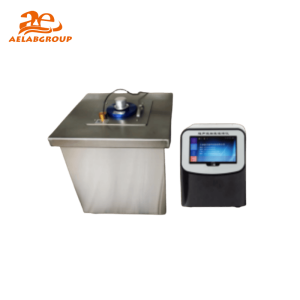
AELAB | Laboratory Equipment | Ultrasonic
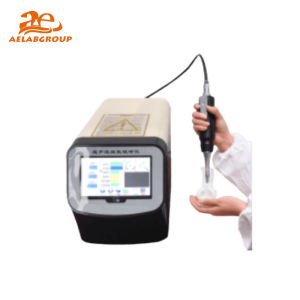
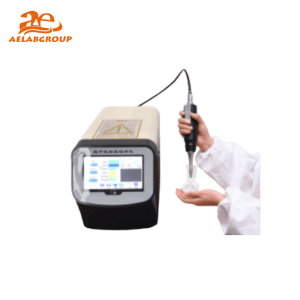
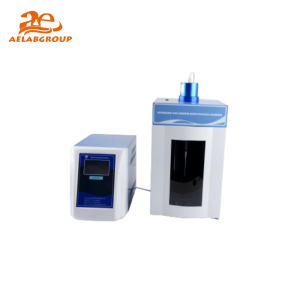
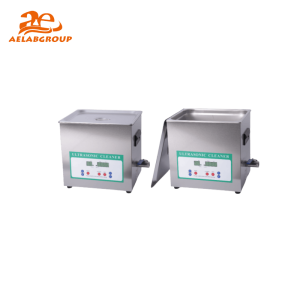
Laboratory ultrasonic devices have become essential tools for modern scientific and industrial research. Using high-frequency sound waves, these instruments enhance precision in cleaning, sample preparation, emulsification, degassing, and extraction. Their efficiency and versatility make them a preferred choice in chemistry, biotechnology, pharmaceuticals, and materials science.
A laboratory ultrasonic device uses high-frequency sound waves to create mechanical vibrations in a liquid medium. These vibrations produce cavitation bubbles that collapse with great force, generating localized energy for cleaning, mixing, breaking down particles, or enhancing chemical reactions. Ultrasonic devices enable precise control over these processes, improving reproducibility and analytical outcomes in laboratories.
| Feature | Details |
|---|---|
| Frequency Range | 20 kHz – 50 kHz (low frequencies for strong cavitation, high for delicate cleaning) |
| Power Output | 50W – 2000W depending on application and device type |
| Mechanism | Ultrasonic cavitation generating intense microbubble collapse for mechanical and chemical effects |
| Control Interface | Digital display with power, time, and temperature settings |
| Temperature Monitoring | Integrated sensors prevent overheating and maintain consistent conditions |
| Material Compatibility | Stainless steel tanks and probes for chemical resistance and durability |
| Programmable Functions | Preset cycles for standardized experiments and repeatable sonication |
| Aspect | Laboratory Ultrasonic Devices | Traditional Methods |
|---|---|---|
| Cleaning Efficiency | Deep, uniform cleaning | Manual scrubbing or soaking |
| Cell Disruption | Fast and efficient | Mechanical grinding or chemical lysis |
| Mixing & Emulsification | Nano-level homogeneous mixing | Mechanical stirring or blending |
| Degassing | Rapid gas removal | Vacuum degassing (slower) |
| Chemical Processing | Enhanced reaction kinetics | Conventional heating and stirring |
Q: How does ultrasonic cavitation work?
A: Cavitation occurs when ultrasonic waves create microscopic bubbles in liquid that collapse, releasing energy for cleaning, mixing, or disrupting samples.
Q: Can ultrasonic devices damage delicate samples?
A: When operated at appropriate frequency and power, ultrasonic devices provide gentle yet effective processing without harming sensitive materials.
Q: What is the ideal frequency for ultrasonic cleaning?
A: Frequencies around 40 kHz are ideal for delicate cleaning, while 20 kHz provides more intense cavitation for tough applications.
Q: Can ultrasonic devices replace mechanical homogenizers?
A: In many cases, yes—ultrasonic homogenizers offer faster, more uniform results with less mechanical wear or contamination risk.
Looking for specific lab equipment? Fill out the form below, and our team will get back to you with detailed information and a personalized quote.