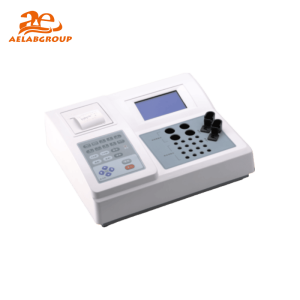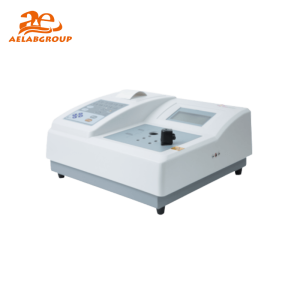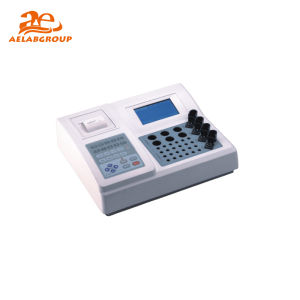
AELAB | Life Science Research | Coagulation Analyzer
A Coagulation Analyzer automates blood clotting tests to assess hemostasis quickly and accurately in clinical, research, and surgical settings. By standardizing PT, aPTT, INR, and related assays, a Coagulation Analyzer improves turnaround time, reduces operator error, and supports better therapeutic decisions.
A coagulation analyzer is a laboratory instrument that evaluates the blood-clotting system (hemostasis) by introducing specific reagents to citrated plasma and measuring clot formation or factor activity. Common tests include Prothrombin Time (PT), Activated Partial Thromboplastin Time (aPTT), Fibrinogen, Thrombin Time (TT), D-dimer, and calculated INR, used to diagnose bleeding/thrombotic disorders and to monitor anticoagulant therapy.
| Feature | Details |
|---|---|
| Core Tests | PT, aPTT, Fibrinogen, TT, D-dimer, INR; optional factors (VIII/IX) & VWF (model-dependent) |
| Detection Methods | Photo-optical turbidity, electromechanical, chromogenic substrates, immunologic latex assays |
| Throughput | ~30–400 tests/hour (choose per workload) |
| Sample & Reagents | 10–150 µL plasma/test; onboard reagent cooling and barcode ID on many systems |
| Reaction Conditions | 37 °C controlled incubation with automated mixing/clot detection |
| Connectivity | Touchscreen UI; LIS/host via HL7/ASTM; export PDF/CSV/XML; QC and audit trails |
| Maintenance & Safety | Auto-clean cycles, clot/level alarms, disposable cuvettes, onboard QC rules |
| Sample Type | 3.2% sodium-citrate plasma; pediatric low-volume options available on select models |
| Aspect | Coagulation Analyzer | Manual Testing |
|---|---|---|
| Speed | Very fast; automated timing and readout | Time-consuming, operator-timed |
| Accuracy | High; precise, reproducible | Variable; user-dependent |
| Operator Dependence | Minimal after setup | High (pipetting/timing) |
| QC Integration | Built-in QC rules and audit trails | Limited/no integration |
| Long-Term Cost | Cost-efficient via reduced repeats and labor | Higher from repeats and variability |
| Standardization | Strong inter-operator and inter-site consistency | Challenging to standardize |
Q: What’s the difference between PT and aPTT?
A: PT evaluates the extrinsic/common pathways (e.g., warfarin), while aPTT assesses the intrinsic/common pathways (e.g., heparin response).
Q: How often should quality control be performed?
A: Daily QC is recommended—more frequently for high-volume or critical care testing—to ensure accuracy and compliance.
Q: Are coagulation analyzers suitable for point-of-care testing?
A: POC devices exist primarily for INR/warfarin monitoring and offer limited parameters compared with full laboratory analyzers.
Q: What sample type is required?
A: Use properly collected 3.2% sodium-citrate plasma; follow local guidelines for fill volume and processing to avoid pre-analytical errors.
Looking for specific lab equipment? Fill out the form below, and our team will get back to you with detailed information and a personalized quote.