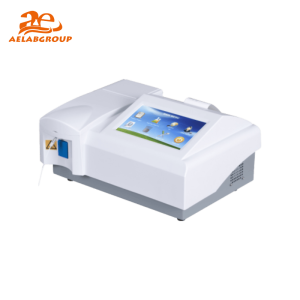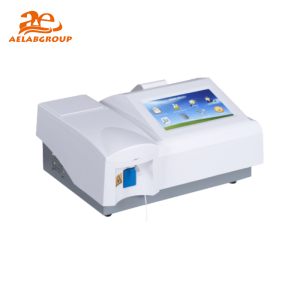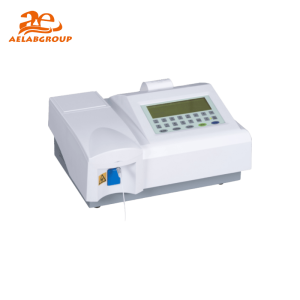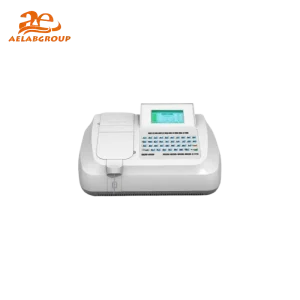
AELAB | Life Science Research | Semi Auto Chemistry Analyzer
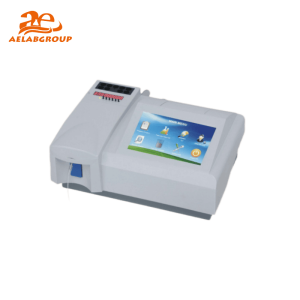
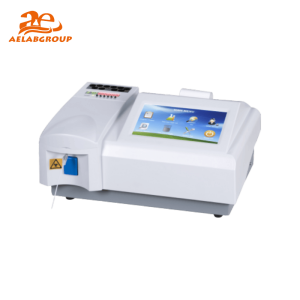
The Semi Auto Chemistry Analyzer is a reliable and cost-effective diagnostic tool that combines manual flexibility with automated precision. In modern laboratories, this analyzer plays a crucial role in biochemical testing for assessing organ function, metabolic activity, and disease markers—making it an ideal solution for small to medium-sized labs.
A Semi Auto Chemistry Analyzer is a clinical laboratory instrument designed to measure biochemical substances in blood and other body fluids. Using the principle of colorimetric photometry, it quantifies compounds like glucose, urea, cholesterol, and enzymes such as ALT and AST. While it requires manual sample preparation and reagent addition, it automates absorbance reading and result computation—balancing precision with affordability for diagnostic labs.
| Feature | Details |
|---|---|
| Wavelength Range | 340–800 nm (with filters or monochromator) |
| Optical System | Photometric / Spectrophotometric detection |
| Sample Volume | Typically 200–500 µL |
| Reagent Volume | 500–1000 µL per test |
| Display Interface | LCD or touch screen; membrane keypad controls |
| Data Storage | Stores 500–10,000 test results |
| Connectivity | USB, RS232, printer, optional LIS integration |
| Calibration & QC | One-point/multi-point calibration; QC with Levy-Jennings graph |
| Aspect | Semi Auto Analyzer | Fully Auto Analyzer |
|---|---|---|
| Automation Level | Partial (manual pipetting required) | Full automation of all processes |
| Sample Handling | Manual | Automated loading and dilution |
| Throughput | Low to medium | High (hundreds per hour) |
| Cost | Low; ideal for smaller labs | High initial investment |
| Maintenance | Minimal; easy to service | Requires trained engineers |
| Ideal For | Clinics and small diagnostic labs | Hospitals and reference laboratories |
Q: Can a semi auto chemistry analyzer test multiple samples at once?
A: Most semi auto analyzers process one sample at a time but offer quick turnaround for small to mid-volume testing environments.
Q: Is training required to operate a semi auto analyzer?
A: Yes. Basic training in pipetting, reagent handling, and standard operating procedures ensures accurate and reliable results.
Q: What maintenance does a semi auto chemistry analyzer require?
A: Routine cleaning of optical components, cuvettes, and regular calibration checks are essential for maintaining accuracy and performance.
Q: Can it be used in veterinary applications?
A: Yes. Many semi auto analyzers are suitable for veterinary biochemical profiling with species-specific reagent kits.
Looking for specific lab equipment? Fill out the form below, and our team will get back to you with detailed information and a personalized quote.