AELAB | Petroleum Testing Equipment | Bomb Calorimeter
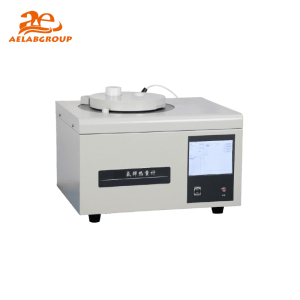
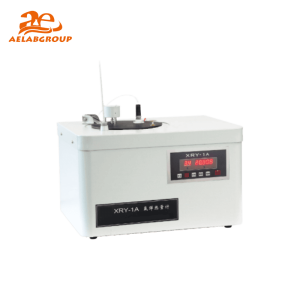
A Bomb Calorimeter precisely measures the heat of combustion to determine calorific value for fuels, foods, and materials. It is indispensable for energy analysis in research labs, fuel testing facilities, and food science. This guide covers bomb calorimeter working principles, features, and how to choose the right instrument.
A bomb calorimeter is a sealed, high-strength oxygen combustion system used to determine the gross calorific value (higher heating value) of solid and liquid samples. A sample combusts inside a metal “bomb” pressurized with oxygen; the released heat is absorbed by a surrounding water jacket. The measured temperature rise—recorded by a high-precision sensor and homogenized by a stirrer—yields the heat of combustion after applying standard corrections (fuse wire, acid formation).
| Feature | Details |
|---|---|
| Measurement Principle | Combustion in pressurized oxygen; temperature rise of a water jacket converted to energy (HHV) |
| Key Components | Combustion bomb, water jacket, stirrer, precision thermometer/sensor, ignition system |
| Typical Sample Mass | 0.5–1.0 g (dried, finely ground) |
| Oxygen Charge | ~25–30 atm pure O2 inside the bomb |
| Accuracy | Up to ±0.1% with proper calibration (e.g., benzoic acid) |
| Operation Modes | Manual, semi-automatic, or fully automatic (with data logging & calculations) |
| Compliance | ASTM D5865, ISO 1928 (fuel calorific value testing) |
| Data & Connectivity | Onboard software, USB/network interfaces for export and LIMS integration |
| Aspect | Bomb Calorimeter | Differential Scanning Calorimeter (DSC) |
|---|---|---|
| Primary Purpose | Heat of combustion (HHV) | Heat flow during phase transitions/reactions |
| Sample Types | Fuels & organics (solids/liquids) | Polymers, pharmaceuticals, foods |
| Accuracy | Very high for combustion energy | Moderate to high for transitions |
| Destructiveness | Destructive (complete combustion) | Mostly non-destructive |
| Temperature Conditions | High-temperature combustion in O2 | Programmed heating/cooling, wide range |
| Typical Use Case | Fuel grading, food energy content | Melting points, glass transitions, curing |
Q: What is a bomb calorimeter used for?
A: Measuring the heat of combustion (calorific value) of fuels, foods, and other organic materials for quality control and research.
Q: How accurate is a bomb calorimeter?
A: With proper calibration and corrections, accuracy can reach approximately ±0.1% for critical industrial applications.
Q: Is bomb calorimetry safe?
A: Yes—combustion occurs in a sealed, high-strength vessel with controlled oxygen pressure and standardized safety checks.
Q: Which standards apply to fuel calorific value testing?
A: Commonly ASTM D5865 and ISO 1928 for determining higher heating value using oxygen bomb calorimeters.
Looking for specific lab equipment? Fill out the form below, and our team will get back to you with detailed information and a personalized quote.