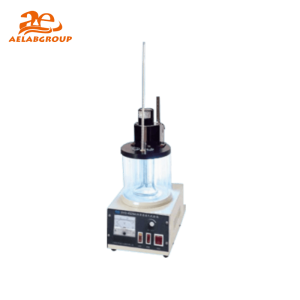
AELAB | Petroleum Testing Equipment | Dropping Point Tester
A Dropping Point Tester determines the temperature at which a lubricating grease becomes fluid enough to form a drop, indicating its upper service temperature. This fast, precise test is essential for high-temperature grease testing in automotive, aerospace, and industrial environments.
A Dropping Point Tester is a laboratory instrument that measures the grease dropping point—the temperature at which a grease softens under controlled heating and releases a drop through a small orifice. This parameter helps define the upper temperature limit for grease applications and supports product development, quality control, and compliance with standards such as ASTM D566, ASTM D2265, and ISO 2176.
| Feature | Details |
|---|---|
| Temperature Range | Up to 400 °C or higher (model dependent) |
| Temperature Accuracy | ±0.1 °C or better for automated systems |
| Heating Rate | Programmable, typically 1–2 °C/min |
| Detection Method | Visual (manual) or optical drop detection (automated) |
| Compliance Standards | ASTM D566, ASTM D2265, ISO 2176 |
| Interface & Connectivity | Digital display; USB/Ethernet for data export |
| Throughput | Single or multi-sample configurations |
| Sample Format | Grease cup with calibrated orifice; prepared grease specimens |
| Aspect | Dropping Point Tester | Melting Point Tester |
|---|---|---|
| Target Sample | Lubricating greases (semi-solids) | Waxes, fats, pharmaceuticals, chemicals |
| Measurement Focus | Temperature at first drop (flow onset) | Temperature of complete melting/phase transition |
| Typical Methods | ASTM D566, ASTM D2265, ISO 2176 | ASTM D127, USP, ISO 926 |
| Heating Arrangement | Grease cup with orifice; oil bath or electric heater | Capillary tube in oil or electrical bath/block |
| Application Domain | Automotive, aerospace, industrial lubrication | Pharma, food, chemicals, materials science |
Q: What is the dropping point of grease?
A: It is the temperature at which a grease becomes fluid enough to release a drop through a calibrated orifice, indicating its upper temperature limit in service.
Q: Which standards are used for dropping point testing?
A: ASTM D566 (manual, oil bath) and ASTM D2265 (higher-temperature applications) are most common; ISO 2176 provides an international method.
Q: Is the dropping point the same as the melting point?
A: No. Dropping point reflects flow onset in a structured semi-solid (grease), while melting point describes a phase change of relatively pure solids such as waxes or pharmaceuticals.
Q: Can dropping point predict maximum operating temperature?
A: It provides an upper limit indicator, but safe operating temperatures are typically below the dropping point and also depend on oxidation stability and base oil volatility.
Looking for specific lab equipment? Fill out the form below, and our team will get back to you with detailed information and a personalized quote.