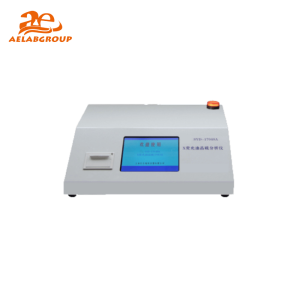
AELAB | Petroleum Testing Equipment | Fuel Oil Tester
A Fuel Oil Tester verifies that diesel, marine, and heavy fuel oils meet performance and regulatory specifications before use. By assessing viscosity, flash point, sulfur, water, and contaminants, a Fuel Oil Tester helps prevent engine damage, downtime, and compliance issues across power, marine, and industrial operations.
A Fuel Oil Tester is a laboratory or field instrument that analyzes the physical and chemical properties of fuel oil to determine suitability for safe, efficient combustion. It commonly measures viscosity, flash point, sulfur content, water content, density, acidity (TAN), and sediment to ensure conformity with standards such as ISO 8217 and ASTM D396.
| Feature | Details |
|---|---|
| Parameters Measured | Viscosity, flash point, sulfur, water, density, TAN, sediment/sludge |
| Measurement Principles | Viscometry; closed/open-cup flash point; Karl Fischer titration; XRF/spectrophotometry; gravimetric sediment |
| Temperature Capability | Controlled measurement per method; flash point up to ~400 °C (method dependent) |
| Automation Level | Manual, semi-automatic, or fully automated workflows |
| Sample Volume | Typically 50–100 mL (flash point); small aliquots for titration/spectroscopy |
| Compliance | ISO 8217, ASTM D396, ASTM D445 (viscosity), ASTM/ISO flash point methods, MARPOL Annex VI (sulfur limits) |
| Connectivity & UI | Touchscreen interfaces; USB/Ethernet data export; onboard LIMS/reporting |
| Portability | Handheld/kit options for on-site checks; benchtop analyzers for full compliance testing |
| Aspect | Fuel Oil Tester | Fuel Analyzer |
|---|---|---|
| Focus | Diesel, marine gas oil, heavy fuel oils | Broader fuels (gasoline, biofuels, blend components) |
| Test Methods | Physical/chemical tests (viscosity, flash point, water, sulfur) | Adds chromatography/spectroscopy for compositional profiling |
| Portability | Portable kits and benchtop units | Primarily benchtop laboratory systems |
| Use Case | Maritime, industrial QA, power plants | R&D, regulatory labs, detailed composition |
| Compliance Focus | ISO 8217, ASTM D396, MARPOL limits | Broader method coverage incl. fuel blending and speciation |
Q: Which standards govern fuel oil testing?
A: Common references include ASTM D396 (fuel oils), ASTM D445 (viscosity), ISO 8217 (marine fuels), and MARPOL Annex VI for sulfur limits.
Q: How often should fuel oil be tested?
A: For critical operations (ships, power plants, standby generators), test each new delivery and perform periodic checks during storage.
Q: Can I test fuel oil on-site?
A: Yes. Portable fuel oil test kits provide rapid assessments of water, sediment, stability, and microbial contamination, enabling real-time decisions.
Looking for specific lab equipment? Fill out the form below, and our team will get back to you with detailed information and a personalized quote.